
.jpeg)
NICE recommends first-line lorlatinib/lorlatinib for patients with newly diagnosed ALK+ NSCLC
NICE recommends Lorlatinib as first-line treatment for patients with newly diagnosed advanced ALK-positive non-small cell lung cancer (NSCLC). The recommendation, based on data from the phase 3 CROWN trial (NCT03052608), would allow patients to obtain an ALK-guided TKI within 90 days. NICE's approval of lorlatinib as the first treatment for ALK-positive lung cancer is a huge step forward for UK patients. Not only does it provide newly diagnosed patients with an additional targeted treatment option, but pivotal research shows it can help prevent disease progression in the long term and help prevent the disease from spreading to the brain.
Patients with ALK-positive NSCLC typically present with stage III or IV disease at diagnosis, and approximately 25% of patients with ALK-driven disease have brain metastases at baseline, underscoring the need for effective treatments to control the central nervous system (CNS). Lorlatinib is a brain-penetrant, third-generation ALK TKI that is active against more ALK-resistant mutations than second-generation inhibitors.
Lorlatinib was compared with crizotinib (Xalkori) in the CROWN trial, which enrolled patients with stage IIIB/IV ALK-positive NSCLC who had not received prior systemic therapy for metastatic disease. To be eligible, patients needed an ECOG performance status between 0 and 2, asymptomatic treated or untreated central nervous system metastases, and at least 1 extracranial measurable target lesion according to RECIST 1.1, and no prior radiation therapy.
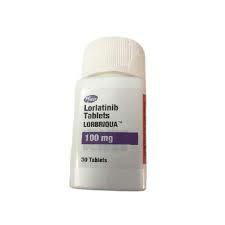
A total of 296 patients were randomly assigned in a 1:1 ratio to receive oral lorlatinib 100 mg (n=149) or crizotinib 250 mg twice daily (n=247). It is worth noting that crossovers are not allowed. The primary endpoint was progression-free survival (PFS) by blinded independent central review (BICR). Secondary endpoints included overall survival, investigator-assessed PFS, and BICR and investigator objective response rate (ORR); intracranial (IC)-ORR, duration of response (DOR), IC-DOR, time to intracranial progression, time to response (TTR), and IC-TTR were also assessed based on BICR. Safety, quality of life, and biomarker analysis were also assessed.
Five-year data show median follow-up for PFS was 60.2 months (95% CI, 57.4-61.6) in the lorlatinib arm and 55.1 months (95% CI, 36.8-62.5) in the crizotinib arm.
Trial data presented at the 2024 ASCO Annual Meeting showed that lorlatinib did not reach the median progression-free survival (NR) (95% CI,64.3 months NR) compared with 9.1 months (95% confidence range, 7.4-10.9) for crizotinib (HR, 0.19; 95% CI, 0.13-0.27). The 5-year progression-free survival rates of lorlatinib and crizotinib were 60% (95% CI, 51%-68%) and 8% (95% CI, 3%-14%), respectively.
Lorlatinib also proved effective regardless of the patient's brain metastasis status. Among patients with brain metastases at baseline, median PFS was NR (95% CI, 32.9-NR) with lorlatinib (n=35) and 6.0 months (95% CI, 3.7-7.6) with crizotinib (n=38; HR, 0.08; 95% CI, 0.04-0.19). The 60-month progression-free survival rates were 53% (95% CI, 35%-68%) and not evaluable [NE], respectively. In patients without baseline brain metastases, the median progression-free survival was NR (95% CI, 64.3 months NR) for lorlatinib (n=114) and 10.8 months (95% CI, 9.0-12.8) for crizotinib (n=109) (HR, 0.24; 95% CI, 0.16-0.36). The 60-month progression-free survival rates were 63% (95% CI, 52%-71%) and 10% (95% CI, 5%-18%) respectively.
Lorlatinib also prolonged time to IC progression regardless of brain metastasis status. Among patients with brain metastases at baseline, the median time to IC progression was NR (95% CI, NR-NR) in the lorlatinib group compared with 7.2 months (95% CI, 3.7-11.0) in the crizotinib group (HR, 0.03; 95% CI, 0.01-0.13). The intracranial progression-free rates within 60 months were 83% (95% CI, 64%-93%) and NE, respectively. In patients without baseline brain metastases, the median time to IC progression was NR (95% CI, NR-NR) and 23.9 months (95% CI: 16.4-30.8) for lorlatinib and crizotinib, respectively (HR, 0.05; 95% CI: 0.02-0.13). The rates of freedom from intracranial progression within 60 months were 96% (95% CI, 89%-98%) and 27% (95% CI, 14%-43%), respectively.
Additional data showed that the confirmed ORR was 81% (95% CI, 73%-87%) for lorlatinib and 63% (95% CI, 54%-70%) for crizotinib (odds ratio [OR], 2.43; 95% CI, 1.43-4.43). The median DOR was NR (95% CI, NR-NR) for lorlatinib and 9.2 months (95% CI, 7.5-11.1) for crizotinib. Among patients with measurable brain metastases at baseline in the lorlatinib group (n=12) and the crizotinib group (n=6), the confirmed IC-ORR was 92% (95% CI, 62%-100%) and 33% (95% CI, 4-78%), respectively (OR, 15.00; 95% CI, 0.99-786.47). The median IC-DOR were NR (95% CI, NR-NR) and 10.2 months (95% CI, 7.5-NR), respectively.
In terms of safety, the most common adverse reactions in the lorlatinib group included hypercholesterolemia, hypertriglyceridemia, and edema.
This is a welcome development that brings hope to those newly diagnosed withALK-positive lung cancer. Early access to the most effective treatments is crucial, reflecting calls for equitable testing and optimal care without delay. This means more people with ALK-positive lung cancer across the UK can live better, longer lives.
References:https://www.onclive.com/view/nice-recommends-first-line-lorlatinib-for-newly-diagnosed-alk-nsclc
[ 免责声明 ] 本页面内容来自公开渠道(如FDA官网、Drugs官网、原研药厂官网等),仅供持有医疗专业资质的人员用于医学药学研究参考,不构成任何治疗建议或药品推荐。所涉药品可能未在中国大陆获批上市,不适用于中国境内销售和使用。如需治疗,请咨询正规医疗机构。本站不提供药品销售或代购服务。


