
.jpeg)
How many years can long-term maintenance treatment with Ixazomib (Enleri) be maintained and its efficacy evaluated?
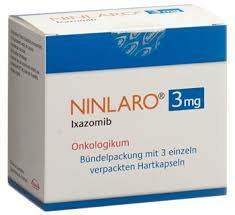
Ixazomib (Ixazomib) is an oral reversible proteasome inhibitor, mainly used for the maintenance treatment of patients with multiple myeloma (MM). Its mechanism of action is by inhibiting proteasome activity and blocking the degradation pathway of abnormal proteins in myeloma cells, thereby inducing cell apoptosis and inhibiting tumor cell proliferation. Compared with injectable proteasome inhibitors, ixazomib is highly convenient for oral administration and is suitable for long-term maintenance therapy, aiming to delay disease recurrence and prolong progression-free survival (PFS).
In long-term maintenance therapy, ixazomib is usually used in combination with low-dose dexamethasone or other targeted drugs. Clinical data show that maintenance therapy can last for several years (usually ranging from 2 to 5 years). The specific treatment course needs to be evaluated based on patient tolerance, hematological indicators and myeloma burden. Most studies have shown that continued use of ixazomib maintenance therapy can significantly delay recurrence, improve patients' progression-free survival, and improve overall survival (OS) to a certain extent. Especially for patients who have completed initial induction therapy and achieved partial or complete remission, the maintenance effect is more obvious.
In terms of efficacy evaluation, doctors usually monitor treatment response through hematological indicators, bone marrow examination and imaging evaluation, including serum M protein, urinary Bence-Jones protein levels and bone marrow plasma cell ratio, etc. In clinical practice, patients can observe disease stabilization or further improvement of indicators within the first 6 to 12 months after maintenance treatment. Long-term continuous medication can help maintain a deep remission state and reduce the risk of recurrence. If fluctuations in hematological indicators or signs of progression occur during the maintenance period, doctors may adjust the dose or combine it with other drugs to maintain the therapeutic effect.
Although long-term use of ixazomib is well tolerated, potential adverse reactions such as thrombocytopenia, neutropenia, gastrointestinal discomfort, or peripheral neuropathy still need to be considered. During the maintenance treatment period, patients should regularly review blood routine, liver and kidney function and nervous system status, and perform dose adjustments or symptomatic treatment under the guidance of a doctor. Taken together, ixazomib, as an oral maintenance drug, can effectively maintain the remission status of multiple myeloma during long-term use from 2 to 5 years, providing patients with a convenient, safe and durable treatment option.
Reference materials:https://www.drugs.com/
[ 免责声明 ] 本页面内容来自公开渠道(如FDA官网、Drugs官网、原研药厂官网等),仅供持有医疗专业资质的人员用于医学药学研究参考,不构成任何治疗建议或药品推荐。所涉药品可能未在中国大陆获批上市,不适用于中国境内销售和使用。如需治疗,请咨询正规医疗机构。本站不提供药品销售或代购服务。


