
.jpeg)
Comparative analysis of tucatinib/tucatinib and 8201
In the treatment field ofHER2-positive breast cancer and its brain metastasis, tucatinib/tucatinib (Tucatinib) and DS-8201 (Trastuzumab Deruxtecan) are regarded as two innovative drugs representing two different treatment directions. The former is a small molecule HER2 kinase inhibitor, and the latter is an antibody drug conjugate (ADC). Both have changed the treatment landscape of HER2-positive and HER2-low-expressing tumors globally, but there are obvious differences in their mechanisms of action, clinical positioning, administration methods, side effects spectrum, and applicable populations. With the deepening of clinical research, the combination and sequential use of the two are becoming a hot topic in HER2-targeted therapy in the future.
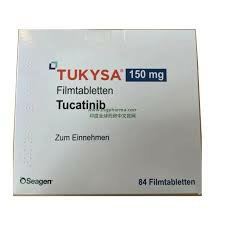
From the mechanism of action, tucatinib is a highly selectiveHER2 tyrosine kinase inhibitor (TKI) that can block the signaling of HER2 receptors, thereby inhibiting tumor cell proliferation. Its significant advantage lies in its extremely high selectivity for HER2 and extremely low inhibitory effect on EGFR, so it is less likely to cause common adverse reactions such as rash and diarrhea. Tucatinib is also one of the few HER2-targeted drugs that can effectively cross the blood-brain barrier. It has outstanding efficacy in patients with brain metastases from HER2-positive breast cancer and has become an important oral drug recommended in clinical guidelines for controlling central nervous system metastasis. In contrast, trastuzumab is an antibody-drug conjugate that combines a HER2 monoclonal antibody with the potent topoisomerase I inhibitor Deruxtecan, using the targeting properties of the antibody to accurately deliver cytotoxic drugs into tumor cells. Its linker can be cleaved in the tumor microenvironment, allowing the drug to not only kill HER2-positive cells, but also kill HER2 low-expressing or adjacent tumor cells through the "bystander effect", expanding the scope of treatment.
From a clinical application perspective, tucatinib is mainly used for HER2-positive metastatic breast cancer after multiple lines of treatment. It especially shows unique advantages in patients with brain metastases. It is often used in combination with trastuzumab and capecitabine as a long-term maintenance oral treatment regimen. Trastuzumab, on the other hand, is known for its powerful ability to shrink tumors. It is suitable for second-line and third-line treatment of HER2-positive breast cancer, and has been expanded to multiple indications such as HER2-low-expressing breast cancer, gastric cancer, and lung cancer. It can significantly reduce tumor burden in a short period of time, making it more suitable for patients with rapidly progressive disease or those who are resistant to other HER2 drugs. It can be said that tucatinib favors "long-term control type", while trastuzumab is "potent killing type".
In terms of administration method, tucatinib is an oral small molecule drug that patients take twice a day, which is relatively convenient for long-term maintenance. Trastuzumab, on the other hand, requires intravenous infusion, usually once every three weeks, and is a hospital administration model. For patients with long-term follow-up, the convenience and compliance of oral medications are significantly better. However, trastuzumab is administered less frequently and is suitable for patients who need to quickly control their disease. The metabolism and toxicity mechanisms of the two drugs are also different: tucatinib is mainly metabolized by the liver, and adverse reactions are mild, with common diarrhea, fatigue, and mild liver function abnormalities; trastuzumab's toxicity mainly comes from its chemotherapy carrier, and the more common ones include nausea, bone marrow suppression, alopecia, etc. The most vigilant one is drug-related interstitial pneumonia, which is listed as a black box warning and requires strict monitoring.
Reference materials:https://www.tukysa.com/
[ 免责声明 ] 本页面内容来自公开渠道(如FDA官网、Drugs官网、原研药厂官网等),仅供持有医疗专业资质的人员用于医学药学研究参考,不构成任何治疗建议或药品推荐。所涉药品可能未在中国大陆获批上市,不适用于中国境内销售和使用。如需治疗,请咨询正规医疗机构。本站不提供药品销售或代购服务。


