
.jpeg)
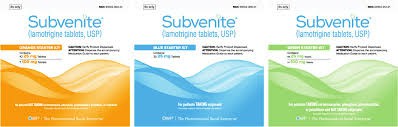
Subvenite (Lamotrigine) instruction manual Chinese introduction
1. Common names:Subvenite, Lamotrigine
2. Who can useSubvenite? Indications?
1. Epilepsy:
1) Adjuvant treatment
Subvenite (Lamotrigine) is indicated for the adjunctive treatment of the following seizure types in patients 2 years of age and older:
(1) Partial epilepsy;
(2) Primary generalized tonic-clonic seizure;
(3) Generalized attacks of Lennox-Gastaut syndrome.
2) Monotherapy: Suitable for conversion to monotherapy in adults (16 years and older) with partial-onset epilepsy who are receiving carbamazepine, phenytoin, phenobarbital, primidone, or sodium valproate as a single antiepileptic drug (AED).
Its safety and efficacy have not been established (1) as initial monotherapy; (2) for conversion to monotherapy from an antiepileptic drug other than carbamazepine, phenytoin, phenobarbital, primidone, or valproate; or (3) for simultaneous conversion to monotherapy from 2 or more concomitant AEDs.
2. Bipolar disorder:
Subvenite is indicated for the maintenance treatment of bipolar disorder to delay the onset of mood episodes (depression, mania, hypomania, mixed episodes) in patients with acute mood episodes who are receiving standard treatment.
3. Limitations of use: Not recommended for the treatment of acute mania or mixed episodes. The effectiveness of Subvenite in the acute treatment of mood episodes has not been established.
3.What are the side effects of Subvenite?
In clinical studies of Subvenite, common adverse reactions (incidence ≥10%) in adult patients with epilepsy included dizziness, headache, diplopia, ataxia, nausea, blurred vision, somnolence, rhinitis, pharyngitis, and rash. Other adverse reactions reported in children with epilepsy (incidence ≥10%) include vomiting, infection, fever, accidental injury, diarrhea, abdominal pain, and tremor. Common adverse reactions (incidence >5%) in adults with bipolar disorder include nausea, insomnia, somnolence, back pain, fatigue, rash, rhinitis, abdominal pain, and dry mouth.
4. How to useSubvenite?
Administer Subvenite by mouthbased on concomitant medications, indications, and patient age. If this medication upsets the patient's stomach, take it with food or milk. Take your medicine regularly. Do not take the medicine more often than your doctor orders. Although this medication may be used in certain situations in children younger than 2 years old, caution is required.
5. How to storeSubvenite?
Subvenite oral suspension contains 10 mg/mL of lamotrigine. It is a pink cherry-flavored suspension in a high-density polyethylene (HDPE) bottle with a white polypropylene, child-resistant lid with foam lining and a heat-sensitive layered inner seal. Subvenite is stored at 20°C to 25°C (68°F to 77°F); adjustments are allowed within the temperature range of 15°C to 30°C (59°F to 86°F). Discard unused portion 90 days after first opening.
6.How does Subvenite work?
The exact mechanism by which Lamotrigine, Subvenite's active ingredient, exerts its anticonvulsant effects is unknown. In animal models designed to test anticonvulsant activity, lamotrigine effectively prevented seizure propagation in the maximal electroshock (MES) and pentylenetetrazole (scMet) tests and prevented seizures in the postdischarge visual and electrical evoked (EEAD) test. Lamotrigine exhibits inhibitory properties in the rat kindling model, both during kindling development and in the fully kindled state. However, the relevance of these models to human epilepsy is unclear.
One proposed mechanism of action of lamotrigine involves effects on sodium channels, the relevance of which in humans remains to be determined. In vitro pharmacological studies have shown that Lamotrigine inhibits voltage-sensitive sodium channels, thereby stabilizing neuronal membranes and thereby regulating presynaptic transmitter release of excitatory amino acids such as glutamate and aspartate.
Lamotrigine does not inhibit N-methyl-d-aspartate (NMDA)-induced depolarization in rat cortical slices or NMDA-induced cyclic GMP formation in immature rat cerebellum, nor does lamotrigine displace competitive or non-competitive ligands on this glutamate receptor complex (CNQX, CGS, TCHP). Lamotrigine has an IC50 of over 100µM for NMDA-induced currents (in the presence of 3µM glycine) in cultured hippocampal neurons.
The mechanism by which lamotrigine exerts its therapeutic effect in bipolar disorder has not been determined.
7. Who cannot use Subvenite?
Subvenite is contraindicated in patients who have shown a hypersensitivity reaction to the drug or its components (e.g., rash, angioedema, acute urticaria, widespread pruritus, mucosal ulceration).
Reference materials:https://www.drugs.com/mtm/subvenite.html
[ 免责声明 ] 本页面内容来自公开渠道(如FDA官网、Drugs官网、原研药厂官网等),仅供持有医疗专业资质的人员用于医学药学研究参考,不构成任何治疗建议或药品推荐。所涉药品可能未在中国大陆获批上市,不适用于中国境内销售和使用。如需治疗,请咨询正规医疗机构。本站不提供药品销售或代购服务。


