
.jpeg)
General life expectancy and clinical statistics of patients taking Giritinib (Segatan)
Giritinib is an oral FLT3 inhibitor, mainly used to treat patients with acute myeloid leukemia (AML) with FLT3 mutations, especially relapsed or refractory AML. Clinical studies have shown that the prognosis of such patients is usually poor, and the median survival period of traditional chemotherapy is only a few months. However, the emergence of giritinib has brought survival benefits to some patients. According to data from large international clinical trials, the median overall survival (OS) of the geritinib treatment group can reach approximately 9 to 11 months, which is significantly longer than the 5 to 6 months of traditional chemotherapy, especially for FLT3-ITD patients with high mutation load.
In clinical statistics, the overall response rate (ORR) of gilitinib treatment is approximately 30% to 50%, among which the complete response (CR) rate is around 20% to 25%. Studies have shown that survival may be further prolonged in patients who receive combined supportive care or subsequent stem cell transplantation. For patients with first-time relapsed or refractory AML, giritinib can not only delay disease progression, but also create conditions for subsequent stem cell transplantation and improve the chance of long-term survival.
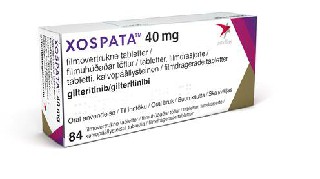
It should be noted that the efficacy of giritinib is affected by many factors, including patient age, underlying diseases, FLT3 mutation type and load, previous treatment history, etc. For patients who are young, in good physical condition, and without serious comorbidities, the median survival period after receiving giritinib treatment may exceed the clinical average, while for patients who are elderly or have multiple chronic diseases, the efficacy and survival period may be relatively short. Therefore, individualized assessment is particularly important for formulating medication regimens and determining life expectancy.
In general, giritinib provides a new treatment option for patients with relapsed or refractory AML mutated FLT3 and significantly improves the survival expectations of some patients. However, patients and their families should view drug efficacy rationally and conduct comprehensive management based on physician guidance, including regular hematology monitoring, symptom observation, and necessary supportive treatment, in order to maximize efficacy and prolong survival.
Reference materials:https://www.drugs.com/
[ 免责声明 ] 本页面内容来自公开渠道(如FDA官网、Drugs官网、原研药厂官网等),仅供持有医疗专业资质的人员用于医学药学研究参考,不构成任何治疗建议或药品推荐。所涉药品可能未在中国大陆获批上市,不适用于中国境内销售和使用。如需治疗,请咨询正规医疗机构。本站不提供药品销售或代购服务。


