
.jpeg)
Effect of Tarlatamab-Imdelltra on GPRC5D target
Tarlatamab-Imdelltra is an innovative bispecific T cell engager that mainly targets DLL3 and is used to treat small cell lung cancer (ES-SCLC) and other malignant tumors with high DLL3 expression. Its mechanism is to guide the patient's own T cells directly into the tumor microenvironment by simultaneously combining the DLL3 antigen on the surface of tumor cells and the CD3 molecule on the surface of T cells to achieve precise killing. DLL3 is highly expressed on the surface of tumor cells, while its expression is very limited in normal tissues. This selectivity provides taratumumab with good targeting and safety, allowing it to activate T cells while minimizing damage to healthy tissues.
The role of Talatumumab is not limited to the recruitment of T cells It can also activate T cells to release a variety of inflammatory cytokines, such as interferon-γ, tumor necrosis factor-α, etc., to enhance the immune system's ability to kill tumors. At the same time, T cell-mediated tumor cell lysis can further enhance the anti-tumor effect and activate the host's immune response through the immunogenic cell death mechanism to form a sustained anti-tumor immune environment. In mouse SCLC models, talatumumab showed significant anti-tumor activity, significantly delayed tumor growth and improved survival rate. These preliminary data provide a strong experimental basis for clinical application.
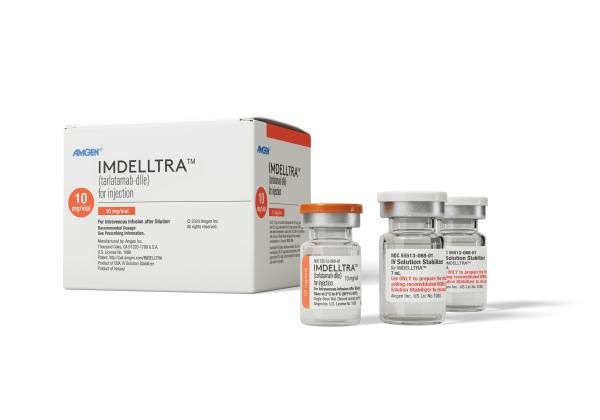
It is worth noting that talatumumab mainly targetsDLL3 rather than GPRC5D. GPRC5D is a different tumor-associated antigen that is mainly highly expressed in multiple myeloma. Related immunotherapy strategies mostly use GPRC5D-specific antibodies or bispecific T cell engagers. Although the mechanism of T cell activation by talatumumab is theoretically useful for T cell redirection of any surface antigen, the current treatment of GPRC5D still requires specialized targeted drugs. Both clinical and experimental data show that talatumumab has the best effect in SCLC patients with high DLL3 expression, but its direct effect or efficacy on GPRC5D has not been reported, so talatumumab cannot be replaced as a GPRC5D targeted therapy.
From a clinical application perspective, talatumumab, as a bispecific T cell engager targeting DLL3, can significantly improve the immune killing efficiency of patients and provide new treatment options for patients with refractory SCLC. Its high selectivity in targeting DLL3 enables controllable side effects, and at the same time enhances tumor control effects through T cell-mediated immune activation. Clinical trials have shown that the drug has potential efficacy when used alone or in combination with standard chemotherapy regimens, improving patients' survival and quality of life. With further accumulation of clinical data in the future, talatumumab is expected to become an important component of DLL3-targeted therapy, providing a precise and effective immunotherapy strategy for SCLC and related DLL3-positive tumors.
In short, the efficacy of talatumumab onDLL3 target has been fully verified. It activates T cells and lyses tumor cells through the bispecific T cell engagement mechanism, showing significant anti-tumor activity. However, it has not yet shown direct efficacy on the GPRC5D target. Its innovative immunotherapy model provides new precision treatment options for tumors with high DLL3 expression, and provides an important reference for the development of more bispecific antibody drugs in the future.
Reference materials:https://www.drugs.com/mtm/tarlatamab.html
[ 免责声明 ] 本页面内容来自公开渠道(如FDA官网、Drugs官网、原研药厂官网等),仅供持有医疗专业资质的人员用于医学药学研究参考,不构成任何治疗建议或药品推荐。所涉药品可能未在中国大陆获批上市,不适用于中国境内销售和使用。如需治疗,请咨询正规医疗机构。本站不提供药品销售或代购服务。


