
.jpeg)
What’s going on with the Tarlatamab-Imdelltra clinical trial?
Tarlatamab-Imdelltra represents the latest advancement in immunotherapy in the treatment of small cell lung cancer, especially for patients with disseminated small cell lung cancer (ES-SCLC), and its clinical research results show the significant potential of this innovative therapy. As a bispecific T cell engager (BiTE®) molecule, talatumumab can simultaneously bind to the DLL3 antigen on the surface of tumor cells and the CD3 receptor of T cells, mediating tumor cell killing by directly activating T cells, providing a new treatment option for patients with advanced small cell lung cancer who have limited effects of traditional therapies. This mechanism is different from traditional chemotherapy or single-targeted drugs. Its core advantage is to achieve precise anti-tumor effects through the immune system's own killing function, thereby demonstrating the potential for lasting efficacy in patients who have failed pretreatment.
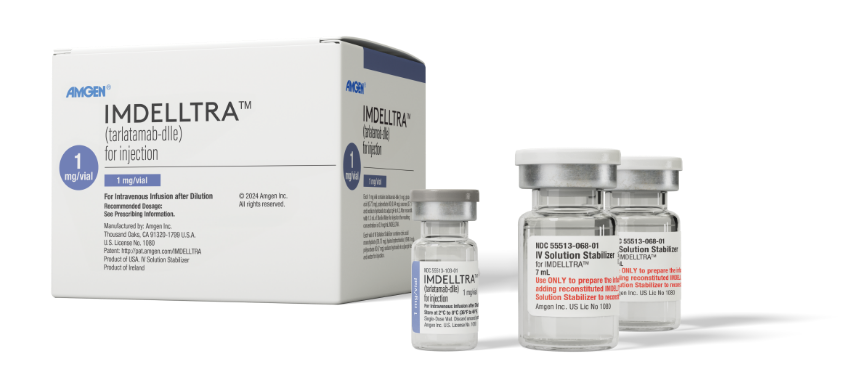
The accelerated approval of IMDELLTRA by the U.S. Food and Drug Administration (FDA) is based on the results of the Phase 2 DeLLphi-301 clinical trial. This trial uses a 10 mg every two weeks (Q2W) dosing schedule to evaluate the efficacy and safety of talatumumab in patients with ES-SCLC who have progressed after at least two previous treatment regimens. In this trial, 99 patients received a 10 mg Q2W dose and the results showed a robust objective response rate (ORR) of 40%, a median duration of response (DoR) of approximately 9.7 months, and a median overall survival (mOS) of 14.3 months. These data suggest that talatumumab not only induces significant tumor responses but may also improve survival expectations in patients with advanced disease and failure to pretreatment. Of note, despite encouraging initial efficacy, complete long-term survival data are still being collected and analyzed.
The clinical value of talatumumab also lies in its uniqueness of targetingDLL3. DLL3 is highly expressed in most small cell lung cancer cells and extremely low in normal tissues, making it an ideal tumor-specific target. By acting as a bispecific T cell engager, talatumumab can directly bridge T cells and DLL3-positive tumor cells, activating T cells and directional killing of tumors, reducing damage to normal tissues. This precise immune killing model not only improves efficacy but also reduces the risk of toxicity associated with traditional chemotherapy.
In addition, the clinical application of talatumumab still needs to pay attention to immune-related side effects, especially the risk of cytokine release syndrome (CRS) and neurological adverse events. The research team usually conducts close monitoring during the early stages of treatment and takes preventive or interventional measures to ensure that patients receive anti-tumor benefits while minimizing potential risks.
Overall,The clinical trial results of IMDELLTRA mark a new breakthrough in the treatment of small cell lung cancer. Its innovative bispecific T cell engager mechanism brings practical hope for therapeutic efficacy to patients with refractory ES-SCLC, and also provides an important reference for further optimization and expansion of immunotherapy in the future.
Reference materials:https://www.drugs.com/mtm/tarlatamab.html
[ 免责声明 ] 本页面内容来自公开渠道(如FDA官网、Drugs官网、原研药厂官网等),仅供持有医疗专业资质的人员用于医学药学研究参考,不构成任何治疗建议或药品推荐。所涉药品可能未在中国大陆获批上市,不适用于中国境内销售和使用。如需治疗,请咨询正规医疗机构。本站不提供药品销售或代购服务。


