
.jpeg)
Differences between Rucaparib and Olaparib
In the field of tumor treatment,PARP inhibitors have become an important treatment for cancers related to DNA repair defects, of which Rucaparib (Rucaparib) and olaparib/olaparib (Olaparib) are the two most representative drugs. Although both are PARP inhibitors and both induce tumor cell death by blocking the PARP-mediated DNA repair pathway, they have significant differences in indications, molecular properties, clinical applications and market positioning.
In terms of indications, olaparib is the world's first approved PARP inhibitor. Its main indications include BRCA mutation-related recurrent ovarian cancer, breast cancer and castration-resistant prostate cancer. Lynparza is widely used in the field of maintenance therapy, especially for patients with recurrent ovarian cancer who are sensitive to platinum-based chemotherapy. Its efficacy as maintenance therapy has been recognized in multiple international guidelines. In contrast, the indications of rucapanib in the global market are mainly concentrated on a few solid tumor types such as recurrent ovarian cancer and fallopian tube cancer, with special emphasis on patients with BRCA mutations or homologous recombination repair deficiency (HRD) positivity. While both are suitable for platinum-sensitive patients, rucapanib is also being explored for potential indications in prostate and breast cancer in some areas.
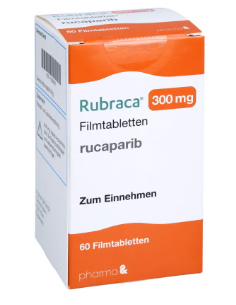
There are also differences in the chemical properties and administration methods of the drugs. Olaparib is mainly taken as oral capsules or tablets, and daily administration needs to strictly follow the dosage and time. Rucaparib is also an oral small molecule drug, but its preparations are slightly different in bioavailability and drug metabolism pathways, which may have a certain impact on dose adjustment in patients with liver and kidney dysfunction. In addition, rucapanib shows a certain broad spectrum of inhibitory effects on PARP-1, PARP-2 and PARP-3 in vivo, while olaparib emphasizes its high selectivity for PARP-1/2. This subtle difference may affect the efficacy and tolerability of specific patients.
In terms of clinical application, Lynparza has accumulated a lot of clinical experience through long-term international trials. Its safety and tolerability curves are relatively clear. Common side effects include anemia, nausea and fatigue. Rucaparib is a newer PARP inhibitor launched in recent years. Its safety is generally controllable, but some studies show that its hematological side effects may be slightly higher than olaparib, and blood changes need to be closely monitored. There are also differences in the exploration of combinations between the two. Olaparib has completed combination trials with a variety of targeted drugs and chemotherapy drugs, while rucapanib is still actively expanding its combination regimen, including potential combination therapy with immune checkpoint inhibitors or other targeted drugs.
From the perspective of market positioning and accessibility, olaparib has been on the market for many years in Europe, the United States and some Asian markets, and its price and medical insurance coverage are relatively mature. However, rucaparib has not yet been launched in China, with limited access channels, and price transparency and medical insurance coverage have yet to be established. Price data in overseas markets also show that rucapanib is comparable to olaparib in the original drug state, but lacks competition from generic drugs, so prices may remain high in the short term.
In summary, although both rucapanib and olaparib arePARP inhibitors and play a key role in the treatment of DNA repair-deficient tumors, they are different in indication selection, molecular targeting properties, clinical application and market coverage. Olaparib has a wider range of applications and rich clinical experience, while rucapanib provides a new treatment option for some BRCA-mutated or HRD-positive patients.
Reference materials:https://www.drugs.com/mtm/rucaparib.html
[ 免责声明 ] 本页面内容来自公开渠道(如FDA官网、Drugs官网、原研药厂官网等),仅供持有医疗专业资质的人员用于医学药学研究参考,不构成任何治疗建议或药品推荐。所涉药品可能未在中国大陆获批上市,不适用于中国境内销售和使用。如需治疗,请咨询正规医疗机构。本站不提供药品销售或代购服务。


