.jpeg)
Sirolimus (Rapamune) Comprehensive Clinical Guide
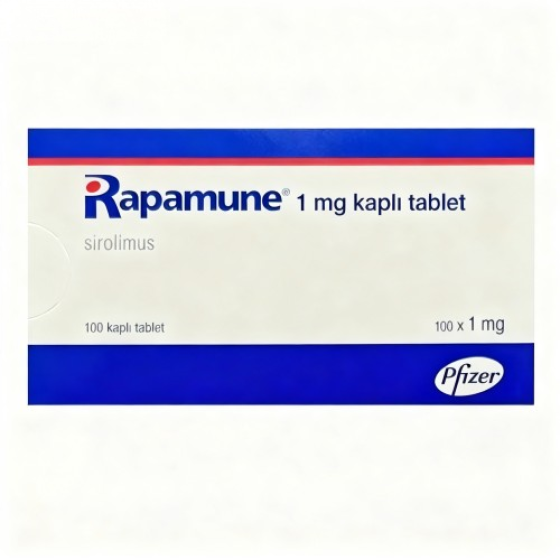
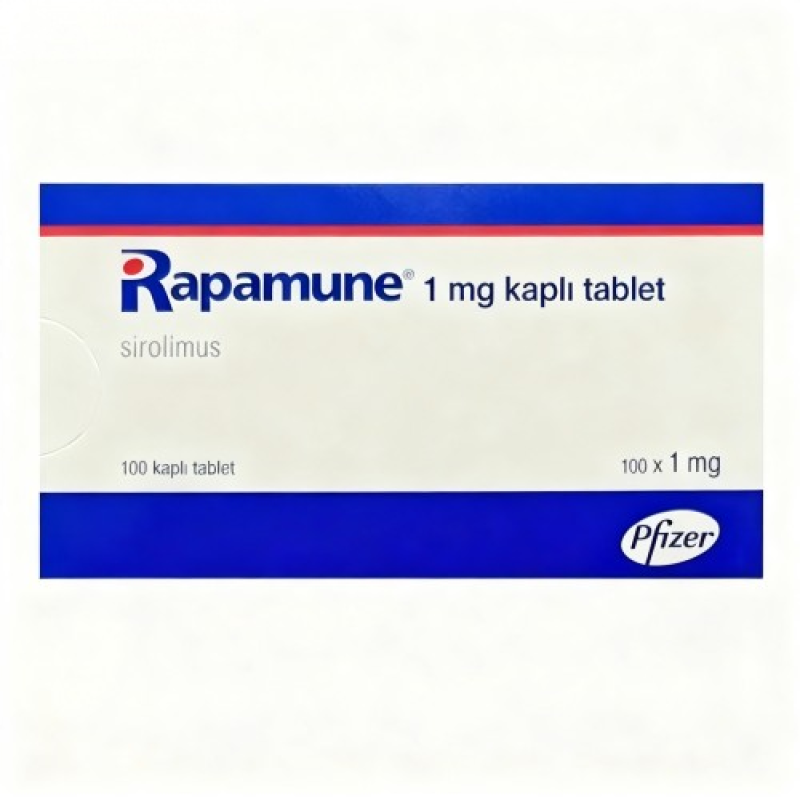
Sirolimus(brand name:Rapamune)is a novel macrolide immunosuppressant developed and manufactured by Wyeth Pharmaceuticals,USA.By inhibiting the activity of mammalian target of rapamycin(mTOR),it blocks the activation and proliferation of T lymphocytes,effectively preventing post-transplant organ rejection,and is widely used in renal transplant patients.The drug is usually combined with cyclosporine and corticosteroids,with the clinical advantage of low nephrotoxicity.
Indications
Prophylaxis of organ rejection in renal transplantation
Sirolimus is indicated for the prophylaxis of organ rejection in renal transplant recipients aged 13 years and older.
For patients with low to moderate immunological risk:initial combination with cyclosporine and corticosteroids is recommended,with cyclosporine tapered and discontinued 2 to 4 months after transplantation.
For patients at high immunological risk(including Black recipients,re-transplant recipients with prior graft loss due to immune causes,and patients with peak panel-reactive antibody[PRA]>80%):combination with cyclosporine and corticosteroids for 1 year after transplantation is recommended.
Limitations of use in renal transplantation
The cyclosporine withdrawal regimen has not been studied in patients with pre-transplant Banff grade 3 acute rejection or vascular rejection,dialysis dependence,serum creatinine>4.5 mg/dL,Black patients,multi-organ transplants,secondary transplants,or patients with high PRA levels.
The safety and efficacy of sirolimus combined with cyclosporine and corticosteroids beyond 1 year in high immunological risk patients have not been established;adjustments to the immunosuppressive regimen after 12 months post-transplant should be based on the patient’s clinical status.
Safety and efficacy in pediatric patients under 13 years of age,and adolescents under 18 years of age with high immunological risk,have not been established.
The safety and efficacy of initial sirolimus monotherapy without cyclosporine in renal transplant patients have not been verified.
The clinical value of switching from calcineurin inhibitors to sirolimus in maintenance renal transplant patients remains unclear.
Treatment of lymphangioleiomyomatosis
Sirolimus is approved for the treatment of lymphangioleiomyomatosis(LAM).
Dosage and Administration
Sirolimus is administered orally once daily,with or without food,but the administration mode should be consistent.Tablets must not be crushed,chewed,or split.Patients unable to swallow tablets may use the oral solution and follow standard administration instructions.
General dosing principles for renal transplant patients
Sirolimus therapy should be initiated as early as possible after transplantation,and it is recommended to be taken 4 hours after modified cyclosporine oral solution or capsules.
Due to the long half-life,frequent dose adjustments based on non-steady-state concentrations may lead to overdosage or underdosage.After each maintenance dose adjustment,at least 7 to 14 days of observation is required before further optimization based on blood concentrations.
Dose adjustment formula:New dose=Current dose×(Target concentration/Current concentration).
A loading dose may be used to significantly increase trough concentration:Sirolimus loading dose=3×(New maintenance dose−Current maintenance dose),with a maximum daily dose of 40 mg.If the calculated daily dose exceeds the limit,the loading dose should be given over 2 days.
Trough concentration should be monitored at least 3 to 4 days after loading dose administration.
2 mg sirolimus oral solution is clinically equivalent to 2 mg tablets and may be interchanged;milligram-equivalence for higher doses has not been established.
Renal transplant patients with low to moderate immunological risk
When combined with cyclosporine,the initial loading dose of sirolimus is 3 times the maintenance dose,e.g.,6 mg loading dose for a 2 mg daily maintenance dose,with subsequent concentration control via therapeutic drug monitoring.
Cyclosporine may be gradually tapered and discontinued over 4 to 8 weeks,2 to 4 months after transplantation.As cyclosporine inhibits sirolimus metabolism,the sirolimus dose should be increased to maintain target trough concentrations.
Renal transplant patients at high immunological risk
Combination therapy with sirolimus+cyclosporine+corticosteroids is recommended for 12 months after transplantation;regimens beyond 1 year require clinical evaluation.
A loading dose of up to 15 mg is given on day 1 post-transplant,with an initial maintenance dose of 5 mg daily starting on day 2;trough concentrations are monitored on days 5 to 7 for dose adjustment.Cyclosporine is initiated at up to 7 mg/kg/day in divided doses,with subsequent adjustment by concentration.Prednisone is dosed at no less than 5 mg daily,and antibody induction therapy may be used.
Patients with lymphangioleiomyomatosis
The starting dose is 2 mg daily.Whole-blood trough concentrations are monitored 10 to 20 days after initiation,maintained at 5 to 15 ng/mL.Dose adjustment principles are consistent with renal transplant patients;concentrations are monitored at least every 3 months once stable.
Therapeutic drug monitoring
Trough sirolimus concentrations are recommended for all patients,especially those with altered metabolism,aged≥13 years with body weight<40 kg,hepatic impairment,formulation changes,or concomitant use of strong CYP3A4 inducers/inhibitors.
Treatment adjustments should not rely solely on blood concentrations,but integrate clinical signs,tissue biopsy,and laboratory findings.
Concentrations are controlled per target ranges when combined with cyclosporine.After cyclosporine discontinuation in low to moderate risk patients,target trough concentrations are 16 to 24 ng/mL in the first post-transplant year,and 12 to 20 ng/mL thereafter.
These ranges are based on chromatographic assays;immunoassay results are not directly interchangeable,and target values should be adjusted according to the assay method.
Special physique and hepatic/renal impairment patients
For patients aged≥13 years with body weight<40 kg,the starting dose is 1 mg/m²/day,with a loading dose of 3 mg/m².
Maintenance doses are reduced by approximately 1/3 in mild to moderate hepatic impairment,and by 1/2 in severe hepatic impairment;loading doses require no adjustment.No dose adjustment is needed for renal impairment.
Adverse Reactions
In renal transplant patients for rejection prophylaxis,common adverse reactions(incidence≥30%)include peripheral edema,hypertriglyceridemia,hypertension,hypercholesterolemia,elevated serum creatinine,abdominal pain,diarrhea,headache,pyrexia,urinary tract infection,anemia,nausea,arthralgia,pain,and thrombocytopenia.
In patients with lymphangioleiomyomatosis,adverse reactions(incidence≥20%)include stomatitis,diarrhea,abdominal pain,nausea,nasopharyngitis,acne,chest pain,peripheral edema,upper respiratory tract infection,headache,dizziness,myalgia,and hypercholesterolemia.
Contraindications
Sirolimus is contraindicated in patients with hypersensitivity to sirolimus or any component of the product.
Precautions
Immunosuppression increases susceptibility to infections and the risk of malignancies including lymphoma and skin cancer,as well as opportunistic infections,fatal infections,and sepsis.Sirolimus should only be prescribed by physicians experienced in transplant immunosuppression,and patients should be managed in facilities with adequate medical resources.
Use in liver transplant patients is not recommended,as it may increase mortality,graft loss,and hepatic artery thrombosis.Use in lung transplant patients is also not advised,due to fatal bronchial anastomotic dehiscence.
Hypersensitivity reactions and angioedema may occur,with increased risk when combined with ACE inhibitors.Impaired wound healing,lymphoceles,and fluid retention may also occur,with higher risk in patients with BMI>30 kg/m².
Sirolimus frequently induces hyperlipidemia,requiring lipid monitoring and prompt dietary,exercise,and lipid-lowering interventions.Long-term combination with cyclosporine may impair renal function,necessitating regular monitoring of creatinine and glomerular filtration rate;it may also worsen proteinuria,requiring regular urine protein testing.
Latent virus reactivation should be monitored,including BK virus nephropathy and progressive multifocal leukoencephalopathy.Non-infectious interstitial lung disease may occur,with increased risk at high drug concentrations.
Sirolimus has embryo-fetal toxicity;effective contraception is required for individuals of reproductive potential.Male patients may experience oligospermia or azoospermia,mostly reversible after discontinuation.
Live vaccines should be avoided during treatment,and UV exposure limited to reduce skin cancer risk.Concomitant use with grapefruit juice is prohibited.Caution is advised with CYP3A4 and P-gp modulators;close concentration monitoring is required when combined with cannabidiol.
Use in Special Populations
Use in pregnant women may cause fetal harm;potential risks should be disclosed.Breastfeeding is not recommended,as the drug may cause serious adverse reactions in breastfed infants.
Females of reproductive potential must use effective contraception during treatment and for 12 weeks after discontinuation.Sirolimus may impair fertility in both sexes,causing azoospermia in males and ovarian cysts or menstrual disorders in females.
Use in pediatric renal transplant patients under 13 years and high-risk adolescents under 18 years is not recommended.Elderly patients,due to higher risk of hepatic and renal decline,should be dosed cautiously,usually starting at a low dose.
Drug Interactions
Sirolimus is a substrate of CYP3A4 and P-gp.Cyclosporine increases sirolimus concentrations,requiring 4-hour dosing separation;sirolimus doses must be increased after cyclosporine discontinuation.
Concomitant use with strong CYP3A4/P-gp inducers(e.g.,rifampicin)or inhibitors(e.g.,ketoconazole)should be avoided;grapefruit juice is prohibited.Caution and dose adjustment are needed with moderate or weak modulators.
Combination with cannabidiol may increase sirolimus levels,requiring toxicity monitoring and possible dose reduction.
Overdosage
Adverse reactions following overdosage are consistent with those observed at therapeutic doses.Supportive care is indicated.Dialysis is ineffective due to low aqueous solubility and high protein binding.
Pharmacokinetics
After oral administration,peak concentrations are reached at approximately 1 hour in healthy subjects and 2 hours in renal transplant patients,with absolute bioavailability of approximately 14%.Tablets have approximately 27%higher bioavailability than the oral solution.
High-fat meals increase drug exposure,requiring consistent dosing relative to food intake.
Sirolimus is approximately 92%bound to plasma proteins,extensively distributed in formed blood elements,metabolized mainly by hepatic and intestinal CYP3A4,with 91%excreted in feces.The terminal elimination half-life is approximately 62±16 hours.
[ 免责声明 ] 本页面内容来自公开渠道(如FDA官网、Drugs官网、原研药厂官网等),仅供持有医疗专业资质的人员用于医学药学研究参考,不构成任何治疗建议或药品推荐。所涉药品可能未在中国大陆获批上市,不适用于中国境内销售和使用。如需治疗,请咨询正规医疗机构。本站不提供药品销售或代购服务。