.jpeg)
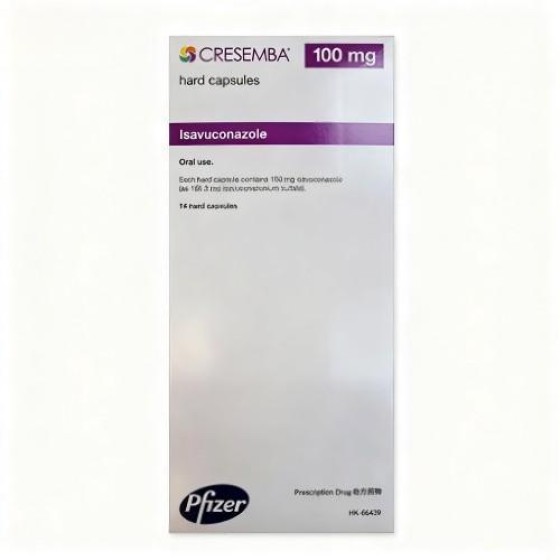
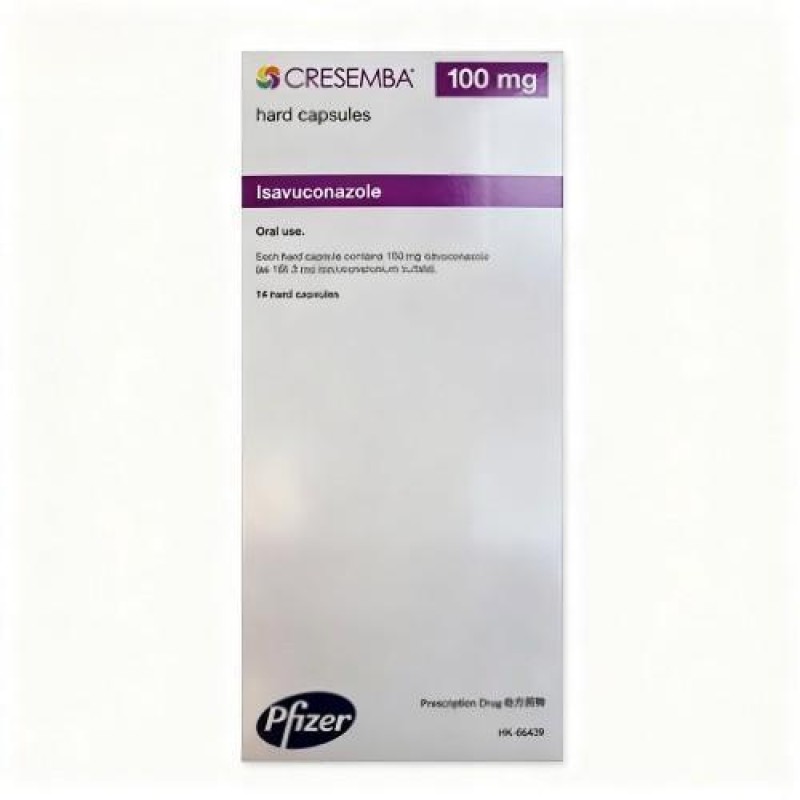
Instructions for Aishakangzuo Capsules
1.Basic information of drugs
Common name:Econazole Capsules
English name:Isavuconazonium Sulfate Capsules
Trade name:Cresemba
Main ingredients:Itraconazole,with a bioavailability of up to 98%after oral administration,can be rapidly converted into active ingredients to exert antifungal effects.
Characteristics:The capsule contents are white to yellow powder or lump.
II.Indications
This product is a novel oral antifungal medication,suitable for the treatment of fungal infections in the following populations:
1.Adult patients
It can be used to treat invasive aspergillosis and mucormycosis in patients who are not suitable for amphotericin B.
2.Children and adolescent patients
It is indicated for the treatment of invasive aspergillosis(IA)and invasive mucormycosis(IM)in children and adolescents aged 6 years and older with a body weight of≥16kg.
Note:Early targeted preemptive or diagnosis-driven therapy can be implemented.After confirmation of specific diagnostic test results,the antifungal treatment regimen needs to be adjusted promptly.
III.Usage and Dosage
(I)Dose regimen
1.Loading dose
Take 2 capsules every 8 hours for the first 48 hours,which is equivalent to an intake of 200mg of esketamine per dose.
2.Maintenance dose
Start taking it 12-24 hours after the last loading dose,once daily,with 2 capsules each time(equivalent to 200mg of esketamine).
3.Duration of treatment
It is determined by clinical response;for long-term treatment with a duration exceeding 6 months,a careful evaluation of the balance between benefits and risks is required.
(II)Instructions related to drug administration
1.Drug administration method
It can be taken on an empty stomach or with food.The entire tablet should be swallowed whole.Do not chew,crush,dissolve,or open the capsule.
2.Dose form switching
This product also comes in a concentrated powder formulation for intravenous infusion,containing 200mg of esaxatcanol.Due to its high oral bioavailability(98%),it can be flexibly switched between intravenous and oral administration when clinically indicated.
(III)Dose adjustment for special populations
1.Elderly patients
No dosage adjustment is required,but due to the limited clinical experience in elderly patients,close monitoring is necessary.
2.Patients with renal insufficiency
Including patients with end-stage renal disease,no dosage adjustment is required.
3.Patients with liver dysfunction
Patients with mild or moderate hepatic impairment(Child-Pugh Class A,B)do not require dosage adjustments;studies have not been conducted in patients with severe hepatic impairment(Child-Pugh Class C),and use is not recommended unless the potential benefits outweigh the risks.
4.Pediatric population
The safety and effectiveness of this product for children under 18 years of age have not been established,and there is no relevant clinical data to support its use.
IV.Adverse reactions
The most common adverse reactions include:nausea,vomiting,diarrhea,headache,elevated liver biochemical indicators,hypokalemia,constipation,dyspnea,cough,peripheral edema,and back pain.
V.Taboo
The use of this product is strictly prohibited for the following conditions:
1.Hypersensitivity to esaxaconazole sulfate or any excipient in this product;
2.Those who are taking medication in combination with ketoconazole;
3.Patients who are taking medication in combination with high-dose ritonavir(>200mg every 12 hours);
4.Patients who are taking strong CYP3A4/5 inducers(such as rifampin,rifabutin,carbamazepine,long-acting barbiturates,phenytoin,St.John's wort)or moderate CYP3A4/5 inducers(such as efavirenz,nafcillin,etravirine)in combination therapy;
5.Patients with familial short QT syndrome.
VI.Precautions
1.Liver-related adverse reactions:Severe liver reactions have been reported.Regular assessments of liver-related laboratory tests and close monitoring of liver function are required at the beginning and during treatment.
2.Infusion-related reactions:Infusion-related reactions may occur during intravenous administration.If they occur,the infusion should be terminated immediately.
3.Hypersensitivity reactions:During treatment with other azole antifungal drugs,severe hypersensitivity reactions such as allergic reactions and Stevens-Johnson syndrome,as well as severe skin reactions,have been reported.If exfoliative skin reactions occur during treatment with this product,the medication should be discontinued immediately.
4.Embryonic and fetal toxicity:It is not recommended for use in pregnant women,unless the assessed benefits to the mother outweigh the potential risks to the fetus.Pregnant patients need to be clearly informed of the relevant hazards.
5.Drug Interactions:This product interacts with multiple drugs,which may significantly alter the plasma concentration of esalate or other medications.Before administration,a comprehensive review of the patient's concomitant medications is necessary.
6.Intravenous preparations:After reconstitution,intravenous preparations may form insoluble particles,which require infusion through an online filter membrane during administration.
VII.Mechanism of action
Isaconazole is the active ingredient formed after oral or intravenous administration of isaconazole sulfate.It exerts its fungicidal effect by inhibiting the cytochrome P-450-dependent enzyme lanosterol 14-alpha-demethylase,which is responsible for converting lanosterol into ergosterol.This blocks the synthesis of ergosterol,a key component of fungal cell membranes.The inhibition of ergosterol synthesis leads to the accumulation of methylated sterol precursors and a deficiency of ergosterol in cell membranes,thereby disrupting the structure and function of fungal cell membranes and inhibiting fungal growth and reproduction.
VIII.Safety and efficacy
An intratracheal infection experiment(infection with Rhizopus delemar or Mucor circinelloides)conducted on neutropenic mice revealed that treatment with esaconazole alone,amphotericin B(L-AMB)alone,or a combination of the two was initiated 8 hours post-infection and continued until day 4.The placebo group received a vehicle control.The primary endpoint was 21-day survival rate,and the secondary endpoint was 4-day tissue fungal burden.
The results indicated that both esaconazole and L-AMB,when used alone,could prolong the median survival time and improve the survival rate of mice(the overall survival rate for both drug monotherapy groups was 50%,compared to only 5%for the placebo group).The overall survival rate reached as high as 80%in the combination therapy group.The fungal burden in any organ in the combination therapy group was reduced by 2.0-3.5 logs compared to the placebo group,while it was reduced by 1.0-2.0 logs in the monotherapy groups.Therefore,it can be concluded that the combination therapy of esaconazole and L-AMB is more effective than monotherapy in treating mucormycosis and is expected to become a preferred new treatment option for mucormycosis.
IX.Storage
Store at a temperature not exceeding 30°C,keep sealed,and avoid direct sunlight and high-temperature humid environments.
[ 免责声明 ] 本页面内容来自公开渠道(如FDA官网、Drugs官网、原研药厂官网等),仅供持有医疗专业资质的人员用于医学药学研究参考,不构成任何治疗建议或药品推荐。所涉药品可能未在中国大陆获批上市,不适用于中国境内销售和使用。如需治疗,请咨询正规医疗机构。本站不提供药品销售或代购服务。