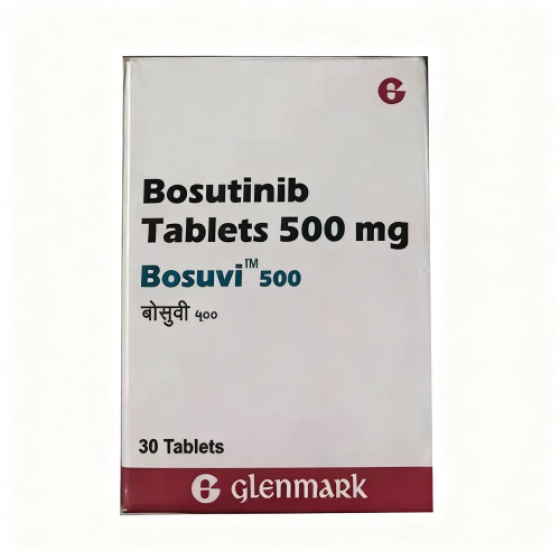
.jpeg)
Bosutinib for Ph+ CML: Eligible Populations, Food-Dependent Dosing, Diarrhea and Hepatotoxicity Monitoring
1.Position and Eligible Populations
Bosutinib inhibits BCR-ABL fusion kinase and related SRC-family signaling and is used across selected Philadelphia chromosome-positive chronic myeloid leukemia settings.
Adults:
Newly diagnosed chronic-phase Ph+CML when a second-generation TKI is appropriate.
Chronic-phase Ph+CML with resistance or intolerance to prior TKI,including imatinib.
Accelerated-phase or blast-phase Ph+CML with resistance or intolerance to prior therapy.
Children:
Chronic-phase Ph+CML from age 1 year,either newly diagnosed or resistant/intolerant to prior TKI.Pediatric dosing uses body surface area rather than adult tablet counts.
Do not use without confirming Ph/BCR-ABL status.Other myeloproliferative disorders,unclassified cytopenias,or suspected CML without karyotype/FISH/PCR should be worked up before starting.
2.Dosing and Administration
Adults,newly diagnosed chronic phase:400mg once daily with food.Adults with resistant/intolerant chronic,accelerated,or blast phase:500mg once daily with food.Continue until progression or unacceptable toxicity;if hematologic,cytogenetic,or molecular targets are unmet and no high-grade toxicity has occurred,clinicians may increase by 100mg steps up to 600mg once daily.
Children,newly diagnosed chronic phase:about 300mg/m²once daily with food.Children with resistant/intolerant chronic phase:about 400mg/m²once daily with food;up-titration depends on body surface area,with a usual ceiling around 600mg/day and lower maxima in some newly diagnosed pediatric regimens.
Administration rules:
Swallow whole tablets with water or a standard beverage unless the available formulation permits dispersion;do not split,crush,or chew unless the label allows.
Take with food to reduce gastrointestinal upset and keep a consistent daily time.
For missed doses,follow the product label;many adult regimens omit the dose if more than 12 hours have passed before the next scheduled dose rather than doubling.
Never self-adjust for diarrhea,transaminase rises,or cytopenias;dose changes belong to the treating hematologist.
3.Adverse Events and Monitoring
Very common reactions include diarrhea,nausea,vomiting,abdominal pain,rash,fatigue,headache,fever,and reduced appetite.Laboratory issues include neutropenia,thrombocytopenia,anemia,ALT/AST elevations,bilirubin changes,creatinine rise,and occasional amylase,lipase,phosphate,uric acid,or muscle-enzyme abnormalities.
Key safety management:
Diarrhea:mild cases use fluids,antidiarrheals,and dietary measures;grade 3–4 diarrhea or a major increase over baseline requires holding bosutinib,then resuming at a reduced or original dose per label.Persistent diarrhea with dehydration,fever,or blood in stool needs urgent care.
Hepatotoxicity:baseline ALT,AST,and total bilirubin;monitor at least monthly for the first 3 months,then by risk.Hold therapy for ALT at least 5 times the upper limit of normal;evaluate and discontinue if ALT elevation is accompanied by bilirubin at least 2 times the upper limit with alkaline phosphatase not markedly elevated,because drug-induced liver injury is possible.
Myelosuppression:schedule complete blood counts early and regularly;hold,reduce,or give supportive care for neutropenia,thrombocytopenia,or anemia.Fever with neutropenia is an infection emergency.
Fluid retention:assess peripheral edema,pleural effusion,weight gain,and dyspnea;investigate cardiac and renal function for moderate-to-severe retention and hold or reduce the drug when indicated.
Additional points:avoid pregnancy during treatment,assess risk-benefit in pregnancy,and usually stop breastfeeding;avoid or adjust strong CYP3A inhibitors and inducers because they change bosutinib exposure,and review PPI and other myelosuppressive or hepatotoxic drugs.Do not use in patients with a history of serious hypersensitivity to bosutinib.
4.Response Monitoring Boundaries
CML management requires more than symptom control.Track CBC,marrow findings when indicated,karyotype/FISH,and BCR-ABL PCR reported as international scale.Failure to reach expected responses at standard timepoints should prompt review of adherence,drug interactions,disease progression,and mutation testing.T315I and some other mutations may limit bosutinib activity;such cases need discussion of alternative generation TKIs or combination strategy rather than simple dose escalation.
[ 免责声明 ] 本页面内容来自公开渠道(如FDA官网、Drugs官网、原研药厂官网等),仅供持有医疗专业资质的人员用于医学药学研究参考,不构成任何治疗建议或药品推荐。所涉药品可能未在中国大陆获批上市,不适用于中国境内销售和使用。如需治疗,请咨询正规医疗机构。本站不提供药品销售或代购服务。