.jpeg)
Acalabrutinib BTK Covalent Inhibition: CLL/SLL Signaling Blockade, Non-Selective Effects, and Progression Monitoring
1.Mechanism and Target Profile
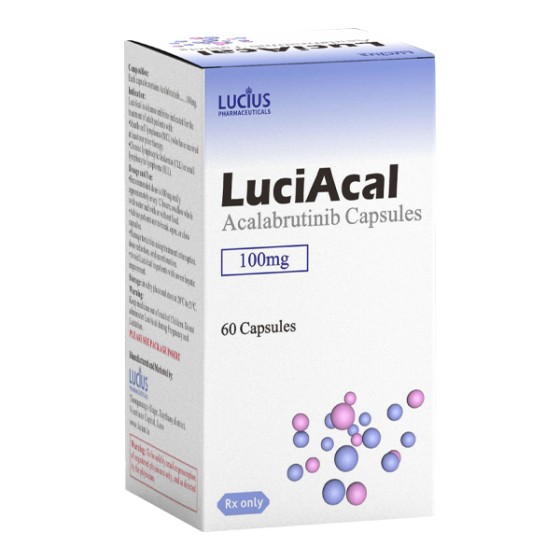
Acalabrutinib(some ex-US brands:Calquence)is a small-molecule,highly selective Bruton tyrosine kinase inhibitor.The parent drug and active metabolite ACP-5862 form covalent binding with a cysteine residue in the BTK kinase domain,inhibit BTK autophosphorylation,and block downstream B-cell receptor signaling through PLCγ2,NF-κB,ERK,and related pathways.
Unlike broad cytotoxic chemotherapy,it does not kill all rapidly dividing cells.It reduces BCR-dependent survival,proliferation,migration,and adhesion.Selectivity for BTK is relatively high,with weaker off-target activity against some other kinases such as EGFR,ITK,and TEC,but infection,bleeding,and cardiac risks still matter in clinical use.
2.Relevance in CLL/SLL
CLL/SLL is characterized by accumulation of mature-like B lymphocytes in blood,marrow,nodes,and spleen.Many clones rely on BCR and microenvironment signals for survival.BTK inhibition reduces BCR triggering,weakens downstream anti-apoptotic and chemotactic signaling,lowers proliferative drive,and can promote egress of tissue-based cells into peripheral blood followed by growth arrest or apoptosis.
The goal is durable signal suppression rather than elimination of all B cells.Acalabrutinib may be used as monotherapy or with anti-CD20 agents depending on prior therapy,risk stratification,fitness,and locally approved labeling.High-risk features such as TP53/17p deletion,unmutated IGHV,or complex karyotype require overall treatment planning and should not be managed by BTK inhibition alone.
3.Not Cancer-Only:Safety Boundaries
BTK also regulates normal B-cell development and immune signaling,so inhibition affects normal B cells and immunity,not only the malignant clone.
Infection:upper respiratory infections,sinusitis,pneumonia,and urinary infections are common;HBV reactivation,herpes zoster,fungal,and other opportunistic infections need attention.Screen HBV before therapy,review vaccinations,and evaluate fever promptly.
Cytopenias:neutropenia,anemia,and thrombocytopenia may occur;schedule CBC and treat febrile neutropenia as an infection emergency.
Bleeding:bruising and epistaxis are common;serious GI,intracranial,or other bleeding can occur.Review anticoagulants,antiplatelets,NSAIDs,and prior bleeding history;for planned surgery,assess whether to hold BTK inhibition to reduce bleeding risk.
Cardiac:atrial fibrillation/flutter may appear in patients with prior arrhythmia,hypertension,or heart disease;evaluate palpitations,chest pain,or dyspnea with ECG and cardiology input.
GI/systemic:headache,diarrhea,nausea,constipation,abdominal pain,fatigue,myalgia/arthralgia,and rash are common;investigate persistent or severe symptoms for alternative causes.
Second primary malignancies:skin cancers and others may occur with long-term therapy;use sun protection and routine dermatology checks.
Hepatic/interactions:monitor transaminases and bilirubin;avoid inappropriate strong CYP3A inhibitors/inducers,grapefruit products,certain azoles,macrolides,antiepileptics,and rifamyins after clinical-pharmacology review.Capsule versus tablet handling with acid-reducing agents differs by formulation.
4.Why Progression Can Occur on Targeted Therapy
BTK inhibition lowers BCR-dependent signaling but does not erase all CLL clones.Progression may result from:
Clonal evolution:BTK resistance mutations such as C481S,PLCG2 mutations,or downstream bypass activation;
Non-BCR survival pathways:microenvironment,NF-κB,or alternative receptor signaling compensation;
Adherence/interactions:missed doses,strong CYP3A inducers lowering exposure,or concomitant drugs altering levels;
Diagnostic mimics:infection,autoimmune cytopenias,or Richter transformation mistaken for simple resistance.
On any change in disease status,obtain CBC,CLL FISH,TP53/IGHV as appropriate,nodal imaging,and biopsy when transformation is suspected;consider BTK/PLCG2 sequencing if resistance is likely.Hematology should decide whether to switch to a non-covalent BTK inhibitor,BCL-2–based combination,anti-CD20 therapy,chemoimmunotherapy,or another approved regimen.Do not label failure based only on mild fatigue or slightly enlarged nodes.
5.Monitoring and Urgent Signals
Baseline:CBC,hepatic/renal function,HBV/HCV/HIV by risk,ECG if arrhythmia/hypertension history,infection and vaccine assessment.During therapy,repeat blood counts and liver tests per protocol;record diarrhea frequency,bleeding,fever,palpitations,dyspnea,jaundice,and persistent headache.Seek urgent care for black/tarry stools,hematemesis,symptomatic intracranial bleeding,high fever or localized infection,syncope/chest pain/arrhythmia,dehydrating diarrhea,marked transaminase/bilirubin rise,or new neurologic deficits suggestive of PML.
[ 免责声明 ] 本页面内容来自公开渠道(如FDA官网、Drugs官网、原研药厂官网等),仅供持有医疗专业资质的人员用于医学药学研究参考,不构成任何治疗建议或药品推荐。所涉药品可能未在中国大陆获批上市,不适用于中国境内销售和使用。如需治疗,请咨询正规医疗机构。本站不提供药品销售或代购服务。