
.jpeg)
What key information is included in the package insert for Pitobrutinib/Zepari
1. Drug names and aliases
Common name: Pirtobrutinib,Pirtobrutinib
Product name: Jaypirca, Jaypirca
Other names: LOXO-305, Pitobrutinib
2. Indications
The indications of Pirtobrutinib/Jepali (Pirtobrutinib) mainly include relapsed or refractory mantle cell lymphoma and relapsed or refractory chronic lymphocytic leukemia /small lymphocytic lymphoma.
Specifically, pitubrutinib has shown effective efficacy in adult patients who have received at least two systemic therapies, especially those who have relapsed after treatment with a BTK inhibitor.
At the same time, for patients with relapsed or refractory chronic lymphocytic leukemia (CLL)/small lymphocytic lymphoma, the drug is also suitable for patients whose disease cannot be controlled after at least two treatments, including a BTK inhibitorand aBCL-2 inhibitor.
3. Usage and dosage
1. Recommended dosage: The recommended usage of Pitobrutinib is 200 mg orally once daily. Patients can choose to take it before or after eating. The specific time does not affect the efficacy of the drug. Treatment should be continued until disease progression or unacceptable toxicity occurs.
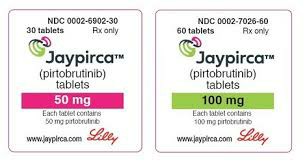
2. Dose adjustment:
(1) For patients with severe renal impairment (eGFR 15-29 mL/min), if the patient's current dose is 200 mg daily, it needs to be adjusted to 100 mg daily. If the current dose is 50 mg, you need to stop using Pitobrutinib.
(2) When using strong CYP3A inhibitors, it is recommended to reduce the dose of pitubutinib by 50 mg; if the current dose is 50 mg, treatment should be interrupted. After 5 half-lives of discontinuation, the original dose can be resumed.
(3) When patients require concurrent treatment with strong or moderate CYP3A inducers, if the current dose is 200 mg, it should be increased to 300 mg, and if the dose is 50 mg or 100 mg, the dose should be increased by 50 mg.
4. Adverse reactions
The safety of pitubrutinib has been extensively evaluated in clinical trials. Common adverse reactions include neutropenia, decreased hemoglobin, and decreased platelet count. These adverse reactions were observed in ≥20% of patients, and in addition, fatigue, musculoskeletal pain, diarrhea, edema, dyspnea, pneumonia, and bruising were reported in ≥15% of patients.
5. Storage conditions
For the storage of the drug, it is recommended that Pitobrutinib tablets be placed at a room temperature of 20°C to 25°C, with the temperature allowed to fluctuate between 15°C and 30°C. Maintaining the stability of a drug is critical to ensuring its efficacy, so high temperature or humid environments should be avoided.
6. Precautions for special groups of people
For special groups, especially female patients, the use of pitubrutinib needs to be cautious. Animal studies have shown that the drug may harm the fetus when taken by pregnant women, so women of childbearing potential must use effective contraception during treatment. Additionally, given the potential for the drug to be excreted in breast milk, women are advised to avoid breastfeeding during treatment and for one week after final dosing to protect the health of their infant.
7. Mechanism of action
Pitobrutinibas a small molecule non-covalentBTK inhibitor works by binding to BTK and inhibiting its activity. BTK plays an important role in B cell signaling, involved in B cell proliferation, migration, and survival. The drug can effectively inhibit BTK-mediated signaling, thereby affecting the proliferation of malignant B cells.
In a number of non-clinical studies, pitubrutinib has shown good anti-tumor activity, especially in BTK wild-type and C481S mutant mouse models. Its anti-tumor effect is dose-dependent, indicating that the drug has potential application prospects in the treatment of related lymphomas.
Reference materials:https://go.drugbank.com/drugs/DB17472
[ 免责声明 ] 本页面内容来自公开渠道(如FDA官网、Drugs官网、原研药厂官网等),仅供持有医疗专业资质的人员用于医学药学研究参考,不构成任何治疗建议或药品推荐。所涉药品可能未在中国大陆获批上市,不适用于中国境内销售和使用。如需治疗,请咨询正规医疗机构。本站不提供药品销售或代购服务。


