
.jpeg)
The efficacy and role of capmatinib (Touradida) and the types of cancer suitable for treatment
1. Drug introduction and mechanism of action
Capmatinib (Capmatinib) is an oral small molecule tyrosine kinase inhibitor (TKI), which mainly targets tumors with abnormal MET (Mesenchymal-Epithelial Transition Factor) kinase. METThe gene is involved in signal transduction, cell proliferation, migration and survival in normal cells, but it may be abnormally activated in a variety of cancers, such as METExon 14skipping mutation (METex14 skipping) or MET gene amplification, such abnormalities can drive tumor initiation, progression and drug resistance.
Capmatinib binds and inhibits MET receptor tyrosine kinase with high selectivity, blocking its downstream signaling pathways (such as RAS-RAF-ME K-ERKandPI3K-AKT-mTOR pathways), thereby inhibiting tumor cell proliferation, inducing apoptosis, and reducing tumor angiogenesis and metastasis potential. This precise targeting mechanism enables it to show significant efficacy in tumors driven by MET abnormalities while reducing toxicity to normal tissues.
2. Main functions and clinical applications
The core effect of capmatinib is to inhibit the growth and progression of MET driven tumors. Its effects are reflected in the following aspects:
1.Anti-tumor proliferation and induction of apoptosis: By selectively inhibiting MET signals, blocking tumor cell proliferation signals and promoting cancer cell apoptosis.
2.Inhibition of tumor invasion and metastasis: MET Abnormalities are often related to enhanced tumor invasiveness and distant metastasis. Capmatinib can inhibit the migration ability of cancer cells and reduce the risk of metastasis.
3. Improve patient symptoms and quality of life: In patients with advanced or metastatic tumors, targeted therapy can shrink lesions and reduce symptoms such as dyspnea, cough, and pain, thereby improving quality of life.
4.Potential effect on patients with brain metastasis: Some clinical studies have shown that capmatinib has the ability to cross the blood-brain barrier and may bring additional benefits to patients with METabnormalNSCLC accompanied by brain metastasis.
Clinical studies have shown that capmatinib has an objective response rate (ORR) of approximately 40%–45%, the disease control rate (DCR) exceeds 70%, and some patients can obtain remission that lasts for many months. For METamplified NSCLC or other MET driven solid tumors, capmatinib has also shown certain efficacy, especially in patients who have failed previous chemotherapy or immunotherapy, becoming a feasible targeted solution.
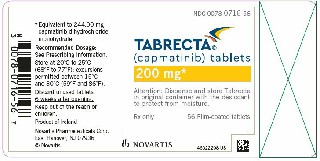
3. Types of cancer suitable for treatment
Capmatinib is mainly suitable for MET tumors driven by abnormalities, including:
1.Non-small cell lung cancer (NSCLC): METExon14 Skipping mutation or MET high amplification patients are the core treatment population of capmatinib. Capmatinib can be used as a targeted therapy option for patients with advanced NSCLC after standard chemotherapy fails, showing a high response rate and disease control rate.
2.Other MET driven solid tumors: including gastric cancer, colorectal cancer, hepatocellular carcinoma and a small number of MET amplification or mutation-positive patients. In these rare subtypes, capmatinib has potential anti-tumor effects by blocking MET signaling.
3.Patients with brain metastases: Some patients with NSCLC or other MET abnormal solid tumors have brain metastases. Capmatinib may have a certain penetration into the central nervous system and have an inhibitory effect on brain metastases, providing a new option for patients who cannot tolerate chemotherapy.
In actual clinical practice, METAbnormal detection methods include tissue biopsy and liquid biopsy (ctDNA). Screening of patients suitable for capmatinib through genetic testing is the core link of precision medicine.
4. Clinical advantages and safety
Compared with traditional chemotherapy, capmatinib has the following advantages:
1.Precise targeting: It only acts on MET abnormal tumor cells, causing little damage to normal tissues and relatively mild side effects.
2.Quick onset of effect: Some patients can observe imaging shrinkage and symptom improvement within the first course of treatment.
3. Well tolerated: Common adverse reactions include edema, nausea, fatigue and elevated liver enzymes, most of which are mild to moderate and can be managed through dose adjustment or supportive treatment.
4.Potential for combined treatment: Capmatinib is being studied in combination with immune checkpoint inhibitors or chemotherapy to further improve efficacy and prolong remission time.
Overall, capmatinib has become an important targeted drug option for patients with MET abnormally driven tumors due to its highly selective inhibition of MET signals, good efficacy and controllable safety. Its application in advanced NSCLC and other MET-driven solid tumors reflects the development trend of precision medicine and brings new treatment hope to patients.
Capmatinib (Capmatinib) is a MET selective inhibitor that inhibits tumor proliferation, induces apoptosis, and reduces metastasis by blocking the MET driven signaling pathway. It is suitable for patients with RETfusion-positive non-small cell lung cancer, METamplification or METex14 mutationNSCLC and some other MET abnormal solid tumors. Its precise targeting, efficient tolerance, and potential to cross the blood-brain barrier give it significant advantages in the treatment of advanced tumors. Patients should confirm their MET status through genetic testing and use it under the guidance of a professional doctor to obtain the best efficacy and reduce the risk of side effects.
Reference link:https://www.drugs.com
[ 免责声明 ] 本页面内容来自公开渠道(如FDA官网、Drugs官网、原研药厂官网等),仅供持有医疗专业资质的人员用于医学药学研究参考,不构成任何治疗建议或药品推荐。所涉药品可能未在中国大陆获批上市,不适用于中国境内销售和使用。如需治疗,请咨询正规医疗机构。本站不提供药品销售或代购服务。


