
.jpeg)
What is the therapeutic effect of taking Platinib (Pujihua) for 60 days in the late stage of lung cancer?
1. Drug introduction and mechanism of action
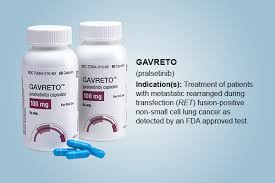
Pralsetinib (Pralsetinib) is an oral small molecule tyrosine kinase inhibitor (TKI) that is a RET (rearrangement translocation oncogene) selective inhibitor. RETGene rearrangement is a rare type of driver gene mutation in non-small cell lung cancer (NSCLC), accounting for approximately 10% of late-stage NSCLC1%–2% of patients. RETfusion-positive tumors have limited response to conventional chemotherapy but show significant efficacy to RETspecific inhibitors. Platinib inhibits tumor cell proliferation and promotes apoptosis by selectively binding to RET tyrosine kinase, inactivating it and blocking downstream signaling pathways (such as RAS-RAF-MEK-ERK and PI3K-AKT-mTOR).
Platinib has shown high selectivity and controllable safety in clinical studies, and is an important treatment option for patients with advanced RET fusion-positive NSCLC patients. It is especially suitable for patients who have failed or are resistant to previous chemotherapy and immunotherapy, as well as some patients with central nervous system (brain metastasis) lesions, showing good tissue penetration and tumor control capabilities.
2. Observation on the efficacy of medication for 60 days
Under the condition of continuous taking platinib**60 days (about 2 courses) **, the clinical efficacy of RET fusion-positive advanced lung cancer patients is mainly reflected in the following aspects:
1.Tumor imaging changes: Multiple II phase clinical trials (such as the ARROW study) have shown that patients taking medication< Imaging manifestations of partial remission (PR) or stable disease (SD) can appear in /span>8 weeks or so. CT or PET-CTThe examination can reveal the shrinkage of tumor nodules, especially in the primary lung lesions and some lymph node metastasis sites. Some patients' brain metastases may also shrink or become stable, which shows that platinib has a certain ability to penetrate the central nervous system.
2.Symptom improvement: Patients with advanced lung cancer are often accompanied by symptoms such as dyspnea, cough, fatigue and chest pain. After continuous medication for 60 days, some patients' symptoms were significantly relieved and their quality of life improved. This improvement is closely related to the reduction of tumor burden, and also benefits from the lower toxic and side effect spectrum of platinib, which is generally well tolerated by patients.
3.Biomarker and laboratory index changes: In RET fusion-positive patients, the use of platinib can reduce the levels of tumor markers in the blood, such as CEA, CYFRA21-1, etc., indicating the effectiveness of treatment. Some patients' hemogram, liver and kidney function did not change much during early monitoring and could be maintained within a safe range.
4.Resistance and tolerance assessment: A course of continuous 60 days usually does not result in obvious acquired resistance, but attention should be paid to mild to moderate side effects, such as hypertension, mild abnormalities in liver function, fatigue and slight decreases in hematological indicators. Most adverse reactions can be resolved through dose adjustment, symptomatic treatment or short-term drug withdrawal without affecting the overall efficacy.
3. Comparison between clinical research and real-world data
ARROWet alII phase clinical study shows that for patients with advanced RETfusion-positiveNSCLC, platinib has an objective response rate (ORR) It is about 60%, the disease control rate (DCR) exceeds 90%, and the median duration of response (DoR) can reach more than 17 months. Short-term medication of 60days mainly reflects early response: most patients can achieve partial remission or disease stabilization within 4–8 weeks of medication.
Real-world data also show that RETpatients with advanced fusion are receiving continuous medication2Within months, most patients can achieve radiographic shrinkage and symptom improvement. Compared with chemotherapy, platinib has significant early efficacy and better tolerability, laying the foundation for subsequent long-term treatment. Especially for patients with brain metastases, platinib shows better central nervous system activity, which is difficult to achieve in traditional chemotherapy.
4. Individual Differences and Medication Management
Although most patients can observe early effects after taking the drug for 60 days, there are individual differences in specific responses. The efficacy is affected by many factors, including patient age, tumor burden, concomitant gene mutations, previous treatment history, and systemic status. Some patients may require a longer period to see significant shrinkage, or may experience adverse reactions and require moderate dosage adjustments.
In terms of medication management, it is recommended that patients undergo regular imaging review, laboratory monitoring and symptom assessment within 60 days. Routine monitoring of blood pressure, liver and kidney function, and blood routine can help detect side effects in time and adjust the plan. At the same time, patients should cooperate with their doctors to evaluate their quality of life, physical status and medication compliance to optimize the effect of the treatment.
To sum up, after patients with advanced RETfusion-positive NSCLC continue to take 60Templatinib, positive effects such as early tumor shrinkage, symptom improvement and tumor marker decline can usually be observed. The side effects are generally controllable and well tolerated, providing a solid foundation for long-term treatment. Although the efficacy fluctuates due to individual differences, a 60-day course of treatment can already preliminarily evaluate the patient's response to RET inhibitors and provide an important reference for subsequent treatment decisions.
Platinib's rapid onset of action, good tolerability and potential control of brain metastases make it an important targeted therapy option for patients with advanced RET fusion lung cancer. Patients should undergo course management under the guidance of professional doctors, and conduct individualized assessments combined with imaging and laboratory monitoring to ensure safe and efficient completion of treatment.
Reference link:https://www.drugs.com
xa0
[ 免责声明 ] 本页面内容来自公开渠道(如FDA官网、Drugs官网、原研药厂官网等),仅供持有医疗专业资质的人员用于医学药学研究参考,不构成任何治疗建议或药品推荐。所涉药品可能未在中国大陆获批上市,不适用于中国境内销售和使用。如需治疗,请咨询正规医疗机构。本站不提供药品销售或代购服务。


