
.jpeg)
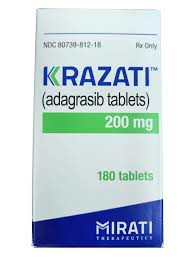
Full text of adagrasib (Krazati) instructions and detailed analysis of indications, usage and side effects
1. Drug background and mechanism of action
Adagrasib is a KRAS G12C inhibitor developed by Mirati Therapeutics . KRAS mutations are common in a variety of tumors, and KRAS G12C mutations are important driver genes for malignant tumors such as non-small cell lung cancer (NSCLC) and colorectal cancer (CRC). Adagrasib irreversibly binds to the KRAS G12C protein and blocks its signaling pathway, thereby inhibiting the growth and division of cancer cells. Similar to Sotorasib (Sotorasib), it is currently one of the important drugs in the global KRAS targeted treatment.
2. Indications and population range
According to U.S. FDA instructions (latest label as of 2025 ), the approved indications of adagrasib include:
1.Non-small cell lung cancer (NSCLC)
Applicable to patients with locally advanced or metastatic non-small cell lung cancer who have KRAS G12C mutation.
These patients had disease progression despite at least one systemic therapy, such as platinum-based chemotherapy or immune checkpoint inhibitors.
Before treatment, the presence of KRAS G12C mutation must be confirmed through a companion diagnostic method approved by FDA .
2.Colorectal cancer (mCRC) combination therapy (approved at the end of 2024 )
Adagrasiib combined with cetuximab (Cetuximab) is used in patients with KRAS G12C mutated metastatic colorectal cancer that has progressed after standard chemotherapy.
Clinical research (KRYSTAL-1 and other trials) have shown that this combination regimen has a certain response rate and survival benefit in patients who have failed previous multiple lines of treatment.
3. Usage, dosage and dosage adjustment
1.Recommended dosage
The standard dose is 600 mg Oral twice daily until disease progression or unacceptable toxicity.
The common specifications on the market are 200 mg capsules, that is, 3 capsules are taken each time, for a total of 6 capsules a day.
2.How to take medicine
It can be taken with food or on an empty stomach, but it is recommended to take the medicine at a fixed time to ensure stable blood concentration.
Capsules should be swallowed whole and not crushed or chewed.
If you miss a dose and it is more than 4 hours before the next dose, you can take it as soon as possible; if it is less than 4 hours, skip the dose and do not double the dose.
3.Dose adjustment
When grade 3 or above toxicity occurs, administration should be suspended. After recovery to ≤1 grade, the dose can be reduced to 400 mg twice a day, and further reduced to 600 mg once a day if necessary.
If the patient cannot tolerate the lowest dose, the drug needs to be permanently discontinued.
4. Drug interactions
1.Gastric acid inhibitor: Adagrasib has better solubility in acidic environment. Avoid concurrent use of proton pump inhibitors (PPI, such as omeprazole). If combined use is necessary, H2 receptor antagonists or antacids should be used instead, and the time should be staggered reasonably.
2.CYP3A4 Metabolism: adagrasib is a CYP3A4 substrate, strong CYP3A4 Inhibitors or inducers (such as rifampicin, ketoconazole) may affect its plasma concentration, and their combined use should be avoided.
3.Electrocardiogram effects: Adagrasib may prolong the QT interval. If combined with other similar drugs (such as antiarrhythmic drugs), enhanced monitoring is required.
5. Adverse reactions and monitoring points
In clinical trials (KRYSTAL-1), common adverse reactions include:
1.Gastrointestinal reactions:
The incidence of nausea, vomiting, diarrhea, and constipation is relatively high, and some patients require symptomatic medication (antiemetics, antidiarrheals).
2.Abnormal liver function:
ALT, AST are elevated, and a few have hepatotoxicity above 3 grade, so liver function needs to be monitored regularly (before treatment and every 2–3 weeks before treatment).
3.Fatigue and loss of appetite:
Some patients experience fatigue and weight loss and require nutritional intervention and appropriate exercise.
4.Respiratory system events:
Rarely occurs Interstitial pneumonia (ILD) or lung inflammation. If new or worsening cough or dyspnea occurs, the drug should be discontinued immediately and investigated.
5. Cardiac electrophysiological effects:
QT There is a risk of prolongation of the QT interval. Regular electrocardiogram and electrolyte monitoring is recommended during treatment, especially for patients with underlying cardiac diseases.
6.Laboratory abnormalities:
Anemia, leukopenia, elevated blood creatinine, etc. require regular blood routine and renal function testing.
6. Medication for Special Populations
1.Pregnant and lactating women: There is no sufficient data yet. Animal experiments suggest there may be potential risks to the fetus. Use should be avoided during pregnancy. Breastfeeding women should stop breastfeeding during treatment and for at least 1 weeks after stopping the drug.
2.Elderly: The overall tolerability is not much different from that of young people, but adverse reactions still need to be closely monitored.
3. Patients with abnormal liver and kidney function: Patients with mild to moderate liver damage or reduced renal function generally do not need to adjust the dose. However, there is insufficient data on severe liver damage and should be used with caution.
7. Clinical efficacy and latest progress
1.NSCLC: KRYSTAL-1 In the study, KRAS G12C mutation NSCLC patients The objective response rate (ORR) is about 43%, and the median duration of response (DoR) exceeds 8 months, showing good efficacy.
2.mCRC: In the KRYSTAL-1 colorectal cancer cohort, the ORR of adagrasiib combined with cetuximab reached approximately 35%, the median progression-free survival (PFS) is between 6–7 months, which is significantly better than traditional treatment.
3.Other tumor exploration: Adagrasib is also conducting clinical trials in pancreatic cancer, biliary tract cancer, etc. KRAS G12C mutated solid tumors, and the results are gradually announced.
8. Summary of medication precautions
1.Before taking the drug, you must pass: Companion Diagnosis Confirmation KRAS G12C mutation.
2.Strictly follow the recommended dosage of: 600 mg twice a day. Do not increase or decrease on your own or skip or overdose.
3.During treatment, liver function, blood routine, and electrocardiogram need to be monitored regularly.
4.Avoid simultaneous use with PPI, strong CYP3A4 inhibitors/ inducers: adjust under the guidance of a doctor if necessary.
5.If serious adverse reactions occur (such as persistent vomiting, difficulty breathing, jaundice, chest tightness and palpitations), you should seek medical treatment immediately and suspend medication.
6.Female patients should avoid contraception and avoid breastfeeding during medication and for at least 1 weeks after the last dose.
Adagrasib (Krazati ), as a new generation of KRAS G12C targeted drugs, brings treatment hope to patients with KRAS mutations that were previously “undruggable”. It has shown clinical benefit in non-small cell lung cancer and colorectal cancer. However, due to the high price of the drug and the need to monitor toxicity, patients should use it under the guidance of professional doctors. In the future, with the accumulation of more clinical data and progress in medical insurance negotiations, adagrasib is expected to benefit more patients.
Reference link:https://www.drugs.com
[ 免责声明 ] 本页面内容来自公开渠道(如FDA官网、Drugs官网、原研药厂官网等),仅供持有医疗专业资质的人员用于医学药学研究参考,不构成任何治疗建议或药品推荐。所涉药品可能未在中国大陆获批上市,不适用于中国境内销售和使用。如需治疗,请咨询正规医疗机构。本站不提供药品销售或代购服务。


