
.jpeg)
The complete version of the instruction manual and detailed analysis of the medication precautions for Sotoracib (AMG 510)
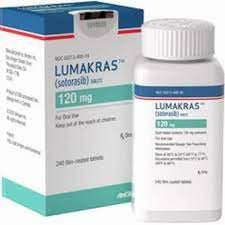
The following is a summary of the key points and medication precautions for Sotorasib (Sotorasib, trade name: LUMAKRAS®/LUMYKRAS®) that combines the latest label information in 2025 to facilitate patients and family members to understand and communicate with doctors (not a substitute for medical advice).
1. Indications and testing requirements
Sotorasiib is an irreversible inhibitor targeting KRAS G12C . Currently, the US FDA has approved two categories of indications: ① Single drug for KRAS G12C mutated locally advanced or metastatic non-small cell lung cancer (NSCLC) after at least one systemic treatment; ② In combination with panitumumab (panitumumab), it is used for KRAS G12C mutated metastatic colorectal cancer (mCRC) after previous treatment with fluoropyrimidine, oxaliplatin, and irinotecan. Before treatment, a companion diagnostic approved by FDA must be confirmed KRAS G12C mutation; NSCLC Plasma (liquid biopsy) can be done first, if negative, tumor tissue re-examination is recommended; mCRC According to label requirements, tumor tissue testing shall prevail. The above NSCLC is an accelerated approval, and continued marketing depends on the results of confirmatory studies.
2. Recommended dosage and administration method
The standard recommended dose is 960 mg Take orally, once a day, before or after meals. Swallow the tablet whole without chewing, crushing or dividing; if swallowing is difficult, disperse it in 120 mL Stir in room temperature non-carbonated water for about 3 immediately (or 2 hours), and make a cup with 120 mL water. In the combination therapy of mCRC , the dose of sotoraxib is still 960 mg QD, and the first dose should be given before the first panitumumab infusion; the dosage of panitumumab is performed according to its instructions. If you miss a dose for more than 6 hours or you vomit after taking the medicine, do not take it again. There will be no supplementary dose on that day and you will continue at the regular time the next day.
3. Dose adjustment and use with acid inhibitors
Adverse reactions can be downgraded according to label classification 480 mg QD, and then reduce to 240 mg QD if necessary; if sotoraxib needs to be suspended or discontinued, panitumumab should also be suspended or discontinued accordingly when used in combination. Sotoracib solubility is affected by intragastric pH : avoid combination with PPI (such as omeprazole) or H2 Concomitant use of receptor antagonists (such as famotidine); if unavoidable, it can only be used in combination with topical antacids at a staggered time, and sotoracib should be taken 4 hours earlier than antacids or later than 10 hours to avoid decreased exposure and influence on efficacy.
4. Important interactions
Concomitant use with strong CYP3A4 inducers (such as rifampicin) should be avoided to avoid reduced drug exposure; at the same time, sotoraxib can affect certain substrate drugs: use CYP3A4, P-gp, BCRP Drugs of the same channel may experience changes in exposure when used together, and the dosage needs to be monitored and adjusted according to the other party's instructions, especially for drugs that may fail or cause serious toxicity if a slight change in concentration occurs. When seeking medical attention, be fully informed about your use of prescription drugs, over-the-counter drugs, vitamins, and herbal supplements.
5. Common adverse reactions and monitoring
In NSCLC studies, common adverse reactions ≥10% include diarrhea, nausea, vomiting, constipation, abdominal pain, as well as hepatotoxicity (elevated transaminase), fatigue, edema, cough, rash, etc.; laboratory abnormalities are represented by ALT/AST Elevated alkaline phosphatase, anemia/leukopenia, etc. are more common. Liver function should be monitored at baseline and regularly during treatment; if there are signs of ILD/interstitial pneumonia (new or worsening cough, shortness of breath, fever), the drug should be evaluated immediately and the drug should be suspended or permanently discontinued as appropriate. Most hepatotoxicity can be improved by stopping the drug, reducing the dose and combining it with glucocorticoids.
6. Special groups and medication tips
There is a lack of human data during pregnancy; animal studies suggest no embryonic teratogenicity within 4.6 times clinical exposure , but pregnancy should only be considered when the benefits outweigh the risks. Recommended for lactation during treatment and after last dose 1 Do not breastfeed during the first week of pregnancy. There is no significant difference in the overall safety and efficacy in the elderly; mild to moderate liver function abnormalities usually do not require initial dose adjustment, but close monitoring is still required. Storage: 20–25 °C Protect from light and dry, and store according to instructions.
7. Key points of combination therapy for colorectal cancer (2025 new)
2025 Year 1 Month, FDA approved sotoraxib combined with panitumumab for KRAS G12C mutation after previous treatment mCRC, based on CodeBreaK-300 and other studies have shown that this combination is superior to the studied standard regimen in terms of progression-free survival. In clinical practice, attention needs to be paid to the superposition and management of adverse reactions such as rash, electrolyte abnormalities, diarrhea, and elevated liver enzymes; if sotoraxib requires temporary or permanent discontinuation, panitumumab should be suspended or discontinued accordingly.
8. Patient medication list and medical consultation suggestions (practical operation)
1) Before starting treatment, prepare a medication list (including stomach medicines/health products), and check with the doctor one by one whether they can be used together; 2) Take the medication once a day at a fixed time, if you miss a dose>6 If you vomit after hours or after taking it, do not take more; 3) It is strictly forbidden to increase or decrease the dosage by yourself or take it with stomach medicine. If you must use stomach medicine, be sure to press "4 hours ago/10 Hours later" is wrong; 4) every 2–4 Recheck liver function every week. If shortness of breath, persistent diarrhea or rash, edema, jaundice, etc. occur, seek medical attention promptly; 5) mCRC Patients undergoing combined treatment should implement linkage management of adverse reactions according to the instructions of the two drugs.
Reference link:https://www.drugs.com
[ 免责声明 ] 本页面内容来自公开渠道(如FDA官网、Drugs官网、原研药厂官网等),仅供持有医疗专业资质的人员用于医学药学研究参考,不构成任何治疗建议或药品推荐。所涉药品可能未在中国大陆获批上市,不适用于中国境内销售和使用。如需治疗,请咨询正规医疗机构。本站不提供药品销售或代购服务。


