
.jpeg)
The application effect of Midostaurin in the treatment of leukemia
Midostaurin, as a targeted therapy drug that has developed rapidly in recent years, has attracted widespread attention for its clinical application in the field of acute myeloid leukemia (AML). It is mainly intended for AML patients who carry FLT3 gene mutations. This group of people often has a higher relapse rate and worse treatment prognosis, and traditional chemotherapy regimens are difficult to effectively control the disease.
The drug inhibits leukemia cell proliferation and anti-apoptosis mechanisms by targetingFLT3 receptor kinase. It is a multi-target tyrosine kinase inhibitor. It is usually used in combination with standard induction chemotherapy and consolidation therapy to intervene in the targeted mechanism from the early stage of the disease. It not only enhances the control of mutated leukemia cells, but also improves the complete remission rate and prolongs disease-free survival. Some studies have also explored its value in maintenance therapy. Especially in patients who are unable to undergo bone marrow transplantation, midostaurin may have positive significance as a single agent for long-term maintenance.
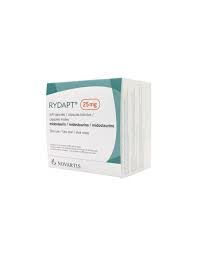
Compared with traditional treatment methods, the biggest advantage of midostaurin is its strong targeting and relatively low systemic toxicity. Although it cannot completely replace chemotherapy, its synergistic effect can significantly improve the overall treatment effect. Especially in high-risk patients with FLT3-ITD mutations, the application of midostaurin can help improve recurrence control and is one of the representative drugs that implements the concept of precision medicine.
In real-world clinical applications, midostaurin has demonstrated high patient compliance and good tolerability. Oral administration reduces the hospitalization time for infusion and is also suitable for weak or elderly patients. During treatment, patients need to regularly monitor blood routine, liver enzymes and electrocardiogram to prevent a few adverse reactions, such as QT interval prolongation, mild gastrointestinal reactions, etc.
It is worth pointing out that midostaurin has not yet been approved for marketing in mainland China, and some patients obtain the drug through overseas medical channels.
Reference materials:https://go.drugbank.com/drugs/DB06595
[ 免责声明 ] 本页面内容来自公开渠道(如FDA官网、Drugs官网、原研药厂官网等),仅供持有医疗专业资质的人员用于医学药学研究参考,不构成任何治疗建议或药品推荐。所涉药品可能未在中国大陆获批上市,不适用于中国境内销售和使用。如需治疗,请咨询正规医疗机构。本站不提供药品销售或代购服务。


