
.jpeg)
Will dabrafenib be included in medical insurance reimbursement after it is launched?
With the widespread promotion of targeted therapy in cancer treatment, the accessibility and economic burden of drugs have become common concerns for patients. Dabrafenib/Dabrafenib As aBRAF inhibitor, since its launch in China, its medical insurance coverage has become the focus of great clinical and patient attention. Especially in tumors related to high-incidence BRAF mutations such as melanoma and non-small cell lung cancer, targeted therapy has long become the first-line standard solution, and medical insurance policies directly affect the sustainability of patient treatment.
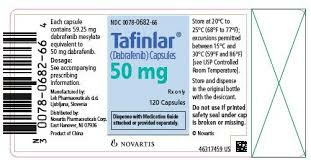
According to the current Chinese medical insurance policy, the dabrafenib combined with trametinib regimen has been included in the national medical insurance catalog, and its covered indications include three core areas: BRAF V600 mutation-positive unresectable or metastatic melanoma; second, BRAF V600 mutation-positive metastatic non-small cell lung cancer after surgery (stage III); and third, BRAF V600 mutation-positive metastatic non-small cell lung cancer. These indications have been approved by the State Food and Drug Administration and are supported by sufficient clinical evidence, thus meeting the medical insurance access standards.
After being included in medical insurance, drug prices have dropped significantly through national negotiations, significantly reducing the burden on patients. In the past, the annual treatment cost of this combination in the market was as high as hundreds of thousands of yuan. However, after paying through medical insurance, the individual out-of-pocket rate has been significantly reduced to an acceptable range. Some areas have implemented a "dual-channel" payment policy. Patients can purchase and reimburse medicines at designated pharmacies designated by medical insurance, and can take medicines without hospitalization, further improving the flexibility of treatment.
It should be reminded that medical insurance reimbursement is not applicable to all patients, but is strictly managed according to indications, positive genetic test results, and treatment paths. Patients must provide a standardized BRAF V600 mutation positive test report, and the treatment plan must be formulated by a qualified medical institution.
Reference materials:https://go.drugbank.com/drugs/DB08912
[ 免责声明 ] 本页面内容来自公开渠道(如FDA官网、Drugs官网、原研药厂官网等),仅供持有医疗专业资质的人员用于医学药学研究参考,不构成任何治疗建议或药品推荐。所涉药品可能未在中国大陆获批上市,不适用于中国境内销售和使用。如需治疗,请咨询正规医疗机构。本站不提供药品销售或代购服务。


