
.jpeg)
Hepatitis C trial supports Gisada/Bitongsa as effective first-line option
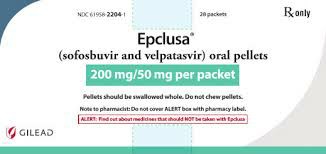
Results from a new randomized trial suggest Sofosbuvir/daclatasvir may be superior to Epclusa in treating hepatitis C, while showing high cure rates with shorter or more flexible treatment strategies. This Vietnam-based study provides the first evidence to directly compare two World Health Organization-recommended hepatitis C treatments, confirming non-inferiority and providing promising data on alternative short-course treatment regimens.
This multi-arm, open-label, non-inferiority trial included 624 adult participants with chronic hepatitis C infection and mild to moderate liver fibrosis. Participants were randomly assigned to receive either Sofosbuvir/daclatasvir or Sofosbuvir/daclatasvir and were further divided into one of four treatment strategy groups, including:
Standards of Care Group;
Four weeks of treatment, four additional pegylated interferons per weekα-2a subcutaneous injection (four weeks of antiviral combined with interferon group);
5 days a weekDaily treatment for two weeks, followed by 10 weeks of maintenance treatment (induction-maintenance group);
Response-oriented therapy (RGT), with duration determined by a single quantitative viral load on day seven (RGT group).
The trial was open-label: no placebo was provided due to the complexity of ensuring participants took the right pill on the right day. Masking of randomly assigned trial personnel was not possible, but efficacy endpoints were based on HCV viral load assessed in the laboratory by masked personnel.
In the original protocol, additional factorial randomization was performed to adjuvant ribavirin or no ribavirin. Only 22 subjects had been assigned ribavirin before it was stopped, following advice from the trial steering committee on recruitment challenges during the COVID-19 pandemic, and there was emerging evidence of a lack of efficacy with adjuvant ribavirin. The primary endpoint is sustained virological response (SVR), defined as plasma HCV RNA falling below a lower quantitative level 12 weeks after the end of treatment without prior treatment failure.
Failure of first-line therapy was carefully defined as including individuals with complete HCV RNA suppression (i.e., below lower quantitative levels) who had late virologic rebound, as well as those with incomplete HCV viral load suppression. In both cases, two consecutive viral loads above a lower quantitative level at least one week apart after the end of treatment are required to confirm treatment failure, with the second need to exceed 2000 IU/mL.
Secondary outcomes were SVR at 12 weeks after combination first-line or re-treatment; lack of initial virologic response (<1 log10 reduction in HCV RNA from baseline); serious adverse events, grade 3 or 4 clinical adverse events, any grade adverse events leading to a change in treatment, and any grade adverse events classified by the investigator as possibly, possibly, or definitely related to the trial treatment; and the occurrence of resistance-related substitutions in individuals who did not achieve SVR.
The Sofosbuvir/daclatasvirgroup achieved a sustained virological response (SVR12) of 97%, compared with 95% in the Jisi third-generationgroup. Although the trial was conducted for patients without schizophrenia, the researchers observed that Sofosbuvir/daclatasvir was superior to Gen3 in 93% of cases. Three of the four treatment strategies (SOC, induction-maintenance, and RGT) all demonstrated SVR rates above 93%, within the prespecified 10% non-inferiority range. Although the 4-week DAA + interferon group achieved an SVR of 94%, its adverse event rate was significantly higher compared with the SOC group.
These findings have significant implications for national hepatitis C programmes, particularly in low- and middle-income countries where drug pricing, availability and patient compliance impact treatment success and sustainability. This study found evidence to support the use of sofosbuvir/daclatasvir and daclatasvir in first-line treatment regimens. These data will be valuable to national programs for access to treatment. For most countries scaling up treatment, simplicity and standardization of treatment are key.
Reference: https://www.medicalrepublic.com.au/hep-c-trial-backs-sofosbuvir-daclatasvir-as-potent-first-line-option/117924
[ 免责声明 ] 本页面内容来自公开渠道(如FDA官网、Drugs官网、原研药厂官网等),仅供持有医疗专业资质的人员用于医学药学研究参考,不构成任何治疗建议或药品推荐。所涉药品可能未在中国大陆获批上市,不适用于中国境内销售和使用。如需治疗,请咨询正规医疗机构。本站不提供药品销售或代购服务。


