
.jpeg)
Regorafenib discontinuation management and relapse risk control measures
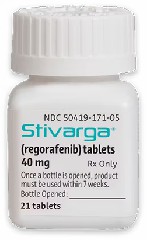
Regorafenib (Regorafenib) is a multi-target oral tyrosine kinase inhibitor (TKI), which is widely used in the treatment of a variety of advanced solid tumors, including colorectal cancer (CRC), gastrointestinal stromal tumor (GIST), hepatocellular carcinoma (HCC), etc. It blocks multiple signaling pathways involved in tumor angiogenesis, tumor microenvironment and tumor cell proliferation (such as VEGFR, PDGFR, < /span>FGFR, KIT, RET, etc.) to exert anti-tumor effects. As a maintenance treatment or third-line drug, regorafenib will inevitably face the management problem of "whether to stop the drug, when to stop the drug, and how to stop the drug" during long-term use. Scientifically handling the withdrawal process of regorafenib and controlling the potential risk of recurrence are the keys to ensuring the sustainability of the treatment effect.
1. Common reasons for drug discontinuation and risk assessment
In clinical practice, regorafenib discontinuation can be roughly divided into two categories: planned discontinuation and unplanned discontinuation. The former is mostly due to the fact that the patient's condition is stable and the treatment goals are achieved, and the efficacy is evaluated to consider whether the medication can be stopped; the latter is mostly caused by adverse reactions, economic burden, poor compliance, or the patient's subjective resistance.
It is worth noting that regorafenib has the positioning of "disease control but not radical cure" in some tumors. Its therapeutic mechanism is more to inhibit tumor growth than to completely eliminate it. Therefore, once the drug is discontinued, there is a certain probability of tumor progression or recurrence. Especially in patients whose disease still has active lesions, hasty discontinuation of treatment often leads to "rebound" tumor growth. Therefore, whether to discontinue treatment must be based on a comprehensive analysis of tumor assessment, patient overall condition and tolerability, and be fully discussed with the multidisciplinary team (MDT).
2. Drug discontinuation management strategy
1. Assessment mechanism before drug discontinuation
Before deciding whether to discontinue regorafenib, a comprehensive disease assessment should be performed, including imaging studies (CT, MRI, PET-CT
2.Transitional discontinuation and dose reduction
If the drug must be discontinued, due to side effects or loss of tolerance, a "gradual taper" strategy may be considered. For example, reduce the dose from 160mg to 120mg or 80mg daily, then extend the medication cycle, and finally stop the medication. This gradual transition helps the body adapt and reduces the physiological rebound and tumor stimulating effects caused by sudden drug withdrawal.
3.Combined treatment strategy
For those who plan to discontinue treatment due to poor tolerance or poor efficacy of monotherapy, combination treatment options with immunotherapy or other targeted drugs can be explored to find alternative paths during the "withdrawal" process. For example, the combination of regorafenib and PD-1 inhibitors has shown certain efficacy in indications such as liver cancer.
4.Psychological intervention and compliance management
Many patients suffer from "treatment fatigue" or emotional problems such as anxiety and depression due to long-term medication use, which indirectly affects medication compliance. At this time, psychological support should be provided, the risks of drug discontinuation should be reasonably explained, confidence should be enhanced through patient communication groups, and a "doctor-patient consensus" drug discontinuation plan should be established.
3. Relapse risk control measures
1.Regular monitoring mechanism
After stopping the drug, it is recommended to conduct imaging review, hematology test and symptom assessment at least once every 1-2months. Fluctuations in tumor markers can be used as auxiliary indicators to provide early warning of tumor recurrence. If suspicious lesions or abnormal indicators are found, a follow-up visit should be made as soon as possible and treatment should be considered to be restarted.
2.Establish a recurrence early warning model
Based on the patient's tumor type, treatment response time, genetic mutation background, total medication cycle and other information, an individualized risk model is established. For people with a high risk of recurrence, a more intensive follow-up plan can be arranged after discontinuation of medication, or a short-term low-dose maintenance medication strategy can be adopted.
3.Prepare emergency treatment plan
Once signs of recurrence are found after discontinuation of treatment, it is necessary to evaluate whether regorafenib treatment can be restarted as soon as possible and observe its resensitivity. Studies have shown that some patients still respond to regorafenib rechallenge. In addition, treatment options with other mechanisms can also be adjusted based on the characteristics of recurrence, such as switching targeting pathways or entering clinical trials.
4.Health management and lifestyle intervention
After stopping the drug, patients still need to maintain a healthy lifestyle, such as a reasonable diet, regular work and rest, moderate exercise, avoiding tobacco and alcohol, etc., to enhance the body's immunity and reduce the chance of tumor recurrence. At the same time, patients are advised to maintain a good attitude and actively cooperate with regular review.
Regorafenib discontinuation and relapse management is a process that requires multidisciplinary collaboration and refined management. For patients whose tumors have not yet been completely controlled, the medication time should be extended as much as possible to avoid premature discontinuation of medication; for those who really need to discontinue medication, a detailed transition plan and recurrence monitoring plan should be developed. At the same time, through patient education, psychological intervention, lifestyle adjustment and other methods to improve the risk prevention ability after drug withdrawal, the benefits of treatment can be maximized. In the future, with the development of more accurate prediction tools and combination treatment strategies, regorafenib discontinuation management will be more scientific and individualized, and will better serve the patient's long-term survival goals.
Reference materials:https://www.drugs.com/
[ 免责声明 ] 本页面内容来自公开渠道(如FDA官网、Drugs官网、原研药厂官网等),仅供持有医疗专业资质的人员用于医学药学研究参考,不构成任何治疗建议或药品推荐。所涉药品可能未在中国大陆获批上市,不适用于中国境内销售和使用。如需治疗,请咨询正规医疗机构。本站不提供药品销售或代购服务。


