
.jpeg)
Which one is better, pomalidomide or lenalidomide?
Pomalidomide (Pomalidomide) and lenalidomide (Lenalidomide) are treatments for multiple myeloma (Multiple Myeloma, Immunomodulatory drugs (IMiDs) commonly used in MM), both of which are thalidomide (Thalidomide) analogs, play an important role in anti-myeloma treatment. Although they have similarities in structure and mechanism, due to differences in development time, clinical indications, efficacy range, and safety, in actual treatment, doctors will choose more appropriate drugs based on specific conditions. The following will compare pomalidomide and lenalidomide in detail in terms of drug mechanism, clinical efficacy, drug resistance, safety, etc., and analyze which drug has more therapeutic advantages.
1. Mechanism of action and generational differences in drugs
Lenalidomide is a second-generation improved drug of thalidomide, and pomalidomide is a third-generation drug. Both work through multiple mechanisms: including directly inhibiting myeloma cell proliferation, inducing apoptosis, regulating immune function, inhibiting tumor-related angiogenesis, etc. They work together on the cereblon (CRBN) protein to promote the degradation of certain oncogenic transcription factors, thus exerting anti-cancer effects. However, pomalidomide has higher selectivity and affinity than lenalidomide, so it theoretically has stronger anti-tumor efficacy in some mechanisms.
Since pomalidomide was developed after the failure of lenalidomide treatment, it was originally designed to deal with the problem of lenalidomide resistance, so it has greater advantages in overcoming resistance. Pomalidomide still responds to some lenalidomide-resistant patients, making it important in the treatment of relapsed and refractory myeloma.
2. Comparison of clinical efficacy
Lenalidomide is widely used in newly diagnosed and relapsed multiple myeloma as part of standard first-line treatment regimens. According to clinical studies, lenalidomide combined with dexamethasone (Rd regimen) can bring a higher overall response rate and longer progression-free survival (PFS) in treatment-naïve patients. Lenalidomide is often one of the drugs of choice for treatment-naïve patients, especially in older patients who are not transplant candidates.
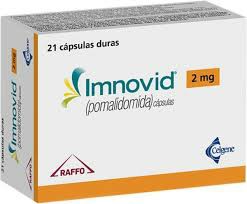
The clinical advantages of pomalidomide are mainly reflected in patients with relapsed and refractory myeloma, especially those who have developed resistance to both lenalidomide and proteasome inhibitors (such as bortezomib). POMALYSTThe clinical trial shows that the overall response rate of patients with relapsed multiple myeloma treated with pomalidomide combined with dexamethasone is 30% and the median progression-free survival is about 4 to 6 months, and some patients even achieved more durable remissions. Therefore, pomalidomide is often used as a third-line or fourth-line treatment option, which is particularly important for high-risk or refractory patients.
Therefore, in first-line treatment, lenalidomide has more therapeutic advantages and broad adaptability; while in the context of lenalidomide treatment failure or multidrug resistance, pomalidomide shows its irreplaceable efficacy.
3. Drug resistance and coping strategies
As treatment advances, patients with multiple myeloma will inevitably face drug resistance issues. Although lenalidomide is effective in early treatment, long-term use is prone to drug resistance, especially when the same drug regimen is used repeatedly, the efficacy decreases significantly.
The emergence of pomalidomide has filled the treatment gap after lenalidomide resistance. It can still induce responses in some lenalidomide-resistant patients and has the ability to treat resistance across drug resistance. The mechanism may be related to stronger immunomodulatory ability, higher CRBN affinity and activation of different downstream signaling pathways. Therefore, pomalidomide offers hope for prolonged survival in patients who have received multiple lines of therapy or are dually resistant (resistant to both lenalidomide and proteasome inhibitors).
4. Comparison of safety and adverse reactions
In terms of safety, both drugs may cause hematological toxicity (such as anemia, neutropenia, thrombocytopenia), but the adverse reactions of pomalidomide are slightly higher than those of lenalidomide, especially the incidence of severe neutropenia is more common.
Non-hematological side effects such as rash, fatigue, constipation, deep vein thrombosis, etc., have also been reported in both. Therefore, anticoagulation prophylaxis and regular blood monitoring are required when using both drugs. For patients who are older, have more comorbidities, or have poor bone marrow reserve, doctors need to be more cautious when choosing pomalidomide.
However, in cases where resistance to lenalidomide has developed, the potential therapeutic benefit of pomalidomide is often greater than the risk of adverse reactions. With appropriate dose adjustment and supportive treatment, most patients can tolerate it well.
5. Summary and clinical selection suggestions
Overall, lenalidomide and pomalidomide each have advantages in the treatment of multiple myeloma. Lenalidomide remains the drug of choice in the early stages of treatment due to its good efficacy, tolerability, and wide application in first-line treatment. Pomalidomide is more suitable for use in the treatment stage after lenalidomide resistance, especially in relapsed or refractory patients, showing strong rescue capabilities.
In clinical applications, doctors usually rationally arrange the order of use of the two based on the patient's treatment stage, previous medication history, disease risk stratification and individual tolerance. For patients who are newly treated, it is recommended to give priority to lenalidomide; for patients who have failed multiple lines of treatment, especially those who are no longer sensitive to lenalidomide, pomalidomide is a valuable treatment option.
In the future, with the development of a new generation of immunomodulatory drugs and cellular immunotherapy, such drugs may appear more in the form of combination therapies to improve the overall response rate and prolong progression-free survival. The combined or sequential use of pomalidomide and lenalidomide is expected to further optimize the treatment strategy for multiple myeloma and bring patients longer survival and higher quality of life.
Reference materials:https://www.drugs.com/
[ 免责声明 ] 本页面内容来自公开渠道(如FDA官网、Drugs官网、原研药厂官网等),仅供持有医疗专业资质的人员用于医学药学研究参考,不构成任何治疗建议或药品推荐。所涉药品可能未在中国大陆获批上市,不适用于中国境内销售和使用。如需治疗,请咨询正规医疗机构。本站不提供药品销售或代购服务。


