
.jpeg)
How long does it take for osimertinib treatment to have the best and most obvious effect?
Osimertinib is a third-generation EGFR tyrosine kinase inhibitor (EGFR-TKI), mainly used to treat patients with non-small cell lung cancer (NSCLC) carrying sensitive mutations or T790M mutations. Regarding its onset time and optimal efficacy period, although the specific time varies from individual to individual, most patients can observe initial efficacy within a few weeks after taking the drug. Especially in cases with heavy tumor burden or obvious symptoms, the drug response is often more rapid.
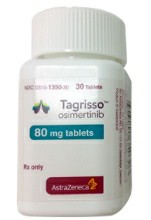
Based on clinical experience and real-world data, most patients can observe improvement in symptoms within 2 to 4 weeks after starting osimertinib treatment, such as relief of cough, relief of chest tightness, and improvement in physical strength, etc. In terms of imaging changes, it is generally recommended to conduct the first review CT scan after 6 to 8 weeks of medication to determine whether there is a trend of tumor shrinkage or lesion stabilization. This is often also the stage when the therapeutic effect is first evident. If the patient is EGFR mutation-positive, imaging evaluation often indicates partial response (PR) or stable disease (SD).
The best efficacy usually occurs in the 2nd to 3rd month after continuous treatment. The tumor response at this stage is mostly sustained shrinkage, accompanied by a decrease in the level of tumor markers (such as CEA or CA125), and significant relief of clinical symptoms. If the patient is highly sensitive to the drug, some cases may even show imaging manifestations of complete response (CR), especially in the case of T790M-positive mutation or early control of brain metastasis.
It is worth noting that osimertinib has strong penetration into the central nervous system, so for patients with brain metastases, brain symptoms such as headaches and confusion can be rapidly improved within 6 weeks after treatment. This is also one of its important advantages compared with first and second generation EGFR-TKIs. In general, osimertinib has a relatively rapid response time, but its persistence and optimal performance still depend on factors such as the patient's mutation type, tumor distribution, and whether there are drug-resistant mutations.
Reference materials:https://go.drugbank.com/drugs/DB09330
[ 免责声明 ] 本页面内容来自公开渠道(如FDA官网、Drugs官网、原研药厂官网等),仅供持有医疗专业资质的人员用于医学药学研究参考,不构成任何治疗建议或药品推荐。所涉药品可能未在中国大陆获批上市,不适用于中国境内销售和使用。如需治疗,请咨询正规医疗机构。本站不提供药品销售或代购服务。


