
.jpeg)
What diseases and clinical indications does Trientine mainly treat?
Trientine is an important copper chelator, mainly used to treat Wilson's disease (Wilson’s disease) caused by abnormal copper metabolism in the body. Wilson's disease is a hereditary copper metabolism disorder. The patient's body cannot excrete copper ions normally, resulting in excessive copper deposition in the liver, brain and other tissues, which in turn causes multi-system damage. As an important drug in the treatment of Wilson's disease, trientine has a unique mechanism of action and clinical advantages. This article will introduce in detail the main diseases treated by trientine, its indications and its clinical application value.
1. Pathological mechanism and clinical manifestations of Wilson's disease
Wilson's disease is an autosomal recessive genetic disease. Due to mutations in the ATP7B gene, which leads to copper ion transport dysfunction, the patient's liver cannot effectively eliminate excess copper in the body. Copper accumulates in the liver, brain, kidneys, eyes and other tissues, causing liver function damage, neurological symptoms and mental disorders. Clinical manifestations are diverse, including hepatitis, cirrhosis, tremor, movement disorders, psychiatric disorders, and cornealKayser-Fleischer rings. Early diagnosis and treatment are critical to preventing disease progression and prognosis.
2. Pharmacological effects and indications of trientine
Trientine forms a stable chelate with free copper ions in the body, allowing copper to be excreted through urine in a non-toxic and easily excreted form, thereby reducing the copper load in the body. Compared with traditional penicillamine, trientine has fewer side effects and is better tolerated. It is especially suitable for patients with penicillamine resistance or intolerance. Trientine has been widely recognized as one of the standard treatments for Wilson's disease.
Clinical indications mainly include:
1.Initial treatment and maintenance treatment of Wilson's disease: Through continued use of trientine, copper levels in the body can be effectively controlled, liver and nervous system damage can be alleviated, and disease recurrence can be prevented.
2.Alternative medications for patients who are intolerant to penicillamine treatment: For some patients, trientine has become the first choice alternative due to severe adverse reactions caused by penicillamine.
3. Copper load management in critically ill and post-liver transplant patients: For patients with severe liver damage or liver transplant, trientine can effectively assist in controlling copper levels in the body and promote postoperative recovery.
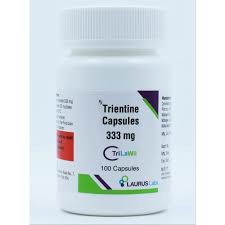
3. Advantages of Trientine in Clinical Application
As a second-line treatment, trientine has several clinical advantages. First of all, it has relatively few side effects, low incidence of common gastrointestinal reactions and allergic reactions, and good patient compliance. Secondly, trientine has a significant improvement effect on neurological symptoms and helps relieve movement disorders and mental symptoms. Furthermore, trientine does not require strict restriction of copper intake in the diet, making life more convenient.
In addition, trientine is suitable for patients of different age groups, including children and elderly patients. Its treatment plan is flexible and can be used alone or in combination with other copper chelators to meet individual treatment needs. With the accumulation of clinical experience and drug improvement, the safety and efficacy of trientine have been further improved, making it an important treatment option for patients with Wilson's disease.
4. Future development and research directions
Although trientine plays an important role in the treatment of Wilson's disease, it still has certain limitations, such as poor efficacy in some patients or long-term drug dependence. Future research focuses include developing more efficient and safe copper chelators, optimizing dosing regimens and combination treatment strategies. In addition, the development of gene therapy and precision medicine provides new possibilities for the cure of Wilson's disease.
Clinically, it is necessary to strengthen research on the long-term efficacy and safety of trientine, especially its application in special groups, such as pregnant women and patients with cirrhosis. At the same time, it is of great significance to improve the prognosis of patients by improving the public and medical staff's awareness of Wilson's disease and promoting early diagnosis and standardized treatment.
In summary, trientine, as the core therapeutic drug for Wilson's disease, has irreplaceable clinical value by effectively reducing the copper load in the body, relieving symptoms, and improving quality of life. With the enrichment of treatment experience and the application of new technologies, trientine and related treatment options will play a greater role in the management of Wilson's disease and bring better treatment prospects to patients.
Reference materials:https://www.drugs.com/
[ 免责声明 ] 本页面内容来自公开渠道(如FDA官网、Drugs官网、原研药厂官网等),仅供持有医疗专业资质的人员用于医学药学研究参考,不构成任何治疗建议或药品推荐。所涉药品可能未在中国大陆获批上市,不适用于中国境内销售和使用。如需治疗,请咨询正规医疗机构。本站不提供药品销售或代购服务。


