
.jpeg)
Is Besetifan an immune drug or a targeted drug?
Belzutifan is strictly a targeted therapy drug, rather than an immunotherapy drug in the traditional sense. Its mechanism of action and target are completely different from most immune checkpoint inhibitors (such asPD-1, PD-L1 antibodies). It was originally developed to solve the treatment problems of certain hypoxia-driven tumors, so it is classified as a new type of HIF-2α (hypoxia-inducible factor 2α) small molecule inhibitor. Its uniqueness in the field of targeted drugs has been confirmed by regulatory agencies in many countries, and it has obtained accelerated approval qualifications such as orphan drugs and breakthrough therapies. It has especially shown significant efficacy in the fields of VHL-related tumors and renal cell carcinoma (RCC).
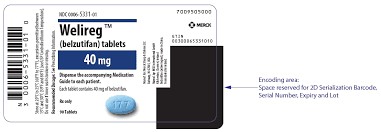
The definition of targeted drugs is to precisely intervene on specific molecular targets to block the survival, reproduction or metastasis signaling pathways of tumor cells, rather than directly activating the immune system to attack cancer cells. Bestifan precisely interferes with the adaptation mechanism of tumor cells to a hypoxic environment—that is, inhibits the activity of the HIF-2α transcription factor, thereby preventing the expression of a series of downstream tumor-promoting genes, such as VEGF (vascular endothelial growth factor), EPO (erythropoietin), GLUT1, etc. This mechanism is particularly critical in von Hippel-Lindau (VHL) disease-related tumors, because mutations in the VHL gene render HIF-2α abnormally stable and become a key driver of tumor growth.
In addition, the targeted therapeutic properties of bezutivan also determine its differentiation path from traditionalTKIs (tyrosine kinase inhibitors). Traditional targeted drugs mostly focus on protein kinase molecules such as EGFR, ALK, VEGFR, and mTOR, while Bestivan acts on a nuclear transcription factor complex, making it a relatively unique branch of the current targeted drug research and development direction. Because of this, its toxicity spectrum is different from that of common targeted drugs. Anemia and hypoxemia are relatively characteristic adverse reactions, and hemoglobin levels and blood oxygen saturation need to be monitored during treatment.
Reference materials:https://www.welireg.com/
[ 免责声明 ] 本页面内容来自公开渠道(如FDA官网、Drugs官网、原研药厂官网等),仅供持有医疗专业资质的人员用于医学药学研究参考,不构成任何治疗建议或药品推荐。所涉药品可能未在中国大陆获批上市,不适用于中国境内销售和使用。如需治疗,请咨询正规医疗机构。本站不提供药品销售或代购服务。


