
.jpeg)
How long do you need to continue injecting Datopotamab?
Datopotamab (Datopotamab, full name: Datopotamab Deruxtecan, referred to as Dato-DXd) is a new type of antibody conjugate drug (ADC) that mainly targets TROP2 (tumor-related calcin), is suitable for the treatment of a variety of solid tumors, especially in refractory tumors such as non-small cell lung cancer (NSCLC) and triple-negative breast cancer (TNBC). Since the drug is still in Phase III clinical trials or in the early stages of marketing, the duration of treatment usually needs to be comprehensively determined based on the patient's individual response, disease control status and adverse reactions.
Normally, dabrotuzumab is administered intravenously, and the common dosing frequency is once every three weeks (Q3W). In clinical trials, such as the TROPION-Lung01 study, this injection cycle is widely used until patients experience disease progression or cannot tolerate drug-related toxicity. In other words, there is no fixed "total injection period", but a strategy of "continuous administration until progression or toxicity is discontinued"**. This method is more common in advanced cancer treatment and aims to prolong patient survival and improve quality of life.
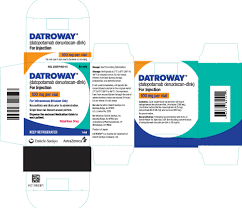
For most patients, if they achieve a good response (such as stable disease, partial response, or complete response) after treatment with dabrotumumab and do not experience significant side effects, the drug can be continued long-term. Some patients continue to benefit from use in clinical trials for more than 6 months to more than a year, indicating that the drug has the potential to continue to control the disease in some people. However, for patients who experience significant toxicity (such as stomatitis, nausea, interstitial lung disease, etc.), doctors may consider reducing the dose, extending the dosing interval, or permanently discontinuing the drug.
In general, dabrotuzumab is not used "according to a limited number of treatment courses", but the use period is determined based on efficacy and tolerability. Patients need to undergo regular imaging evaluation and laboratory monitoring during treatment to determine whether to continue use, adjust dosage, or change treatment options. Maintaining regular medication and good compliance during the early stages of treatment is particularly critical to delaying disease progression and achieving long-term control. In the future, as more real-world data and indications expand, treatment cycles and management strategies will be further individualized.
Reference materials:https://www.drugs.com/
[ 免责声明 ] 本页面内容来自公开渠道(如FDA官网、Drugs官网、原研药厂官网等),仅供持有医疗专业资质的人员用于医学药学研究参考,不构成任何治疗建议或药品推荐。所涉药品可能未在中国大陆获批上市,不适用于中国境内销售和使用。如需治疗,请咨询正规医疗机构。本站不提供药品销售或代购服务。


