
.jpeg)
How effective is Elacetrant?
In the EMERALD Phase III clinical trial, nearly half of approximately 478 patients with ER+ HER2− advanced advanced breast cancer were evaluated harboring ESR1 mutations. The study used a randomized controlled design, assigning patients to receive either elacestrant or standard endocrine therapy, such as Fulvestrant or an aromatase inhibitor. The results showed that in the ESR1 mutation-positive subgroup, the median progression-free survival (PFS) was 3.8 months in the group receiving elastran, compared with only 1.9 months in the control group, a significantly lower risk. This data is the first to definitively demonstrate that oral SERD significantly delays the progression of ESR1-mutated breast cancer.
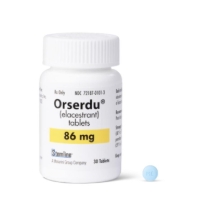
Further analysis showed that even in patients with low ESR1 mutant allele frequency, elastran still showed efficacy advantages. This shows that it also has a therapeutic effect on low-frequency mutations. Patients who had previously received CDK4/6 combined with endocrine therapy for more than one year had a more obvious benefit from elastran , suggesting that its superiority is more prominent in the context of high drug resistance.
In terms of drug safety, common side effects of elastran include mild nausea, fatigue and joint pain. It is generally well tolerated and the vast majority of patients can continue to take it without affecting their quality of life. This enables better long-term compliance in maintenance treatment of advanced breast cancer.
As the first FDA-approved oral SERD, elastran fills the treatment gap for patients with ER+ HER2− ESR1 mutations after failure of endocrine-resistant therapy. Although the absolute duration of PFS extension is on the order of months, it is significant for patients who cannot directly use chemotherapy or who have the desire to survive. It not only delays disease progression, but also buys patients more time and treatment opportunities, and improves the level of precision medicine for advanced breast cancer.
In summary, elastran has demonstrated significant value in terms of mechanism innovation, therapeutic positioning and clinical efficacy, and is an important milestone in the treatment of ER+ HER2− ESR1 mutation-resistant breast cancer. In the future, with the expansion of indications and combination regimens, its clinical significance will be further enhanced.
References:https://www.drugs.com/mtm/elacestrant.html
[ 免责声明 ] 本页面内容来自公开渠道(如FDA官网、Drugs官网、原研药厂官网等),仅供持有医疗专业资质的人员用于医学药学研究参考,不构成任何治疗建议或药品推荐。所涉药品可能未在中国大陆获批上市,不适用于中国境内销售和使用。如需治疗,请咨询正规医疗机构。本站不提供药品销售或代购服务。


