
.jpeg)
How effective is Ensartinib in treating non-small cell lung cancer?
Ensartinib is a new generation of ALK (anaplastic lymphoma kinase) inhibitor, mainly used to treat ALK-positive non-small cell lung cancer (NSCLC). It was developed by Xcovery and later cooperated with a number of international pharmaceutical companies to promote clinical research and marketing applications around the world. Compared with the first-generation ALK inhibitor crizotinib (Crizotinib), ensartinib has better therapeutic effect, safety, and It has obvious advantages in controlling brain metastases and has gradually become an important treatment option for ALK-positive NSCLC patients. This article will comprehensively analyze the performance of ensartinib in the treatment of non-small cell lung cancer from four aspects: efficacy data, control of brain metastases, comparison with other similar drugs, and real-world application feedback.
1. Efficacy performance supported by clinical research data
The clinical efficacy of ensartinib mainly comes from the international multi-center III clinical trial called eXalt3. This study compared ensartinib with the first-generation ALK inhibitor crizotinib in first-line treatment of ALK-positive advanced NSCLC. The results showed that ensartinib significantly prolonged progression-free survival (PFS): the median PFS was 25.8 months, while the crizotinib group was only 12.7 months. The overall objective response rate (ORR) was also higher, 74% in the ensartinib group versus 67% in the crizotinib group. In addition, ensartinib's response lasts longer and its tumor control ability is more stable, which is of great significance to prolonging patient survival and improving quality of life.
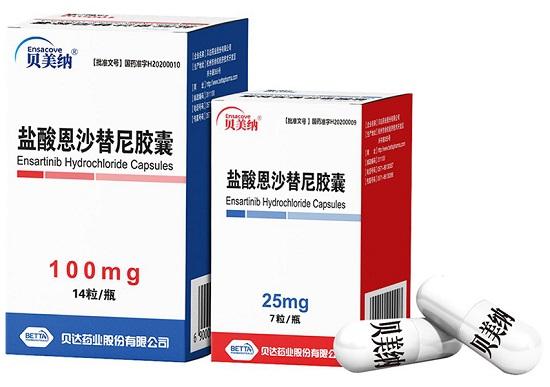
2. Outstanding ability to control brain metastasis
Brain metastasis is a common complication in patients with ALK positive lung cancer. Many ALK inhibitors (such as crizotinib) have poor blood-brain barrier penetration capabilities and are not ideal for controlling metastatic lesions in the central nervous system (CNS). Ensartinib has demonstrated excellent pharmacokinetic properties in this regard. Its molecular structure has been optimized to enhance its ability to cross the blood-brain barrier, thereby effectively controlling or delaying the occurrence of brain metastasis.
In the eXalt3 trial, ensartinib showed a strong central nervous system response rate (CNS-ORR) — up to 64% — in patients with existing brain metastases. What is more noteworthy is that for patients with asymptomatic brain metastases, ensartinib can significantly reduce or stabilize the lesions, allowing patients to delay or even avoid invasive treatments such as radiotherapy, which is of great significance in clinical treatment strategies.
3. Comparison with other second or third generationALK inhibitors
There are currently a variety of targeted drugs on the market for the treatment of ALKpositiveNSCLC, including alectinib (Al ectinib), lorlatinib (Lorlatinib), brigatinib (Brigatinib), etc. Compared with these drugs, ensartinib is competitive in terms of efficacy. Although lorlatinib has advantages in crossing drug-resistant mutations, it has many central nervous system side effects, such as mood changes, cognitive impairment, etc., while ensartinib performs better in terms of central tolerance. The main side effects are rash, elevated transaminases, and gastrointestinal discomfort, most of which are grade 1 to 2 and are easy to control and manage.
In addition, ensartinib is also considered to be a "cost-effective" treatment option, especially in developing countries. Compared with some imported ALK inhibitors, its price is more advantageous, helping to improve drug accessibility and patient compliance.
4. Feedback on efficacy and tolerability in real-world applications
In clinical practice, the experience with ensartinib is generally good. Most patients can observe significant tumor shrinkage in the early stages of use, and their symptoms improve rapidly, such as cough relief, increased physical strength, and increased appetite. Ensartinib shows some antitumor activity even in patients who have failed treatment with crizotinib or other ALK inhibitors. Some patients experienced side effects such as rash, elevated liver enzymes, and mild nausea. After dose adjustment or symptomatic treatment, they were basically able to continue taking the medication. There were not a large number of discontinuations due to adverse reactions.
It is worth mentioning that ensartinib has also been approved for marketing by the State Food and Drug Administration in mainland China and has been included in the medical insurance catalog. The advancement of this policy has significantly reduced the financial burden on patients, allowing more ALK-positive lung cancer patients to receive effective treatment in a timely manner, extending their survival time and improving their quality of life.
Based on clinical data and real-world feedback, ensartinib, as a new generation of ALK inhibitors, has shown excellent efficacy in the treatment of ALK -positive non-small cell lung cancer. It has excellent performance in prolonging progression-free survival, improving response rate, controlling brain metastasis and overall safety. It is currently one of the trustworthy treatment options for patients with ALK-positive NSCLC. With the deepening of subsequent research and the expansion of indications, ensartinib is expected to occupy a more important position in the precision treatment system for lung cancer. For patients, rational use of ensartinib under the guidance of doctors will likely achieve long-term disease control and better quality of life.
Reference materials:https://www.drugs.com/
[ 免责声明 ] 本页面内容来自公开渠道(如FDA官网、Drugs官网、原研药厂官网等),仅供持有医疗专业资质的人员用于医学药学研究参考,不构成任何治疗建议或药品推荐。所涉药品可能未在中国大陆获批上市,不适用于中国境内销售和使用。如需治疗,请咨询正规医疗机构。本站不提供药品销售或代购服务。


