
.jpeg)
Can bevacizumab effectively control tumors?
Bevacizumab (Bevacizumab), as an anti-angiogenic drug, has demonstrated strong tumor control capabilities in the treatment of various malignant tumors. Its mechanism of action is mainly by neutralizing vascular endothelial growth factor (VEGF-A) and blocking tumor-induced neovascularization, thus cutting off the supply of oxygen and nutrients required by cancer cells. This method of inhibiting the tumor's "blood supply system" does not directly kill tumor cells, but can significantly slow down their expansion and metastasis, thus improving the overall effectiveness of treatment.
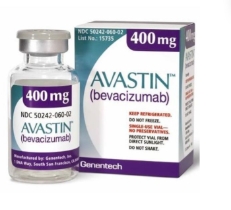
In practical applications, bevacizumab is often used in combination with chemotherapy drugs, such as in combination with FOLFOX or FOLFIRI in metastatic colorectal cancer, and in combination with platinum + pemetrexed in non-small cell lung cancer. Both have been proven to prolong progression-free survival (PFS) and partial overall survival (OS). In addition, significant anti-tumor activity has been demonstrated in recurrent glioblastoma, advanced ovarian cancer, and renal cell carcinoma. It is particularly suitable for cancer types with active angiogenesis and rich blood vessels in tumor tissue. Although bevacizumab does not have the rapid tumor shrinkage effect of traditional cytotoxic drugs, it provides patients with an important opportunity to extend their survival by stabilizing the disease, delaying progression, improving chemotherapy sensitivity, and improving quality of life.
However, bevacizumab is not suitable for all tumor types, and its efficacy also varies depending on individual genetic background and tumor molecular characteristics. For example, in some breast cancer subtypes, the benefit is controversial. In addition, drug resistance mechanisms in the tumor microenvironment, such as activation of the VEGF alternative signaling pathway, endothelial cell mutations, etc., may also affect its long-term efficacy. Therefore, the optimal use of bevacizumab should be based on comprehensive decision-making based on molecular classification, dynamic efficacy evaluation, and toxic and side effect management. Future combination models with other targeted drugs or immunotherapy may further enhance its tumor control potential.
Reference materials:https://www.drugs.com/bevacizumab.html
[ 免责声明 ] 本页面内容来自公开渠道(如FDA官网、Drugs官网、原研药厂官网等),仅供持有医疗专业资质的人员用于医学药学研究参考,不构成任何治疗建议或药品推荐。所涉药品可能未在中国大陆获批上市,不适用于中国境内销售和使用。如需治疗,请咨询正规医疗机构。本站不提供药品销售或代购服务。


