
.jpeg)
What is the difference between Bicizumab and Cosentyx?
Bimekizumab and Cosentyx (generic name: Secukinumab; secukinumab) are both current treatments for psoriasis and related immune diseases. Important biological agents, although they have many similarities in terms of mechanism of action, indications, frequency of medication, and therapeutic effects, there are also essential differences, especially in terms of targeting mechanism and depth of treatment. Bichizumab's "dual IL-17 blocking" mechanism brings unique advantages to it.
First of all, from the perspective of target mechanism, it is the core difference between the two. Cosentyx is one of the earlier IL-17A single-target inhibitors on the market. It specifically blocks the inflammatory factor IL-17A and inhibits the immune pathway that plays a leading role in psoriasis, thereby effectively reducing skin inflammation and plaque symptoms. Bichizumab goes a step further and targets two complementary and synergistic inflammatory factors, IL-17A and IL-17F, at the same time. Clinical studies have found that although IL-17F is weaker than IL-17A, its expression may be higher in the context of chronic inflammation. Therefore, inhibiting IL-17A alone may have a "therapeutic blind spot." The dual-target mechanism of bichizumab makes up for this, making it more potential to improve the depth and speed of skin symptoms. The clearance rate (such as the ratio of PASI 90 and PASI 100) has shown better performance in multiple comparative studies.
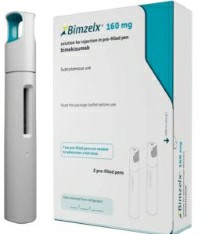
Secondly, in terms of indication scope, both have been approved for the treatment of moderate to severe plaque psoriasis and active ankylosing spondylitis, but the development stages are slightly different. Cosentyx was approved by the FDA and EMA as early as 2015. It is the earliest IL-17 biologic on the market and has a wide range of indications, including psoriatic arthritis, ankylosing spondylitis, etc. Bicizumab was initially used for psoriasis in European and American countries. In recent years, it has gradually expanded to the field of arthritis, and will be approved in China in 2024 for active ankylosing spondylitis and radiologically negative axial spondyloarthritis. As the indications continue to expand, Bichizumab will form a more direct clinical competition with Cosentyx, but its performance in new-onset subtypes and refractory patients is more expected.
Look at the method and frequency of administration. The standard dosage of Cosentyx is 300mg subcutaneous injection, once a week for a total of 5 times in the initial stage, and then once every 4 weeks. Bicizumab is injected subcutaneously at 320 mg each time. During the induction period, the injection is once every 4 weeks for 5 consecutive times (that is, until the 16th week). After that, it is changed to once every 8 weeks, which significantly reduces the frequency of medication. For patients weighing ≥120 kg, bicizumab may be considered for injection every 4 weeks during the maintenance period to maintain efficacy. Such adjustments make long-term management more convenient and more compliant than chitizumab, and are particularly suitable for patients who want to reduce the frequency of medical treatments that interfere with daily life.
In terms of safety, both showed good tolerability and hypoallergenicity. Common adverse reactions of Cosentyx include upper respiratory tract infection, mild rash and injection site reaction. In addition to the above, Bicizumab also needs to be alert to the slightly increased incidence of fungal infections. In particular, Candida infection is slightly higher than other IL-17 inhibitors in some studies, but most of them are mild and controllable. Because cizizumab may have a greater impact on some mucosal barrier microecologies by inhibiting the IL-17 pathway more deeply, it is still necessary to dynamically monitor immune status and infection risks during long-term use, especially in patients with underlying diseases such as diabetes and stomatitis.
Reference materials:https://www.drugs.com/bimekizumab.html
[ 免责声明 ] 本页面内容来自公开渠道(如FDA官网、Drugs官网、原研药厂官网等),仅供持有医疗专业资质的人员用于医学药学研究参考,不构成任何治疗建议或药品推荐。所涉药品可能未在中国大陆获批上市,不适用于中国境内销售和使用。如需治疗,请咨询正规医疗机构。本站不提供药品销售或代购服务。


