
.jpeg)
How long does it take to see obvious therapeutic effects after taking Alpelisib?
Alpelisib (trade name: Piqray) is an oral PI3Kα inhibitor that targets PIK3CA mutations. It is mainly used in combination with fulvestrant. Treatment of patients with advanced or metastatic breast cancer who are hormone receptor positive (HR+), HER2negative, and PIK3CA mutated. Many patients in the early stages of taking medication are concerned about when the treatment will take effect.
According to the results of the SOLAR-1 clinical study, most patients in the treatment group of apelvis combined with fulvestrant began to show signs of tumor shrinkage or disease stabilization within 6 to 8 weeks after treatment. Although individual differences are large, most patients can observe significant effects in the imaging evaluation at the end of the second course of treatment (i.e. about two months), such as a reduction in tumor volume or a decrease in metastatic activity. If some patients have a more sensitive condition, they may even feel changes in blood tumor markers or symptom improvement within 4 weeks.
As a targeted therapy drug, Apelix’s therapeutic mechanism requires controlling the growth of cancer cells by inhibiting the PI3K pathway, so the efficacy will not appear as quickly as chemotherapy. It is clinically recommended that patients undergo systematic evaluation after taking the drug for at least 12 consecutive weeks (about 3 months), and comprehensively judge the response to the drug through imaging examinations (CT, MRI, etc.) and tumor marker detection. If disease control or even partial remission (PR) occurs at this stage, it indicates that the drug is working well and treatment should be continued.
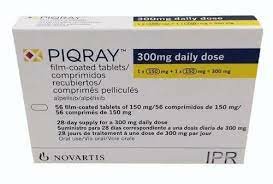
Once Apelix takes effect, its effects are usually long-lasting. In clinical trials, there are patients whose median progression-free survival has been extended to more than 11 months, and some people who respond well to the drug can even maintain disease control for a year or more. Especially in the disease course stage where PIK3CA mutations are clear and endocrine resistance is not yet completely out of control, the long-term management value of Apelvis is very prominent. This also means that even if the onset of effects is slightly slower, long-term treatment can still have significant benefits.
It is worth noting that Apelvis may cause uncomfortable reactions such as high blood sugar, rash, diarrhea and other symptoms in the early stage of its effect. If not properly handled, it may cause patients to interrupt treatment and affect the efficacy. Clinically, it is recommended to establish a complete monitoring mechanism in the early stage of treatment, such as weekly blood sugar testing, skin care intervention, dietary adjustment, etc., to help patients successfully pass the drug adaptation period and improve treatment compliance. As long as you properly deal with early side effects and insist on taking medication regularly, stable and visible treatment results can often be achieved within 2 to 3 months.
To sum up, Apelvis usually starts to take effect in 4~8 weeks, and the efficacy can be fully evaluated around 12 weeks, and has good sustainability. During the treatment process, attention should be paid to early management to ensure that patients successfully reach the window of efficacy.
Reference materials:https://www.drugs.com/
[ 免责声明 ] 本页面内容来自公开渠道(如FDA官网、Drugs官网、原研药厂官网等),仅供持有医疗专业资质的人员用于医学药学研究参考,不构成任何治疗建议或药品推荐。所涉药品可能未在中国大陆获批上市,不适用于中国境内销售和使用。如需治疗,请咨询正规医疗机构。本站不提供药品销售或代购服务。


