
.jpeg)
Introduction to the main therapeutic effects and mechanism of action of Inavolisib
Inavolisib is a new type of oral small molecule drug that is a selective PI3K inhibitor that mainly targets the PI3K α subtype. PI3K (Phosphatidylinositol 3-kinase) signaling pathway plays a central role in various biological processes such as cell proliferation, survival, metabolism and migration, and its abnormal activation is closely related to the occurrence and development of various tumors. The development and application of inalised marks an important progress in the field of precision tumor treatment, especially in breast cancer and other solid tumors with abnormally active PI3K signaling pathways. This article will introduce in detail the main therapeutic effects and mechanism of inarisep to provide a comprehensive reference for patients and clinicians.
First of all, the main therapeutic effect of inaliset is reflected in its inhibitory effect on tumors with abnormally active PI3K signaling pathway. PI3Kα is the key isoform in the PI3K family and is involved in regulating cell growth and survival. Many tumor cells activate PI3Kα through PIK3CA gene mutations, causing the signaling pathway to continue to turn on, promoting uncontrolled proliferation and resistance to apoptosis of tumor cells. As a highly selective PI3Kα inhibitor, inaliset can effectively block this signaling pathway, inhibit tumor cell proliferation, and induce cell apoptosis, thereby achieving the purpose of controlling tumor growth. Clinical studies have shown that inaliset exhibits significant anti-tumor activity in breast cancer patients carrying PIK3CA mutations, especially hormone receptor-positive (HR+), HER2-negative advanced or metastatic breast cancer.
Regarding the mechanism of action, inaliset effectively inhibits its kinase activity by selectively binding to the catalytic subunit p110α of PI3Kα isoform. PI3KThe activation of signaling pathway usually starts from the receptor tyrosine kinase on the cell membrane, which activates PI3K and then catalyzes PIP2 (phosphatidylinositol -4,5-bisphosphate) generatesPIP3 (phosphatidylinositol-3,4,5-triphosphate), thereby activating downstream AKT and mTOR signaling pathways promote cell proliferation and survival. The inhibitory effect of inalisate blocks the production of PIP3 and blocks the transmission of AKT signals, fundamentally interrupting the key signal chain that tumor cells rely on for survival and reproduction, thus exerting anti-tumor effects. Due to its high selectivity, inaliset can inhibit tumors while reducing the impact on other PI3K isoforms, reducing drug side effects and improving patient tolerance.
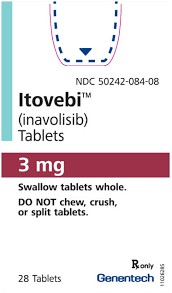
Inaliset is often used in clinical applications in combination with endocrine therapy, such as aromatase inhibitors (such as letrozole) or selective estrogen receptor modulators (such as formet), to treat patients with hormone receptor-positive, HER2-negative advanced or metastatic breast cancer carrying PIK3CA mutations. The combination of drugs not only enhanced the inhibitory effect on tumor cells, but also effectively delayed the development of drug resistance and improved the progression-free survival of patients (PFS). Current clinical research results show that inalise combined with endocrine therapy significantly improves the therapeutic effect compared with endocrine therapy alone and has good safety, providing a new treatment option for this type of breast cancer patients.
In terms of safety, inaliset has relatively mild side effects due to its strong selectivity. Common adverse reactions include mild to moderate hyperglycemia, rash, diarrhea, nausea and fatigue, etc. These side effects can usually be effectively controlled through dose adjustment and symptomatic treatment. Compared with non-selective PI3K inhibitors, inaliset has better safety and tolerability, and patients have better treatment compliance. Clinicians should closely monitor patients' blood sugar levels and skin reactions, handle related adverse events in a timely manner, and ensure the smooth progress of treatment.
In short, as an innovative and selective PI3Kα inhibitor, inalisate blocks the proliferation and survival signals of tumor cells by precisely inhibiting the PI3K signaling pathway, showing broad prospects in the treatment of PIK3CA mutated breast cancer and other related tumors. Its excellent anti-tumor efficacy and good safety and tolerance bring new hope to patients. In the future, as more clinical studies are conducted, inaliside is expected to expand its scope of indications and become an important part of precision anti-cancer treatment.
Reference materials:https://www.drugs.com/
[ 免责声明 ] 本页面内容来自公开渠道(如FDA官网、Drugs官网、原研药厂官网等),仅供持有医疗专业资质的人员用于医学药学研究参考,不构成任何治疗建议或药品推荐。所涉药品可能未在中国大陆获批上市,不适用于中国境内销售和使用。如需治疗,请咨询正规医疗机构。本站不提供药品销售或代购服务。


