
.jpeg)
What is the recommended standard usage and dosage of Mirdametinib?
Mirdametinib is an innovative oral small molecule MEK inhibitor, mainly used to treat patients with neurofibromatosis Type 1 (NF1), especially those with obvious symptoms and unable to be completely removed by surgery (plexiform neurofibromas, PN). As another precision treatment drug specifically targeting NF1 after sorafenib and other targeted drugs, midametinib has received widespread attention in 2025 and has become an important breakthrough in this field. This article will comprehensively introduce the standard usage and dosage, treatment mechanism, adverse reaction management and clinical efficacy of midametinib to help patients and medical staff better understand and rationally apply this drug.
First of all, the recommended usage and dosage of midametinib is mainly based on the patient's body surface area (Body Surface Area, BSA) and is accurately adjusted. This is also a dosage plan tailored for children and patients of different body types. The specific dosage is as follows: For patients with a body surface area of 0.40 to 0.69 square meters, it is recommended to take it orally twice a day 1mg an>2 mg >3mg; patients with a body surface area equal to or greater than 1.50 square meters, 4mg twice daily. The treatment cycle is usually 28 days, of which the first 21 days are the continuous medication period and the last 7 days are the withdrawal period. Physicians will decide whether to continue multiple cycles based on the patient's specific situation until the disease progresses or unacceptable toxicity occurs.
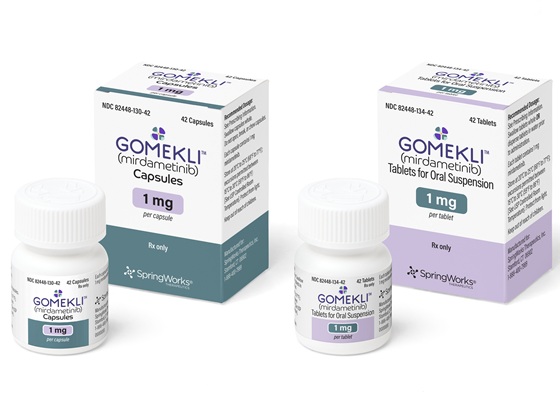
Midametinib, as aMEK inhibitor, inhibits the mitogen-activated protein kinase (MAPK) signaling pathway The key kinases MEK1 and MEK2 block the excessive activation of this pathway, thereby inhibiting the abnormal proliferation and survival of tumor cells. Due to the abnormal activation of the Ras/MAPK pathway that is common in patients with NF1 plexiform neurofibromas, midametinib precisely targets this mechanism to effectively control tumor growth, relieve symptoms, and improve patients' quality of life. The oral administration method of the drug is convenient for patients to take it for a long time and is also suitable for the daily treatment needs of children and adolescent patients.
During medication, dose adjustment and adverse reaction management are particularly important. Patients should strictly follow the doctor's prescription and cannot increase or decrease the dosage on their own. If serious side effects occur, your doctor may recommend stopping the medication or lowering the dose. Common adverse reactions include rash, diarrhea, nausea, fatigue, eye discomfort, etc. Some patients may have abnormal liver function indicators or hematological abnormalities. Clinically, it is recommended that patients undergo regular blood tests and liver function tests to detect and deal with side effects in a timely manner. In addition, patients should pay attention to protecting their skin during taking it, avoiding direct sunlight, maintaining a good diet and rest, and enhancing their body's resistance.
In terms of clinical research, the efficacy of midametinib has been supported by a number of key clinical trials. The most representative ReNeu study included NF1 patients of multiple ages. The results showed that midametinib can significantly reduce the volume of plexiform neurofibromas and improve related symptoms, such as pain, functional disability and quality of life indicators. The study not only confirmed the anti-tumor effect of the drug, but also showed that it has good safety and tolerability. Based on these data, midametinib was approved by the US FDA in 2025, becoming a new standard in the treatment of NF1.
In general, midametinib has brought new hope to NF1 patients with its precise mechanism, reasonable dose design and good clinical performance. When receiving treatment, patients should follow the doctor's guidance, conduct regular follow-up visits and monitoring, and scientifically manage medication and adverse reactions to ensure maximum efficacy and safety. In the future, with the accumulation of more clinical data and in-depth research, Midametinib is expected to further expand its indications, improve its efficacy, and bring good news to more neurofibromatosis patients.
Reference materials:https://www.drugs.com/
[ 免责声明 ] 本页面内容来自公开渠道(如FDA官网、Drugs官网、原研药厂官网等),仅供持有医疗专业资质的人员用于医学药学研究参考,不构成任何治疗建议或药品推荐。所涉药品可能未在中国大陆获批上市,不适用于中国境内销售和使用。如需治疗,请咨询正规医疗机构。本站不提供药品销售或代购服务。


