
.jpeg)
What should I do if I become resistant to adagrasib? Subsequent treatment options
Adagrasib has shown strong efficacy against KRAS G12C mutant solid tumors, but similar to other targeted drugs, some patients may still develop acquired resistance after long-term use. The mechanisms of drug resistance are diverse and may include subtype evolution of KRAS mutations, bypass activation of the MAPK pathway, enhancement of upstream RTK signals, and even the emergence of new mutations such as KRAS Y96D or NRAS activation. These molecular events result in reduced tumor sensitivity to single targeted drugs, thereby affecting disease control.
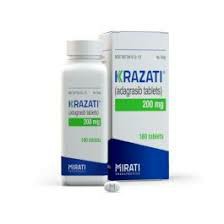
In the face of resistance to adagrasiib, several response strategies are gradually being implemented in clinical practice. The first step is to conduct genetic testing again to clarify the resistance mechanism and identify whether there are targetable secondary mutations. If it is accompanied by abnormalities in the EGFR pathway or PI3K pathway, doctors may consider adding combination drugs such as EGFR inhibitors and mTOR inhibitors to form synergistic inhibition of the target. Another development direction is to combine adagrasib with immune checkpoint inhibitors to activate the immune response in the tumor microenvironment, especially for patients with positive PD-L1 expression.
For patients who have completely failedKRAS G12C inhibitors, they can also consider switching to the next generation of KRAS inhibitors, such as dual-targeting molecules under development, or new inhibitors based on KRAS mutation subtypes. In addition, some patients can obtain breakthrough treatment opportunities by participating in clinical trials to obtain targeted drugs or combination regimens that are still in the experimental stage but have novel mechanisms.
Importantly, resistance to adagrasiib does not represent the end of targeted therapy, but the starting point of a new round of precision therapy. In the future, personalized treatment strategies based on drug resistance mechanism typing will become mainstream. Doctors can develop subsequent treatment paths based on the molecular characteristics of patients' tumors, thereby continuing the long-term benefits of targeted therapy. For patients, close follow-up and genetic dynamic monitoring will become an important part of post-resistance management.
References:https://www.krazati.com/
[ 免责声明 ] 本页面内容来自公开渠道(如FDA官网、Drugs官网、原研药厂官网等),仅供持有医疗专业资质的人员用于医学药学研究参考,不构成任何治疗建议或药品推荐。所涉药品可能未在中国大陆获批上市,不适用于中国境内销售和使用。如需治疗,请咨询正规医疗机构。本站不提供药品销售或代购服务。


