
.jpeg)
Does rubicatin/rubitin belong to the category of chemotherapy drugs?
Lurbinectedin Although it is a newer type of anti-tumor drug, based on its mechanism of action and pharmacological classification, it is indeed classified into the category of "chemotherapy drugs". The core mechanism of action of this drug is to inhibit the activity of RNA polymerase II by binding to the minor groove region of DNA, thereby blocking the transcription process of cancer cells and inducing apoptosis. It does not target a single mutation pathway, but widely affects the cell cycle, DNA repair and gene expression. Therefore, it is included in the category of "alkylating agent analogs" or "transcription inhibitory cytotoxic drugs", which is essentially similar to traditional platinum-based and taxane-based chemotherapy drugs.
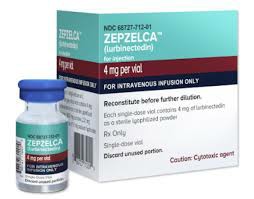
Unlike some targeted drugs that target specific molecular markers, the killing mechanism of rubitidine does not depend on whether the patient carries a certain mutation, nor does it involve immune response regulation, so it does not fall into the category of precision therapy or immunotherapy drugs. This also makes its application wider, especially for patients with small cell lung cancer who are resistant to standard first-line chemotherapy. Despite this, its adverse reactions are also improved compared to traditional chemotherapy drugs. Common side effects such as neutropenia, fatigue, nausea, etc. can be effectively controlled through adjuvant medication in clinical practice, showing certain safety advantages.
At present, European and American cancer treatment guidelines have listed rubitidine as one of the standard treatment drugs after recurrence of small cell lung cancer (SCLC). It has a good response rate especially for patients who relapse after platinum therapy. Although its name has a "definite" structure, similar to some targeted drugs, its essence is still a cytotoxic chemotherapy drug with broad-spectrum anti-tumor activity. This characteristic determines that its positioning in the tumor treatment pathway is still biased towards traditional chemotherapy sequences, especially in patients who have failed or are not suitable for immunotherapy and play an important complementary role.
Reference materials:https://www.zepzelca.com/
[ 免责声明 ] 本页面内容来自公开渠道(如FDA官网、Drugs官网、原研药厂官网等),仅供持有医疗专业资质的人员用于医学药学研究参考,不构成任何治疗建议或药品推荐。所涉药品可能未在中国大陆获批上市,不适用于中国境内销售和使用。如需治疗,请咨询正规医疗机构。本站不提供药品销售或代购服务。


