
.jpeg)
Whether Upadacitinib can treat eczema and related clinical evidence
Upadacitinib is a selective JAK1 inhibitor initially used to treat immune-mediated diseases such as rheumatoid arthritis. In recent years, as its efficacy in the field of dermatology has been gradually recognized, upadatinib has been approved in many European and American countries for the treatment of moderate to severe atopic dermatitis (ie, eczema). In 2022, the U.S. FDA officially approved it as a systemic treatment option, suitable for patients 12 years old and above who have poor control over external medication. This indicates that the clinical role of upadatinib in the treatment of eczema has been widely recognized by the global medical community.
Several pivotal clinical trials (such asMeasure Up 1 and Measure Up 2) have verified the efficacy of upadatinib in the treatment of eczema. The results of the study showed that patients taking upadatinib had more than 70% of their skin lesions significantly improved at 12 weeks (EASI-75 score achievement rate). At the same time, the itching was significantly reduced, and the quality of sleep and quality of life were significantly improved. Compared with traditional topical hormones, cyclosporine or non-selective immunosuppressants, upadatinib, as an oral small molecule drug, has a faster onset of action and better compliance. It is especially suitable for patients with long-term disease courses and frequent relapses.
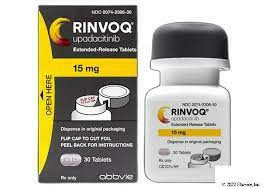
Although upadatinib has excellent performance in improving eczema symptoms, as a JAK inhibitor, it also has certain risks of side effects, including upper respiratory tract infection, increased blood lipids, changes in blood cell counts, and increased liver enzymes. Therefore, blood routine, liver and kidney function and blood lipid indicators need to be monitored regularly during use. Compared with systemic hormones or phototherapy, the overall incidence of adverse reactions of upadatinib is lower, and most of them are mild to moderate, which can be alleviated by adjusting the dose or symptomatic treatment. For patients with high-risk factors, such as cardiovascular disease or infection history, doctors should carefully evaluate whether to take medication.
Up to now, upadatinib has not been officially approved for the treatment of atopic dermatitis in China. It is only approved for the treatment of rheumatic immune diseases such as rheumatoid arthritis and psoriatic arthritis. However, there are some cross-border clinical trials or individual import channels that allow patients to use the drug in advance to control refractory eczema. With the accumulation of more real-world data around the world, it is expected that Upadatinib will be approved for eczema indications in China in the future, providing a more effective and convenient treatment option for moderate to severe patients. For patients whose current external medications are ineffective and have frequent relapses, upadatinib may become a new treatment hope.
Reference materials:https://www.drugs.com/
[ 免责声明 ] 本页面内容来自公开渠道(如FDA官网、Drugs官网、原研药厂官网等),仅供持有医疗专业资质的人员用于医学药学研究参考,不构成任何治疗建议或药品推荐。所涉药品可能未在中国大陆获批上市,不适用于中国境内销售和使用。如需治疗,请咨询正规医疗机构。本站不提供药品销售或代购服务。


