
.jpeg)
Recommended daily dosage and medication instructions for Nintedanib
With the increasing incidence of chronic progressive lung diseases such as pulmonary fibrosis, systemic sclerosis-related interstitial lung disease (SSc-ILD), and tumors with interstitial lesions, nintedanib (Nintedanib), as a new, oral, small molecule tyrosine kinase inhibitor, has been included in guideline recommendations in many countries and regions due to its good anti-fibrosis effect. In order to help patients take the drug more scientifically and standardizedly, this article will systematically review the actual use of nintedanib, focusing on the "daily recommended dosage" and "clinical medication guidance".
1. Introduction to nintedanib: an important breakthrough in anti-fibrosis targeted therapy
Nintedanib was originally developed by the German company Boehringer Ingelheim. It is a multi-target tyrosine kinase inhibitor that mainly inhibits VEGFR (vascular endothelial growth factor receptor), < span>FGFR (fibroblast growth factor receptor) and PDGFR (platelet-derived growth factor receptor) and other pathways to achieve anti-angiogenesis and anti-fibrosis effects. Currently, nintedanib is mainly used to treat the following three types of diseases:
Idiopathic pulmonary fibrosis (IPF)
Systemic sclerosis-associated interstitial lung disease (SSc-ILD)
Chronic progressive fibrosing interstitial lung disease (PF-ILD)
2. Recommended daily dosage
Recommended doses of nintedanib are generally consistent across indications. Whether treating idiopathic pulmonary fibrosis or systemic sclerosis lung disease, the following are recommended:
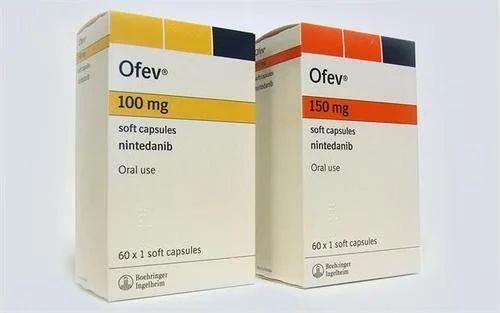
Daily dose:300mg
Specific dosage:150mg Twice a day (morning and evening)
Taking time: It is recommended to take it within 30 minutes during or after meals to reduce gastrointestinal irritation
For some patients with mildly impaired liver function or intolerance to side effects, the dose can be reduced to 100mg each time, twice a day (a total of 200mg/day), but this needs to be done under the guidance of a doctor's evaluation.
3. Medication precautions and guidance on frequently asked questions
1.Does it need to be taken on an empty stomach?
It is not recommended to take it on an empty stomach. Nintedanib is best taken during or after meals, which can significantly reduce gastrointestinal discomfort symptoms such as nausea and diarrhea caused by drug stimulation.
2.How to arrange the medication time?
It is recommended to take the medicine at an interval of about 12 hours (such as 8 o'clock in the morning and 8 o'clock in the evening) to ensure that the drug concentration remains stable in the body. If you miss a meal, it is still recommended to take it with a small amount of food and avoid taking the medicine directly on an empty stomach.
3.What should I do if I miss a dose?
If you forget to take the medicine and it is within 3 hours of the original time, you can take it again; if it exceeds 3 hours, it is recommended to skip the medicine and take the next dose according to the original plan. Do not double the medicine.
4.What should I do if I have diarrhea or nausea after taking medicine?
Gastrointestinal discomfort is the most common side effect of nintedanib, especially diarrhea. Patients with mild symptoms can be relieved by drinking more water, adjusting their diet, and using antidiarrheal drugs such as loperamide. If symptoms persist for more than 48 hours or affect normal life, you should consult your doctor whether to adjust the dose or suspend treatment.
5.Can it be taken for a long time?
Nintedanib is a chronic disease treatment drug, and its efficacy is slowly established. It needs to be taken regularly for a long time to inhibit the progression of pulmonary fibrosis. Studies have shown that regular medication can delay the decline of lung function and reduce the risk of acute exacerbation.
4. Medication recommendations for special populations
Patients with abnormal liver function: Child-Pugh A patients can take the standard dose, B patients are recommended to use a reduced dose, C patients are not recommended;
Patients with renal insufficiency: Generally, no dose adjustment is required, but patients with severe renal impairment still need to closely monitor drug tolerance;
Elderly patients:≥65 The tolerance is slightly worse, especially gastrointestinal reactions need to be more cautious, and monitoring should be strengthened when starting treatment;
Users combined with other drugs: Nintedanib is metabolized by CYP3A4. When used together with anticoagulants, antihypertensive drugs, some antibiotics, etc., please pay attention to the risk of interaction.
5. Suggestions for regular inspection items during medication
In order to ensure the safety and efficacy of medication, the following regular inspection items are recommended:
Monthly test liver function (ALT, AST, bilirubin, etc.);
Assess lung function every2-3months (FVC, DLCO);
Monitor weight changes and symptoms of gastrointestinal discomfort;
If you have a history of cardiovascular disease, have your blood pressure and electrocardiogram checked regularly.
6. Nintedanib price and medical insurance information (2025updated)
Nintedanib has been officially launched in mainland China and has been included in the national medical insurance directory. Although the price before reimbursement is relatively high, with a box (150mg*60 capsules) selling for around 1 yuan, the actual burden on patients is greatly reduced after reimbursement by medical insurance. Especially for urban and rural residents covered by medical insurance, the reimbursement ratio can reach more than 70%. The specific price and reimbursement range should be subject to the policies of the local medical insurance department or hospital pharmacy.
In addition, patients who are difficult to cover by medical insurance or need long-term medication can also choose to purchase Indian generic versions of drugs through overseas channels. The price per box is only about 400 to 500 yuan, but they need to pay attention to the source and compliance of the drugs and beware of the risk of counterfeit drugs.
7. Summary: Scientific and standardized medication is the key to delaying the progression of pulmonary fibrosis.
Nintedanib is an internationally recognized anti-pulmonary fibrosis targeted drug, and its therapeutic value has been confirmed in multiple clinical trials and real-world studies. Standard intake of 150mg twice a day, attention to the management of gastrointestinal reactions, and regular testing of liver and lung function are the core elements to ensure the safety and efficacy of treatment. For the majority of patients with pulmonary fibrosis or systemic sclerosis combined with interstitial lung disease, understanding and mastering the correct way to take medication can help stabilize the condition in the long term, delay disease progression, and improve the quality of life. It is recommended that patients make individualized adjustments under the guidance of professional doctors and do not stop medication or change doses without authorization, so as to achieve the goals of scientific medication and precise treatment.
Reference materials:https://www.drugs.com/
[ 免责声明 ] 本页面内容来自公开渠道(如FDA官网、Drugs官网、原研药厂官网等),仅供持有医疗专业资质的人员用于医学药学研究参考,不构成任何治疗建议或药品推荐。所涉药品可能未在中国大陆获批上市,不适用于中国境内销售和使用。如需治疗,请咨询正规医疗机构。本站不提供药品销售或代购服务。


