
.jpeg)
Nearly half of patients respond to rituxitinib for alopecia areata, with most results lasting
Ritlecitinib (Litfulo; Pfizer) produced a clinical response in nearly half of patients with alopecia areata (AA), and a partial response in 12.6% of study participants, according to a published study. Researchers also reported that gender and duration of hair loss were factors in this clinical response pattern.
The U.S. Food and Drug Administration has approved the highly selective Janus kinase 3 inhibitor ritexitinib for the treatment of severe AA in adults and adolescents aged 12 years and older. The inhibitor has shown significant efficacy in AA. The Phase 2b/3 ALLEGRO trial (NCT03732807) was the basis for the drug's approval in this indication. In addition to clinical response efficacy demonstrated by the Severity of Hair Loss Tool (SALT), other subgroup studies have demonstrated the efficacy of ritexitinib in different patient populations.
This study analyzed theALLEGRO study and the ongoing open-label Phase 3 ALLEGRO-LT study (NCT04006457) to evaluate and characterize clinical responses to rituxitinib 50 mg in patients with AA. The analysis focused on patients with greater than or equal to 50% scalp hair loss, including alopecia totalis (AT) and alopecia universalis (AU), who were either rollover patients or new to ALLEGRO-LT. Patients were divided into six response groups based on SALT score trajectories over 24 months.
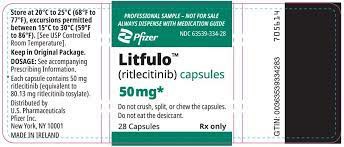
Rituxitinib50 mg once daily has shown promising durability and depth of clinical response in patients with moderate to severe AA. Of the 191 patients in the flipping cohort, nearly half (45.5%) achieved significant scalp hair regrowth, defined as a SALT score of less than or equal to 20 by month 24. These responders were further divided into early (18.3%), intermediate (16.8%), and late (10.5%) responders.
Of those who responded,46.0% achieved complete scalp hair regrowth (SALT score of 0), and 93.1% maintained response over 2 years. Notably, improvement was observed in all responder categories, with early and intermediate responders showing almost complete regeneration at 12 months.
Baseline characteristics played an important role in predicting treatment outcomes, researchers reported. Early responders tend to be younger and primarily female (91.4%), had milder disease at baseline, with a mean SALT score of 79.9, and a shorter mean duration of current AA episodes (2.3 years). In contrast, nonresponders were more likely to have more extensive alopecia, higher SALT scores (mean 96.8), longer disease duration, and higher prevalence of AT or AU. Abnormal eyebrow and eyelash assessments at baseline were also more common among nonresponders.
Multivariable regression models confirmed that several independent baseline factors were significantly associated with reduced odds of a meaningful response to ritexitinib. These factors include older age, male sex, longer duration of scalp alopecia (≥50%), and higher baseline SALT score. Specifically, an increase in age of 21 years corresponded to a 63.6% decrease in the likelihood of response, while an increase in the duration of scalp hair loss of 3 years was associated with a 46.5% decrease in the likelihood of response. The presence of comorbid atopic diseases such as asthma, allergic rhinitis, or autoimmune thyroiditis does not affect treatment outcome.
References:https://www.dermatologytimes.com/view/nearly-half-of-patients-respond-to-ritlecitinib-for-alopecia-areata-with-most-sustaining-results
[ 免责声明 ] 本页面内容来自公开渠道(如FDA官网、Drugs官网、原研药厂官网等),仅供持有医疗专业资质的人员用于医学药学研究参考,不构成任何治疗建议或药品推荐。所涉药品可能未在中国大陆获批上市,不适用于中国境内销售和使用。如需治疗,请咨询正规医疗机构。本站不提供药品销售或代购服务。


