
.jpeg)
Rubicatin/rubitin maintenance combination receives FDA priority review in ES-SCLC
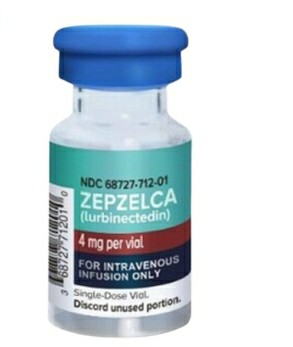
According to developerJazz Pharmaceuticals 1 press release, the U.S. Food and Drug Administration (FDA) has approved a priority supplemental new drug application (sNDA) for lurbinectedin plus atezolizumab. Reviewed as first-line maintenance therapy for patients with advanced small cell lung cancer (ES-SCLC) who have not progressed on induction therapy with atezolizumab plus carboplatin/etoposide.
Supporting data for the sNDA come from the IMforte Phase 3 trial (NCT05091567), which evaluated rubitidine in combination with atezolizumab versus atezolizumab alone as maintenance therapy in patients with ES-SCLC. Researchers presented results from the IMforte trial at the 2025 American Society of Clinical Oncology (ASCO) Annual Meeting. The median progression-free survival (PFS) from random assignment to maintenance was 5.4 months (95% CI, 4.2-5.8) with rubnetidine combination therapy compared with rubnetidine alone Median survival with atezolizumab was 2.1 months (95% CI, 1.6-2.7) (HR, 0.54; 95% CI, 0.43-0.67; P<0.0001). The progression-free survival rates of each treatment group were 41.2% and 18.7% at 6 months, respectively, and 20.5% and 12.0% at 12 months.
Other data showed that the median overall survival (OS) of the rubitidine combination treatment group was 13.2 months (95% CI, 11.9-16.4 ) and 10.6 months (95% CI, 9.5-12.2) in the atezolizumab monotherapy group (HR, 0.73; 95% CI, 0.57-0.95; P=0.017). At 12 months, the OS rates of each group were 56.3% and 44.1% respectively; Rubitidine combination treatment The absolute risk of OS was reduced by 12.1% (95% CI, 1.97%-22.31%).
Adding rubitidine to atezolizumab improved PFS and OS in most predefined subgroups, including sex, race, and ethnicity, although there was no OS improvement in patients with lactate dehydrogenase concentrations above the upper limit of normal and in patients with prophylactic cranial irradiation. IMforte's data showed that there were no new or unexpected safety signals associated with the rubitidine combination. Across the entire experimental group, the most commonGrade 3/4 adverse reactions included anemia (8%), decreased neutrophil count (7%), decreased platelet count (7%), and neutropenia (5%).
IMforte is the first Phase 3 study to show that first-line maintenance therapy in ES-SCLC improves PFS and OS, highlighting the potential of rubitidine plus atezolizumab to become the new standard of first-line maintenance therapy for patients with this aggressive and difficult-to-treat disease. In the open-label, multicenter IMforte trial, 483 patients entering the maintenance phase were randomized 1:1 to receive either rubitidine plus atezolizumab (n=242) or atezolizumab alone (=241). The researchers administered rubitidine at a dose of 3.2 mg/m2, supplemented by granulocyte colony-stimulating factor prophylaxis, and added 1200 mg of atezolizumab every 3 weeks, or atezolizumab alone every 3 weeks.
The trial's primary endpoints were independent review agency - PFS based on RECIST v1.1 criteria and OS. Secondary endpoints included investigator-assessed progression-free survival, objective response rate, and duration of response. The U.S. Food and Drug Administration's priority review designation of rubitidine in combination with atezolizumab as first-line maintenance therapy highlights the urgent need for new approaches and the potential benefit for patients with ES-SCLC, a disease with limited treatment options and high unmet need, that this combination may help extend their lives without worsening the disease.
Reference materials:https://www.zepzelca.com/
[ 免责声明 ] 本页面内容来自公开渠道(如FDA官网、Drugs官网、原研药厂官网等),仅供持有医疗专业资质的人员用于医学药学研究参考,不构成任何治疗建议或药品推荐。所涉药品可能未在中国大陆获批上市,不适用于中国境内销售和使用。如需治疗,请咨询正规医疗机构。本站不提供药品销售或代购服务。


