
.jpeg)
Cabozantinib (Cabozantinib) Drug Instructions Contents, Usage, Dosage and Contraindications Detailed Explanation
Cabozantinib is an oral multi-target tyrosine kinase inhibitor (TKI), with trade names including Cabometyx (tablets) and Cometriq (capsules). It mainly inhibits tumor growth, metastasis and angiogenesis by inhibiting various tyrosine kinase pathways in tumor cells, including MET, VEGFR, AXL and RET. Cabozantinib is currently approved in many countries and regions around the world for the treatment of advanced renal cell carcinoma (RCC), hepatocellular carcinoma (HCC) and medullary thyroid cancer (MTC). The following is a detailed analysis of the dosage, contraindications and other precautions in the cabozantinib instructions.
1. Detailed explanation of indications
Cabozantinib indications mainly include the following categories:
1.Advanced renal cell carcinoma (RCC): Applicable to adult patients who have previously received anti-angiogenic therapy. As a second-line treatment, cabozantinib shows better advantages in extending progression-free survival and overall survival.
2.Hepatocellular carcinoma (HCC): Applicable to adult patients who have previously received sorafenib treatment. It has shown certain clinical efficacy in liver cancer patients by inhibiting tumor angiogenesis and the MET signaling pathway.
3.Medullary thyroid cancer (MTC): used for the treatment of MTC patients who cannot be surgically removed or have metastasized, especially for cases with positive RET mutations.
It is important to note that the different dosage forms (Cabometyxtablets vs. Cometriqcapsules) are not interchangeable due to differences in their pharmacokinetics and dosing schedules.
2. Usage and dosage instructions
Cabozantinib must be used under the guidance of experienced oncologists, and its dose should be reasonably adjusted according to different indications and individual tolerance. The following are recommended dosages:
1.Renal cell carcinoma (RCC) and hepatocellular carcinoma (HCC):
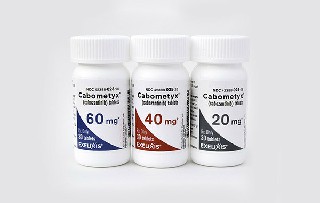
The recommended dose is 60 mg once dailyorally.
Should be taken on an empty stomach (at least 2 hours before meals or 1 hours after meals).
If Grade 3 or above toxic reactions occur, medication should be suspended and the dose should be reduced to 40mg or 20mg based on recovery.
2.Medullary thyroid carcinoma (MTC):
The recommended dose is 140 mg once daily (taken in capsule form).
It should also be taken on an empty stomach and should not be taken with food to prevent irregular drug absorption.
3.Dose adjustment and management:
In the event of adverse reactions such as hypertension, hand-foot syndrome, gastrointestinal perforation, severe diarrhea, bleeding, proteinuria, etc., the medication may need to be suspended and the dose reduced before restarting after the symptoms are relieved.
When coadministering CYP3A4 strong inhibitors or inducers, attention should be paid to adjusting the dose of cabozantinib to avoid excessively high or low plasma concentrations.
3. Contraindications and people who should use it with caution
Although cabozantinib is a targeted therapy with broad antitumor activity, it is not suitable for all populations. The following are the main contraindications and groups of people who should use it with caution:
1.Contraindicated in patients with known allergies to cabozantinib or its components.
2. It is prohibited or should be used with caution in patients with severe hepatic insufficiency: the drug is mainly metabolized by the liver, and toxic accumulation may occur after use in patients with severe liver impairment.
3. Use with caution in patients with active bleeding or coagulation disorders: Cabozantinib may increase the risk of bleeding, including gastrointestinal bleeding, epistaxis, cerebral hemorrhage, etc.
4.Use with caution in patients with previous gastrointestinal perforation or fistula: Cabozantinib can cause gastrointestinal perforation or fistula formation, especially in patients who have received previous radiation therapy or gastrointestinal surgery.
5.Contraindicated for pregnant and lactating women: Animal studies have shown that this drug may have serious effects on fetal development. Women should take contraceptive measures during and at least 4 months after treatment.
Safety and effectiveness for use in children and adolescents have not been established.
4. Adverse reactions and monitoring suggestions
Cabozantinib has many common adverse reactions and requires regular monitoring, including the following:
1.Skin toxicity: such as hand-foot syndrome (erythema, peeling, pain), rash, etc. It is recommended that patients avoid excessive friction and hot water scalding, and promptly detect and deal with early detection.
2.Gastrointestinal reactions: such as diarrhea, nausea, stomatitis, vomiting, etc. In severe cases, dehydration and electrolyte imbalance may occur. Use antidiarrheal drugs and rehydration if necessary.
3.Hypertension: This is one of the common adverse reactions of cabozantinib, especially in the early stages of treatment. Patients are advised to control their blood pressure before taking the medication and monitor it regularly.
4.Abnormal liver function: If ALT and AST are elevated, liver enzymes should be tested regularly before and during treatment.
5.Fatigue and weight loss: Most are reversible, but dose adjustment may be considered when the quality of life continues to be affected.
6.Other serious but rare adverse reactions: such as thrombosis, pulmonary embolism, QT interval prolongation, delayed wound healing, etc.
5. Drug interactions
Cabozantinib is mainly metabolized by CYP3A4, so combination with strong CYP3A4 inhibitors (such as ketoconazole, clarithromycin) or inducers (such as rifampicin, phenobarbital) should be avoided to avoid affecting the efficacy or increasing toxicity. If coadministration is necessary, the risks should be carefully assessed and dosage adjustments should be made.
In addition, cabozantinib is a highly protein-bound drug. Combining it with other highly protein-bound drugs may cause competitive displacement and increase the concentration of active drugs. At the same time, it can inhibit a variety of transporters such as BCRP and P-gp, potentially interfering with the excretion process of other drugs.
Cabozantinib, as a multi-target oral targeted drug, has been proven to have good effects on a variety of malignant tumors such as kidney cancer, liver cancer, and thyroid cancer. During use, you need to strictly follow the recommended dosage in the instructions and adjust it according to individual conditions. This drug has many adverse reactions and involves multiple system organs. Therefore, it must be used under the guidance of a professional doctor. Blood pressure, liver and kidney function, electrolyte levels and other indicators should be regularly tested to deal with potential toxic reactions in a timely manner. The rational use of cabozantinib is expected to bring survival benefits to tumor patients and is currently one of the important means in the treatment of various refractory tumors.
Reference materials:https://www.drugs.com/
[ 免责声明 ] 本页面内容来自公开渠道(如FDA官网、Drugs官网、原研药厂官网等),仅供持有医疗专业资质的人员用于医学药学研究参考,不构成任何治疗建议或药品推荐。所涉药品可能未在中国大陆获批上市,不适用于中国境内销售和使用。如需治疗,请咨询正规医疗机构。本站不提供药品销售或代购服务。


