
.jpeg)
Instructions for use and marketing status of glyceryl phenylbutyrate oral solution (Ravicti)
1. Common name: Glycerol Phenylbutyrate Oral Liquid for oral useGlycerol Phenylbutyrate Oral Liquid
Product name:Ravicti, Rivian
2. Indications:
Glycerol Phenylbutyrate Oral Liquid is indicated for the chronic management of patients with urea cycle disorders (UCDs) who cannot be managed by dietary protein restriction and/or amino acid supplementation alone. Oral phenylbutyrin must be used with dietary protein restriction and in some cases dietary supplements (e.g., essential amino acids, arginine, citrulline, protein-free caloric supplements).
Usage restrictions:
1. Oral glyceryl phenylbutyrin is not indicated for the treatment of acute hyperammonemia in patients with UCDs, as more rapid intervention is essential to reduce plasma ammonia levels.
2. The safety and effectiveness of oral administration of glycerol phenylbutyrin to treat N-acetylglutamate synthase (NAGS) deficiency has not been established.
3. Usage and dosage:
1. How to use
-The total daily dose is divided into 3 to 6 servings, taken orally, with meals
-When taking this product, you must limit protein intake in the diet and add dietary supplements (such as essential amino acids, arginine, citrulline, protein-free energy supplements) as needed.
2. Recommended dosage:
The dosage of oral glycerol phenylbutyrin is based on the patient's diet, height, and weight. Periodic blood tests are needed to adjust the dosage. The total daily dose of oral glycerol phenylbutyrate should be divided into equal amounts and taken with each meal. Oral phenylbutyrate is likely life-long treatment unless the patient has a successful liver transplant.
-The recommended total daily dose needs to be calculated based on body surface area, ranging from 4.5ml/m2/day to 11.2ml/m2/day;
-Patients under 2 years old: The single dose should be determined to the nearest 0.1ml (for example, 0.11ml, then take 0.2ml); the total daily dose should be divided into 3 to 6 portions, taken orally, with meals;
-Patients 2 years and older: Single doses should be kept to the nearest 0.5ml (e.g. 0.55ml, round to 1.0ml). The total daily dose is divided into 3 to 6 servings, taken orally, with meals;
-Recommended starting dose for phenylbutyrate-naïve patients:
1) Patients with body surface area (BSA) <1.3m2: The recommended dose is 8.5ml/m2/day; the total daily dose is divided into 3 to 6 portions, taken orally with meals;
2) Patients with body surface area ≥1.3m²: The recommended dose is 7ml/m2/day; the total daily dose is divided into 3 to 6 servings, taken orally, with meals;
-The starting dose for patients switching from sodium phenbutyrate to glyceryl phenylbutyrate: total daily dose of glyceryl phenbutyrate (mL) = total daily dose of sodium phenylbutyrate granules (g) x 0.81; the total daily dose is divided into 3 to 6 servings, taken orally, with meals.
4. Adverse reactions:
In clinical studies of oral glyceryl phenylbutyrate, common adverse reactions include diarrhea, headache, flatulence, abdominal pain, vomiting, loss of appetite, fatigue, indigestion, nausea, dizziness, and abdominal discomfort; after the drug is put on the market, adverse events such as abnormal body odor (including odor from skin, hair, and urine), nausea and vomiting, dysgeusia, or burning sensation in the mouth have also occurred.
5. Supply and storage:
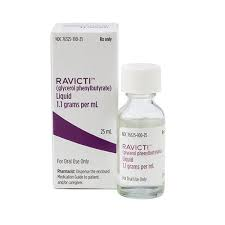
Glyceryl phenylbutyrate for oral use is available1.1 g/ml in 25 ml multi-purpose glass bottles, which can be stored at 20-25°C (68-77°F) with a tolerance of 15-30°C (59-86°F). Throw away bottle 28 days after opening
6. Taboo:
Oral administration of glycerol phenylbutyrate is contraindicated in patients with known hypersensitivity to phenylbutyrate. Allergy symptoms include wheezing, difficulty breathing, coughing, low blood pressure, flushing, nausea and rash.
7. Mechanism of action:
UCDs are genetic defects in enzymes or transporters necessary for the synthesis of urea from ammonia (NH3, NH4+). A lack of these enzymes or transporters causes toxic levels of ammonia to accumulate in the blood and brain of affected patients. Glyceryl phenylbutyrate is a triglyceride containing 3 PBA molecules. PAA is the main metabolite of PBA and the active part of glycerol phenylbutyrin. Phenyl acetate (PAA) combines with glutamine (containing 2 nitrogen molecules) through acetylation in the liver and kidneys to form phenylacetyl glutamine (PAGN), which is excreted by the kidneys. On a molar basis, PAGN, like urea, contains 2 moles of nitrogen and provides an alternative excretion carrier for waste nitrogen. xa0
8. Listing situation:
1. United States: In February 2013, it was approved by the U.S. Food and Drug Administration (FDA) for sale under the trade name of Ravicti;
2. European Union: approved by the European Medicines Agency (EMA) for marketing in November 2015, with the trade name Ravicti; 3. China: approved by the National Medical Products Administration in July 2023, with the trade name Ravicti.
Reference materials:https://www.ravicti.com/
[ 免责声明 ] 本页面内容来自公开渠道(如FDA官网、Drugs官网、原研药厂官网等),仅供持有医疗专业资质的人员用于医学药学研究参考,不构成任何治疗建议或药品推荐。所涉药品可能未在中国大陆获批上市,不适用于中国境内销售和使用。如需治疗,请咨询正规医疗机构。本站不提供药品销售或代购服务。


