
.jpeg)
What is the effect of taking Adagrasib for three months?
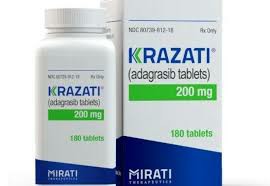
Adagrasib is a targeted drug that specifically targets the KRAS G12C mutation. It belongs to a new generation of small molecule inhibitors, and its trade name is Krazati. It is usually used to treat patients with non-small cell lung cancer (NSCLC) whose disease has progressed despite having received at least one systemic therapy. After taking adagrasiib for three months, many patients will begin to evaluate whether the drug has produced significant effects. This time point is not only a key point to detect the effect of disease control, but also reflects the differences in individual responses to drugs.
Based on existing clinical experience, if the patient can tolerate the common side effects of the drug such as nausea, fatigue, mild liver enzyme elevation, etc. after starting to take the drug, and no new lesions are observed through imaging review (such as chestCT, PET-CT) at three months, and the original tumor shrinks or remains stable, this is usually considered that the drug has taken effect. Especially among patients with clear KRAS G12C mutations who have not used such targeted drugs before, three months of treatment can often see improvements in symptoms, such as cough reduction, smooth breathing, and improved quality of life.
Of course, whether the effect is significant is also closely related to the patient's overall physical condition, mutation load, concomitant medications, immune status and other factors. Although some patients do not experience imaging tumor shrinkage within three months, the lesions do not continue to expand and there is no obvious clinical deterioration. This situation is also considered as "stable disease" and the effect of treatment can continue to be observed. If the tumor progresses rapidly after three months, it may indicate natural resistance to adagrasib. It is recommended to communicate with the doctor immediately whether the treatment regimen or combination of drugs needs to be changed.
Therefore, the evaluation of efficacy after three months of use needs to be based on clinical symptoms, laboratory indicators and imaging results. Reasonable evaluation can help patients adjust treatment strategies in a timely manner to maximize the quality and time of survival. At the same time, The treatment of KRAS G12C is still in the rapid development stage, and future combined treatments and alternating regimens may further improve treatment outcomes after three months.
Reference materials:https://www.krazati.com/
[ 免责声明 ] 本页面内容来自公开渠道(如FDA官网、Drugs官网、原研药厂官网等),仅供持有医疗专业资质的人员用于医学药学研究参考,不构成任何治疗建议或药品推荐。所涉药品可能未在中国大陆获批上市,不适用于中国境内销售和使用。如需治疗,请咨询正规医疗机构。本站不提供药品销售或代购服务。


