
.jpeg)
What is the clinical trial status of the new drug mivamutide injection?
Mifamurtide injection (Mifamurtide) is a new type of immunomodulator, and its performance in clinical trials has attracted widespread attention from the medical community. The drug's active ingredient, Mifamurtide, enhances the body's immune response to cancer by activating important components of the immune system, such as macrophages and monocytes. In recent years, studies on patients with osteosarcoma have shown that mivamutin may play an important role in the treatment process.
Osteosarcoma is a malignant tumor that occurs primarily in the bones, usually in adolescents and young adults. Due to its unique biological behavior, osteosarcoma has a high rate of metastasis and recurrence, so effective treatments remain a major clinical challenge. The emergence of mivamutin provides a new possibility for the treatment of osteosarcoma, especially in terms of how to reduce the risk of recurrence after surgical resection.
In a multicenter randomized controlled trial involving678 patients, researchers conducted an in-depth exploration of the efficacy of mifamurtide. The patients ranged in age from 1 to 31 years old and were all patients with high-grade non-metastatic osteosarcoma. After surgery to remove the tumors, all participants received a combination of standard anti-cancer drugs including chemotherapy, while half of the patients received an additional treatment with mivamutide. The primary objective of the study was to compare relapse-free survival between those who took miavamutide and those who did not.
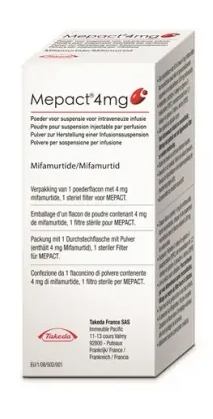
After 10 years of follow-up, the results showed that patients taking mivamutide had made significant progress in disease recurrence-free survival. Of the patients who received mivamutide, 68% (231 of 338) were free of disease recurrence, compared with 61% (207 of 340) of the group who did not receive mivamutide. This data clearly demonstrates the positive clinical significance of mivamutin in extending patients' relapse-free survival.
In addition, the study also found that patients treated with mivamutide also had a significant reduction in the risk of death by 28%. This finding has important guiding significance for the clinical management of patients with osteosarcoma, prompting doctors to consider incorporating mivamutin into the treatment plan when formulating personalized treatment plans, in order to improve the patient's survival rate and quality of life.
Although the mechanism of action of mivamutin has not yet been fully elucidated, studies have shown that Mifamurtide may enhance the body's ability to attack tumor cells by promoting the activation of immune cells and the release of inflammatory mediators. This mechanism of action provides a theoretical basis for its potential in clinical applications.
It is worth noting that the clinical application of mivamutide is not without challenges. Although the clinical trial results are encouraging, in practical applications, doctors need to comprehensively consider the patient's specific situation, including pathological type, physical condition, and possible side effects. In addition, the use of mivamutide should be carefully evaluated and conducted in appropriate patient populations to ensure its safety and efficacy.
In conclusion, mivamutin injection showed good therapeutic prospects in clinical trials of osteosarcoma. With further research on its mechanism of action and continuous improvement of clinical practice, we expect that mivamuttide can bring more hope to patients with osteosarcoma and become an important therapy in this field.
Reference materials:https://www.ema.europa.eu/en/medicines/human/EPAR/mepact
[ 免责声明 ] 本页面内容来自公开渠道(如FDA官网、Drugs官网、原研药厂官网等),仅供持有医疗专业资质的人员用于医学药学研究参考,不构成任何治疗建议或药品推荐。所涉药品可能未在中国大陆获批上市,不适用于中国境内销售和使用。如需治疗,请咨询正规医疗机构。本站不提供药品销售或代购服务。


