
.jpeg)
Where to get the drug instructions for Elacetrant
Elacestrant is a new type of selective estrogen receptor degrader (SERD) jointly developed by the American pharmaceutical company Radius Health and the Menarini Group. It is used to treat hormone receptor-positive (ER+), HER2-negative advanced or metastatic breast cancer with ESR1 mutations. The drug was approved by the FDA in early 2023 under the trade name Orserdu. To ensure proper use of a drug, both patients and doctors should understand the detailed instructions for the drug. The following is the core information and how to obtain the drug instructions:
1. [Indications]
Applicable population: Elastran is suitable for postmenopausal women or adult male patients with breast cancer, especially those who still experience disease progression after at least one endocrine therapy;
Molecular characteristics requirements: The patient's tumor must haveESR1 gene mutation, which is usually one of the molecular mechanisms leading to resistance to previous endocrine therapy;
Cancer type: Limited to advanced or metastatic breast cancer that is estrogen receptor positive (ER+) and human epidermal growth factor receptor 2 negative (HER2-).
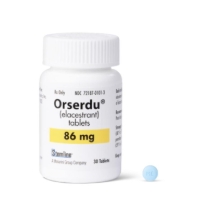
2. [Usage and Dosage]
Recommended dosage: 345 mg orally once daily;
How to take the medicine: It must be taken with food, which will help increase the bioavailability of the medicine;
Treatment cycle: It should be continued until disease progression or intolerable toxicity occurs;
Dosage form specifications: Usually tablets, each tablet generally contains345mg of the active ingredient of elastran.
3. [Pharmacokinetics and metabolic pathways]
Elagrastran mainly passes through the liverCYP3A4 enzyme is metabolized, so close monitoring is required when combined with CYP3A4 inhibitors or inducers;
The drug has a long half-life, supporting a once-daily dosing regimen;
It is not recommended to take the medicine on an empty stomach to avoid affecting the absorption rate and therapeutic effect.
4. [Common adverse reactions]
Common side effects reported in clinical trials include nausea, fatigue, arthralgia, diarrhea, dyslipidemia, and elevated liver enzymes;
Individual patients may experience electrocardiogramQT interval prolongation, regular monitoring is recommended during medication;
For those with serious adverse reactions, dosage interruption or adjustment may be considered and handled under the guidance of a doctor.
5. [Drug use for special groups]
Patients with hepatic insufficiency need to use the drug with caution, and patients with moderate to severe hepatic impairment may need to adjust the dose;
There are no clear dosage adjustment recommendations in existing studies for patients with renal insufficiency, and individualized assessment is required;
Contraindicated during pregnancy and lactation: Because it acts on the endocrine axis, it has potential teratogenic risks.
6. [Suggestions for use of the manual]
Before using elastran, doctors should carefully read the complete instructions and evaluate the efficacy and risks based on the patient'sESR1 mutation status, medication history, and comorbid diseases. Patients should take medication under the guidance of a professional doctor and have regular reviews, paying special attention to liver function and ECG monitoring. If the patient develops severe discomfort, he/she needs to stop taking the medicine immediately and seek medical advice.
7. [How to Obtain Drug Instructions]
FDA official website: Search "Orserdu" or "Elacestrant" on the U.S. Food and Drug Administration (FDA) website (https://www.accessdata.fda.gov) to obtain the authoritative English version of the instructions, including clinical trial summaries, adverse reaction rates, drug interactions, etc.;
EMA European Medicines Agency: For labeling of the European marketed version, please visit https://www.ema.europa.eu;
References:https://www.drugs.com/mtm/elacestrant.html
[ 免责声明 ] 本页面内容来自公开渠道(如FDA官网、Drugs官网、原研药厂官网等),仅供持有医疗专业资质的人员用于医学药学研究参考,不构成任何治疗建议或药品推荐。所涉药品可能未在中国大陆获批上市,不适用于中国境内销售和使用。如需治疗,请咨询正规医疗机构。本站不提供药品销售或代购服务。


