
.jpeg)
Larotinib/Larotinib resistance mechanism and subsequent treatment options
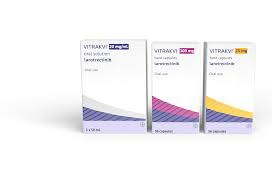
Larotrectinib is a highly selective TRK inhibitor, mainly used to treat patients with solid tumors with NTRK gene fusion. It is one of the first "tissue-independent" targeted anti-cancer drugs approved by the FDA. It can effectively block the downstream signaling of three tyrosine kinase receptors, TRKA, TRKB and TRKC, and is widely applicable to a variety of solid tumor types, including adult and pediatric patients. However, although larotrectinib shows good response rate and tolerability in the initial treatment, as the treatment time is prolonged, some patients will develop acquired resistance, leading to disease progression, which has become the focus of current clinical attention.
Larotrectinib resistance mechanisms are mainly divided into two categories: one is "site-dependent resistance" caused by target site mutations and the other is "site-independent resistance" caused by activation of alternative signaling pathways.
In site-dependent resistance, the most common one isSecondary mutations in the TRK protein structure. These mutations usually occur within the kinase domain, including solvent front region mutations in the kinase active pocket (such as TRKA G595R), gate region mutations (such as TRKC F617L), and kinase domain conformational change mutations. Such mutations will affect the spatial conformation of larotrectinib that binds to its target, thereby weakening the inhibitory ability of the drug. This type of mutation is a typical "secondary acquired mutation", similar to the EGFR T790M or ALK G1202R mutation mechanism.
Site-independent drug resistance usually involves tumor cells bypassing NTRK-dependent growth mechanisms by activating other survival pathways, such as abnormal activation of the MAPK pathway and PI3K/AKT pathway, or the emergence of new mutations such as KRAS and BRAF. This type of alternative resistance mechanism is common in patients with advanced tumors who have long-term use of larotrectinib and is closely related to the molecular heterogeneity of the tumor.
When dealing with larotrectinib resistance, individualized follow-up treatment strategies need to be developed clinically based on different mechanisms. If resistance is caused by TRK kinase structural mutations, you can consider switching to second-generation TRK inhibitors such as Selitrectinib (BAY 2731954) or Repotrectinib. These drugs have strong affinity for TRK secondary mutations and a broader inhibitory spectrum. Some patients can still achieve remission after changing drugs, especially after the type of drug-resistant mutation is clarified, and the next first-line treatment can be selected in a targeted manner.
If the resistance mechanism is related to the activation of alternative signaling pathways, further molecular testing is required, such asNGS or RNA sequencing to confirm new driver gene mutations, and then combine with other targeted drugs for combined or sequential treatment. For example, for patients with KRAS or MET amplification, combined use of a MEK inhibitor or a MET inhibitor may provide some relief. In addition, for cases with slow progression or oligometastases, local treatment modalities such as radiotherapy or radiofrequency ablation may also be considered to prolong disease control time.
In some cases, although the patient shows disease progression, but the symptoms are well controlled and there is no obvious impact on organ function, doctors may recommend continued use of larotrectinib and close monitoring, because partial resistance does not mean complete failure, especially in the stage where drug-resistant mutations have not yet dominated the progression of tumor clones.
To sum up, larotrectinib resistance is not the end point, but a turning point to the next stage of precision treatment. By clarifying the drug resistance mechanism through genetic testing, combined with a new generation of targeted drugs or combination treatment strategies, it is expected to prolong the patient's survival and improve the quality of life while controlling tumor progression.
Reference materials:https://www.vitrakvi.com/
[ 免责声明 ] 本页面内容来自公开渠道(如FDA官网、Drugs官网、原研药厂官网等),仅供持有医疗专业资质的人员用于医学药学研究参考,不构成任何治疗建议或药品推荐。所涉药品可能未在中国大陆获批上市,不适用于中国境内销售和使用。如需治疗,请咨询正规医疗机构。本站不提供药品销售或代购服务。


