
.jpeg)
Analysis of the recommended dosage, dosage, and combination regimen of Taletrectinib
The recommended dose of Taletrectinib (Taletrectinib) varies based on the latest clinical studies and approved indications. For the approved treatment of ROS1positive non-small cell lung cancer in China, the standard recommended dose for adult patients is 600mg once daily (usually two 300mg tablets), administered orally. The medicine should be swallowed whole and should not be chewed or broken to ensure stable release of the medicine. The dosage may be adjusted appropriately due to individual patient differences (such as liver function status, occurrence of side effects) and must be operated under the guidance of a doctor.
Taritinib should be taken at a fixed time every day and is not affected by diet. It can be taken on an empty stomach or with meals. However, it is recommended that taking it at the same time every day will help maintain the stability of blood concentration. In order to avoid missing doses, if the patient forgets to take the medicine at the scheduled time, he should take it as soon as possible. If it is close to the time of the next dose, he should skip that time and do not take double dose. Long-term adherence to regular medication is essential to maintain efficacy and reduce the risk of relapse.
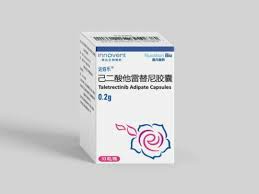
At present, talatinib is mainly used as a monotherapy in patients with ROS1 fusion-positive non-small cell lung cancer, especially in people who have failed previous treatment with ROS1 inhibitors such as crizotinib. However, as research deepens, some exploratory solutions are under way, such as combining PD-1 inhibitors, chemotherapy or other targeted drugs to enhance the anti-tumor effect, especially when drug resistance or complex mutations occur. Taritinib's strong central penetrating ability also provides the possibility for combined treatment of brain metastases.
For patients with mild to moderate liver function impairment or mild renal impairment, there is generally no need to adjust the dose; however, if serious adverse reactions occur, such as continued elevation of liver enzymes, severe fatigue, or prolongation of the QT interval, the doctor may reduce the dose to 300 mg per day or lower at the discretion of the doctor. Patients should regularly check hematological indicators, liver function and electrocardiogram during treatment with talatinib to assess whether dose adjustment or medication suspension is needed. Individualized medication is the key to ensuring efficacy and safety.
Reference materials:https://www.fda.gov/drugs/
[ 免责声明 ] 本页面内容来自公开渠道(如FDA官网、Drugs官网、原研药厂官网等),仅供持有医疗专业资质的人员用于医学药学研究参考,不构成任何治疗建议或药品推荐。所涉药品可能未在中国大陆获批上市,不适用于中国境内销售和使用。如需治疗,请咨询正规医疗机构。本站不提供药品销售或代购服务。


