
.jpeg)
Analysis of the main effects and clinical therapeutic efficacy of brigatinib
Brigatinib (Brigatinib) is a new generation of oral ALK (anaplastic lymphoma kinase) and ROS1 inhibitors, mainly used for treatmentALKpositive non-small cell lung cancer (NSCLC) have shown significant efficacy, especially in overcoming resistance to first-generation ALK inhibitors. As an important drug in the field of targeted therapy, brigatinib has gradually become one of the first choices for treatment of ALK-positive NSCLC patients due to its broad-spectrum inhibitory ability, good brain metastasis penetration and safety. This article will conduct a detailed analysis of brigatinib’s main mechanism of action, indications, clinical efficacy and future development directions.
1. Mechanism of action
Brigatinib is a multi-target tyrosine kinase inhibitor that mainly targets ALK fusion gene and ROS1 fusion gene abnormalities. ALK Gene rearrangement is a key driver mutation in non-small cell lung cancer, which promotes the proliferation and survival of tumor cells when activated. Brigatinib inhibits the activity of ALK kinase and blocks its downstream signaling pathways, inhibiting the proliferation and promoting apoptosis of tumor cells. Compared with first-generation ALK inhibitors (such as crizotinib), brigatinib's structural design optimizes its ability to inhibit drug-resistant mutations (such as G1202R, L1196M, etc.), thereby extending the duration of efficacy.
In addition, brigatinib also performs well in inhibiting the ROS1 fusion gene, which provides another effective treatment option for ROS1-positive NSCLC patients. More importantly, brigatinib has good central nervous system (CNS) penetration and can effectively control brain metastases. This is especially critical for patients with lung cancer, because brain metastases are a common and difficult-to-treat complication in patients with advanced NSCLC.
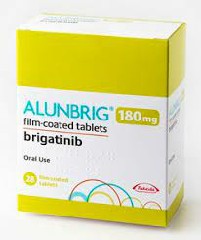
2. Clinical indications
Brigatinib is mainly approved for the treatment of patients with ALK-positive advanced non-small cell lung cancer, including those who have previously received crizotinib and other first-generationALKPatients who develop resistance after treatment with inhibitors, as well as treatment-naïve ALKpositive NSCLC patients. Some regions and guidelines also recommend it for the treatment of ROS1 positive patients.
As clinical trials continue to advance, the scope of indications for brigatinib is expected to be further expanded, including being used in a wider range of lung cancer patients in combination with other targeted drugs or immunotherapy. In addition, brigatinib is also exploring its potential role in clinical studies in other solid tumors.
3. Clinical efficacy analysis
The efficacy of brigatinib has been verified in multiple key clinical trials. ALKpositiveNSCLCIn patients, brigatinib showed a high objective response rate (ORR) and a significantly prolonged progression-free survival (PFS). In a phase IIALTA trial, brigatinib was used in patients who failed crizotinib, and the ORR was 54%
In ALK inhibitor-naïve patients, brigatinib also demonstrated excellent efficacy. ALTA-1L III phase clinical trial showed that brigatinib significantly prolonged PFS, with the median PFS reaching 24 months, far exceeding crizotinib. The median intracerebral progression-free survival of patients with brain metastases was also significantly improved, demonstrating good protection of the central nervous system.
In terms of safety, brigatinib was generally well tolerated, with the most common adverse reactions including mild to moderate gastrointestinal symptoms (such as nausea, diarrhea), hypertension, and rash. A small number of patients may develop lung inflammation (such as interstitial lung disease), which requires close monitoring and prompt treatment. Compared with first-generation ALK inhibitors, brigatinib has a lower incidence of adverse reactions and is easier to manage.
4. Future Outlook
With the continuous development of targeted therapy, brigatinib, as a new generation of ALK inhibitor, is effective in the treatment of ALK positiveNSCLC’s position in the field is increasingly stable. Future research will focus on optimizing combination drug regimens, such as combined treatment with immune checkpoint inhibitors and chemotherapy drugs, to further improve efficacy and prolong patient survival.
In addition, the mechanism of action and target characteristics of brigatinib make it possible to show potential in ROS1 positive tumors and other tumor types, and relevant clinical trials are being actively carried out. The approval of new indications is expected to expand its clinical application scope and benefit more patients.
Overall, brigatinib has become an important treatment option for patients with ALKpositive non-small cell lung cancer due to its strong targeting ability, good brain metastasis control effect and safety tolerability. In the future, with the accumulation of more clinical data and the integration of new therapies, brigatinib is expected to continue to improve the treatment level and quality of life of lung cancer patients.
Reference materials:https://www.drugs.com
[ 免责声明 ] 本页面内容来自公开渠道(如FDA官网、Drugs官网、原研药厂官网等),仅供持有医疗专业资质的人员用于医学药学研究参考,不构成任何治疗建议或药品推荐。所涉药品可能未在中国大陆获批上市,不适用于中国境内销售和使用。如需治疗,请咨询正规医疗机构。本站不提供药品销售或代购服务。


