
.jpeg)
Is Tarlatamab suitable for treating patients with colon cancer?
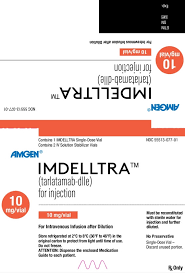
Tarlatamab (Tarlatamab) is a new bispecific Tcell connector (BiTE) immunotherapy drug, mainly targeting DLL3 (Delta-like ligand 3) Target. Currently, the drug is in the clinical research stage and is mainly being developed for the treatment of neuroendocrine tumors that highly express DLL3 such as small cell lung cancer (SCLC). So, is talatumumab suitable for patients with colon cancer? There is currently no clear evidence of its effectiveness in the treatment of colon cancer.
From the perspective of target expression, DLL3 has a relatively low expression in colon cancer, which is far less significant than that in small cell lung cancer. The mechanism of talatumumab relies on the high expression of the target to achieve directed attack of T cells. Therefore, its therapeutic potential is limited for tumors with low DLL3 expression, such as colon cancer. This means that talatumumab is not currently widely considered for the treatment of colon cancer.
The current scope of clinical trials is also focused on the field of pulmonary neuroendocrine tumors. Several clinical studies, such as the DeLLphi-300 and DeLLphi-301 trials, did not include colon cancer. This shows that the current research direction is still focused on tumor types with high DLL3 expression, and its efficacy or safety in patients with colon cancer has not yet been explored.
For patients with colon cancer, the current mainstream treatment options are still surgery, chemotherapy, targeted drugs (such as bevacizumab, cetuximab) and immunotherapy (such asPD-1 inhibitors). In the absence of relevant clinical data support, talatumumab is not recommended for patients with colon cancer, unless new studies in the future discover that DLL3 is highly expressed in some colon cancer subtypes and prove its efficacy.
In summary, talatumumab is not currently suitable for the treatment of patients with colon cancer. Its target specificity, scope of clinical indications, and research focus all point to pulmonary neuroendocrine tumors with high DLL3 expression. For patients with colon cancer, standard treatment options should still be selected based on existing evidence and waiting to see whether new immune drugs will make breakthroughs in this field in the future.
Reference materials:https://www.drugs.com/donanemab.html
[ 免责声明 ] 本页面内容来自公开渠道(如FDA官网、Drugs官网、原研药厂官网等),仅供持有医疗专业资质的人员用于医学药学研究参考,不构成任何治疗建议或药品推荐。所涉药品可能未在中国大陆获批上市,不适用于中国境内销售和使用。如需治疗,请咨询正规医疗机构。本站不提供药品销售或代购服务。


