
.jpeg)
Comparison and difference analysis between tepotinib and serpatinib
Tepotinib and Selpercatinib (Selpercatinib, also known as seputinib) are both targeted drugs that have attracted much attention in the field of precision treatment of lung cancer. Although both are used to treat non-small cell lung cancer (NSCLC) caused by certain gene mutations, they have essential differences in target mechanisms, indications, pharmacokinetics and drug resistance manifestations. Understanding the differences between these two drugs is crucial for clinical drug selection and the development of precise treatment strategies, especially in the management of lung cancer patients targeting different genetic drivers. Each has its own advantages.
First of all, from the perspective of its mechanism of action, tepotinib is a highly selective MET tyrosine kinase inhibitor, which is mainly used to treat patients with non-small cell lung cancer who carry MET exon 14 skipping mutations. This mutation leads to continued activation of the MET signaling pathway, thereby driving abnormal proliferation and metastasis of tumor cells. Tepotinib achieves anti-tumor effects by inhibiting MET activity and blocking its downstream signaling pathways. In contrast, serpatinib is a highly selective RET inhibitor that mainly targets RET gene fusion-positive non-small cell lung cancer and some thyroid cancers. RET fusion is also a type of driver mutation, which is common in young, non-smoking lung cancer patients. Serpatinib effectively controls tumor growth by precisely inhibiting the activity of RET fusion protein.
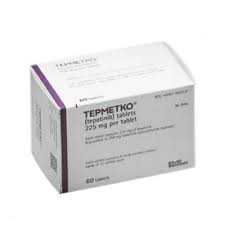
Secondly, in terms of indications, both are designed to target patients with specific mutations, but their targets do not overlap. Tepotinib is mainly used to treat patients with METex14 jump-positive NSCLC. It is currently mostly used as a first-line or second-line treatment option for advanced or relapsed patients. Selpercatinib is mainly used in RET fusion-positive NSCLC and some RET-mutated medullary thyroid cancer (MTC) or differentiated thyroid cancer (DTC) ineffective in radioactive iodine therapy, and its applicable population is wider. In addition, serpatinib has been studied in RET-related solid tumors in children, demonstrating its potential indications in multiple tumor types.
From the perspective of pharmacokinetic characteristics, tepotinib is a once-daily oral drug with a long half-life. The drug is stably distributed in the body and shows good tissue penetration. Selpercatinib is usually taken twice a day. It has a fast absorption rate and good blood concentration stability, making it suitable for long-term targeted therapy. The two also differ in terms of drug interactions and safety in patients with liver and kidney function. Tepotinib needs to be used with caution in patients with moderate liver function impairment, while Selpercatinib is relatively safer in such patients, but requires close monitoring in patients with QT prolongation or abnormal heart rhythm.
The drug resistance mechanism is also one of the important differences between the two. Tepotinib resistance is often caused by secondary mutations of the MET gene, activation of bypass pathways (such as KRAS, PI3K, etc.) or phenotypic changes (such as EMT), while the resistance mechanism of Selpercatinib is mostly manifested by secondary mutations of the RET gene (such as G810S/C, etc.), or activation of other oncogenic pathways (such as MAPK, FGFR, etc.). Understanding the resistance mechanism can help determine whether other targeted drugs or combination treatment strategies need to be used.
In terms of clinical manifestations, both drugs have good efficacy, but the side effect spectrum is slightly different. Common side effects of tepotinib include peripheral edema, nausea, fatigue, weight gain, etc., while selpercatinib more commonly causes hypertension, elevated liver enzymes, dryness, diarrhea and other problems. Overall, most of the side effects of both are well controllable and reversible, and the incidence of adverse reactions is closely related to individual differences.
Reference materials:https://www.tepotinib.com/
[ 免责声明 ] 本页面内容来自公开渠道(如FDA官网、Drugs官网、原研药厂官网等),仅供持有医疗专业资质的人员用于医学药学研究参考,不构成任何治疗建议或药品推荐。所涉药品可能未在中国大陆获批上市,不适用于中国境内销售和使用。如需治疗,请咨询正规医疗机构。本站不提供药品销售或代购服务。


