
.jpeg)
How effective is Vorasidenib in treating IDH-mutant brain tumors?
Vorasidenib is a novel, selective inhibitor of isocitrate dehydrogenase 1 and 2 mutations (IDH1/IDH2) targeted drugs, specifically used to treat patients with gliomas (especially low-grade brain tumors) carrying IDH mutations. In multiple clinical studies in recent years, vorsidenib has shown good safety and therapeutic prospects, especially in terms of delaying tumor progression and controlling disease, bringing new treatment opportunities to patients with IDH mutated brain tumors. The following is an in-depth analysis of the therapeutic effect of vorsidenib on IDH mutated brain tumors from the aspects of its therapeutic mechanism, clinical efficacy, applicable population and future development prospects.
1. Precise mechanism of action, specially designed for IDH mutation patients
IDHMutation is a specific molecular abnormality in gliomas that is common in diffuse low-grade gliomas (including astrocytomas and oligodendrogliomas). It is also a key diagnostic basis in the World Health Organization (WHO) glioma classification. IDHMutation causes abnormal enzyme activity and produces a large amount of 2-hydroxyglutarate (2-HG), a "pseudo-metabolite", which in turn inhibits normal cell differentiation and promotes tumor formation. Vorsidenib selectively inhibits the activity of IDH1 and IDH2 mutant proteins and reduces 2-HG levels, thereby reversing or inhibiting tumor-related metabolic abnormalities and delaying tumor growth.
The biggest advantage of vosidenib is its good central penetrability and its ability to effectively cross the blood-brain barrier, which makes it particularly effective in the treatment of brain tumors. Traditional chemotherapy drugs or other targeted drugs often have limited efficacy due to their inability to fully enter the central nervous system. The structure of vorsidenib is designed to solve this problem. Its drug concentration in brain tissue is sufficient to maintain the activity of inhibiting IDH mutations.
2. Significant clinical efficacy, delaying tumor progression time
The global Phase III clinical trialINDIGO study announced in 2023 is an important milestone in evaluating the efficacy of vorsidenib. The study enrolled 331 patients with recurrent, low-grade glioma who carried IDH1/2 mutations and had not received chemotherapy or radiotherapy. The results showed that the progression-free survival (PFS) of the voroxiranib group was 27.7 months, compared with 11.1 months in the placebo group, nearly twice as long, showing significant clinical benefit. In addition, vorsidenib also significantly delays the time for patients to receive further radiotherapy or chemotherapy, giving patients a longer treatment window.
The study also showed that voroxiranib is well tolerated by patients, with most adverse reactions ranging from 1 to 2. Common side effects include fatigue, headache, and slight increases in liver enzymes, and serious toxicity is rare. Compared with the decline in cognitive function and impact on quality of life caused by traditional radiotherapy or chemotherapy, vorsidenib, as an oral targeted therapy, has significant advantages in preserving cognitive function and prolonging disease control time.
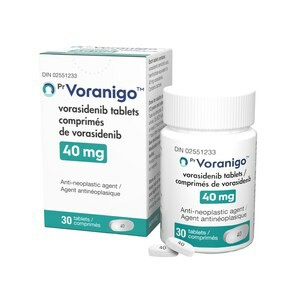
3. Clear applicable groups to facilitate individualized treatment
Voxirinib is currently mainly used for patients with low-grade gliomas carrying IDH1 or IDH2 mutations. It is especially suitable for patients who have not received radiotherapy and chemotherapy, are asymptomatic or have mild symptoms, and whose disease progresses slowly. Such patients usually have a good prognosis and the disease progresses relatively slowly. Therefore, through "delayed intervention", vorsidenib can avoid adverse reactions caused by early radiotherapy and chemotherapy, making the treatment more strategic.
In addition, with the increasing emphasis on molecular typing of tumors, IDH mutations serve as clear targets, providing precise application scenarios for voroxiranib. In the future, it may also be expanded to research on the treatment of some intermediate and high-grade IDHmutated brain tumors or combined with other drugs, bringing new hope to a wider patient group.
4. Huge potential in the future, expected to change the treatment landscape of glioma
The launch and clinical research progress of Voxirinib marks that brain tumor treatment is gradually moving from traditional radiotherapy and chemotherapy to the era of molecular targeted and precise treatment. As the first targeted drug developed specifically for IDH mutated brain tumors, vorsidenib not only improves the selectivity and safety of treatment, but may also be used in combination with immunotherapy and other metabolic inhibitors in the future to further improve the therapeutic effect.
Currently, vorsidenib has not yet been approved for marketing in mainland China, but it has received breakthrough therapy designation from the U.S.FDA and is expected to accelerate its global launch in the future. If domestic patients need medication, they can obtain relevant versions through international drug channels, but they must pay attention to the quality and source safety of the drugs and use them under the guidance of a doctor.
In short, as a new brain tumor drug targeting IDH mutations, voroxiranib has significant clinical efficacy, good tolerability and clear adaptability to the population. In treatmentIDHIt provides a new solution for mutated low-grade glioma, which is expected to become an important means to delay disease progression and improve quality of life. With the release of more research data and the expansion of indications, voxiranib will further change the landscape of brain tumor treatment in the future and bring more hope to patients.
Reference materials:https://www.drugs.com
[ 免责声明 ] 本页面内容来自公开渠道(如FDA官网、Drugs官网、原研药厂官网等),仅供持有医疗专业资质的人员用于医学药学研究参考,不构成任何治疗建议或药品推荐。所涉药品可能未在中国大陆获批上市,不适用于中国境内销售和使用。如需治疗,请咨询正规医疗机构。本站不提供药品销售或代购服务。


